

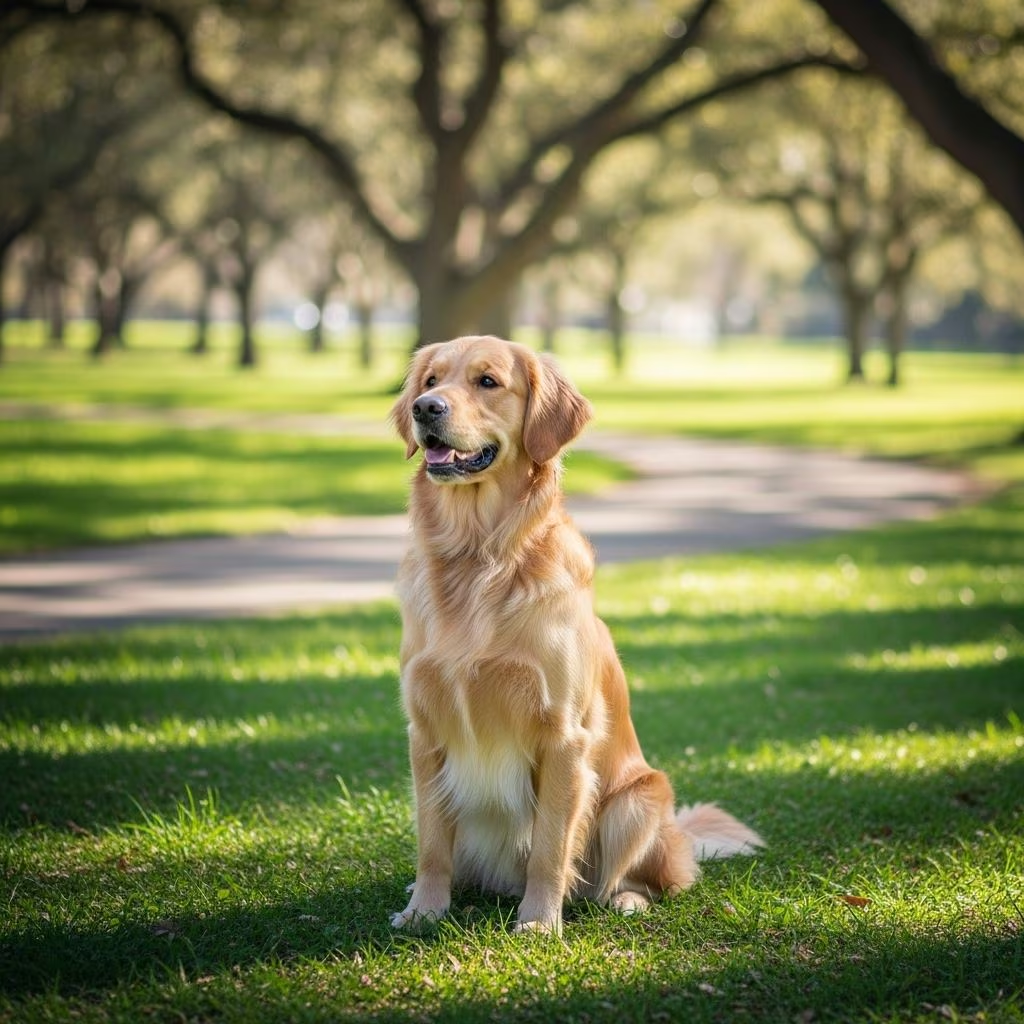
Teaching your dog to respond reliably to wait and stay commands transforms everyday interactions, from mealtimes to walks, into safe and controlled experiences. These skills foster impulse control, prevent unwanted behaviors like bolting through doors, and build a stronger bond through positive reinforcement. Unlike casual obedience, these cues emphasize patience and self-regulation, applicable across various scenarios.
Understanding the Difference Between Wait and Stay
The wait command instructs your dog to pause briefly before proceeding, ideal for thresholds, food bowls, or sudden stops. It promotes momentary hesitation without a fixed position. In contrast, stay requires holding a specific position—sit, down, or stand—until explicitly released, handling longer durations, distances, and distractions.
Distinguishing them prevents confusion: wait is flexible for quick impulses, while stay demands endurance. Both rely on clear cues, rewards, and gradual progression to ensure success.
Essential Tools and Preparation for Success
Before training, gather high-value treats (e.g., small pieces of chicken or cheese for motivation), a clicker for precise timing, and a leash for safety. Choose quiet environments initially, progressing to stimulating ones. Sessions should last 5-10 minutes, multiple times daily, ending on positive notes.
- Treat selection: Use what excites your dog most, reserving special ones for training.
- Clicker use: Marks exact good behavior; pair with treats via “charging” (click-treat 20-30 times without commands).
- Release word: Select one like “free” or “okay” to signal end of behavior.
Consistency across family members reinforces learning; everyone uses identical wording and timing.
Step-by-Step Guide to Teaching the Wait Command
Wait training starts with real-life relevance, like doorways or meals, building self-control organically.
Phase 1: Food Bowl Foundation
Position your dog in a sit with the bowl at eye level. Say “wait,” lower slightly; if steady, click and treat from the bowl, raising it back. Progress incrementally:
- Lower bowl inches at a time over sessions.
- Reach floor level, set down briefly, click, retrieve.
- Leave bowl down during treat delivery, repeating “wait.”
If breakage occurs, reset calmly without scolding—progression ensures confidence.
Phase 2: Doorway Discipline
Leash your dog, approach door. Say “wait” with palm out like a stop sign. Crack door; if forward lunge, close it and retry. Reward eye contact or stillness before full release.
- Practice 10-20 reps per session.
- Gradually widen door, add steps out first.
- Incorporate turns away to build independence.
This curbs door-dashing, enhancing safety on walks.
Phase 3: Walks and Real-World Application
On leash walks, use “wait” at curbs or crossings. Stop abruptly, cue wait, reward calm before proceeding. Advance to off-leash in secure areas, praising steady posture amid mild distractions like passing squirrels.
Troubleshooting: If arousal spikes, down-regulate with routine calm practices, avoiding overload in high-stimulation zones initially.
Comprehensive Stay Training Protocol
Stay builds on positions like sit or down, layering duration, distance, and distractions methodically—the “3 Ds.”
Building Duration
Cue sit, hand signal (palm out), say “stay.” Hold 1-2 seconds, treat, release. Increment by seconds:
| Session Goal | Technique | Treat Frequency |
|---|---|---|
| 5 seconds | Single treat post-hold | End only |
| 10-20 seconds | Multiple treats during | Every 3-5 sec |
| 30+ seconds | Random intervals | Variable |
Reset calmly on breaks: “Oops, sit-stay.” Use pleasant tones to inform, not command.
Introducing Distance
From solid 10-second stays, step back one foot, return to treat/release. Build gradually:
- 1 step: 3 seconds.
- 3 steps: 5-10 seconds.
- Full room: Return before failure.
Always reward at dog, reinforcing position holding.
Mastering Distractions
Lower time/distance initially. Add mild antics:
- Side step, clap, hop.
- Ball bounce, spins.
- Simulate passersby or toys.
Progress slowly; one failure prompts regression. Combine elements: stay at distance with claps.
Advanced Proofing
Exit sight briefly (mirror check), step out/in, build time. Practice variable rewards for reliability sans cues.
Common Challenges and Solutions
Breakdowns: Shorten criteria, increase treat value, ensure fatigue isn’t factor.
High energy dogs: Exercise prior; teach calm-settling without positions.
Multiple dogs: Train separately, then tandem with barriers.
Older dogs: Adapt pace, celebrate small wins; arthritis may favor down-stays.
Integrating into Daily Routines
Weave training seamlessly: wait before meals/games, stay during grooming. Real-world wins solidify habits, reducing reactivity over time.
Benefits Beyond Obedience
These commands boost confidence, reduce anxiety via predictability, and prevent mishaps like counter surfing. Long-term, they enable off-leash trust in parks or hikes.
Frequently Asked Questions (FAQs)
What’s the best age to start?
Puppies from 8 weeks; adults anytime with patience.
Clicker necessary?
No, but accelerates learning via marker precision.
How long until reliability?
Weeks with daily practice; lifetime maintenance.
Force-free only?
Yes—positive methods yield durable, stress-free results.
Differences for breeds?
High-drive breeds need higher rewards; adapt to energy.
Progress Tracking Table
| Skill Level | Wait Milestones | Stay Milestones |
|---|---|---|
| Beginner | Bowl pause 2 sec | 10-sec sit |
| Intermediate | Doorway hold | Distance 5 ft, mild distract |
| Advanced | Walk stops off-leash | Room exit, high distract |
References
- Training Your Dog to ‘Wait’ and ‘Stay’ — Whole Dog Journal. 2023. https://www.whole-dog-journal.com/behavior/training-your-dog-to-wait-and-stay/
- How to Teach your Dog to Stay in 3 Steps Force Free! — YouTube (Dog Training Revolution). 2023-10-15. https://www.youtube.com/watch?v=GAziMECDxD0
- How to Teach Your Dog to Stay — American Kennel Club (AKC). 2024-05-20. https://www.akc.org/expert-advice/training/teach-your-dog-to-stay/
- How to change your life with the ‘wait’ command — The Naked Dog Training. 2022-10-24. https://www.thenakeddogtraining.com/traininghowtos/2022/10/24/how-to-change-your-life-with-the-wait-command
- Learn How to Teach the Wait Command — YouTube. 2023. https://www.youtube.com/watch?v=TsDy2a2YefE



