

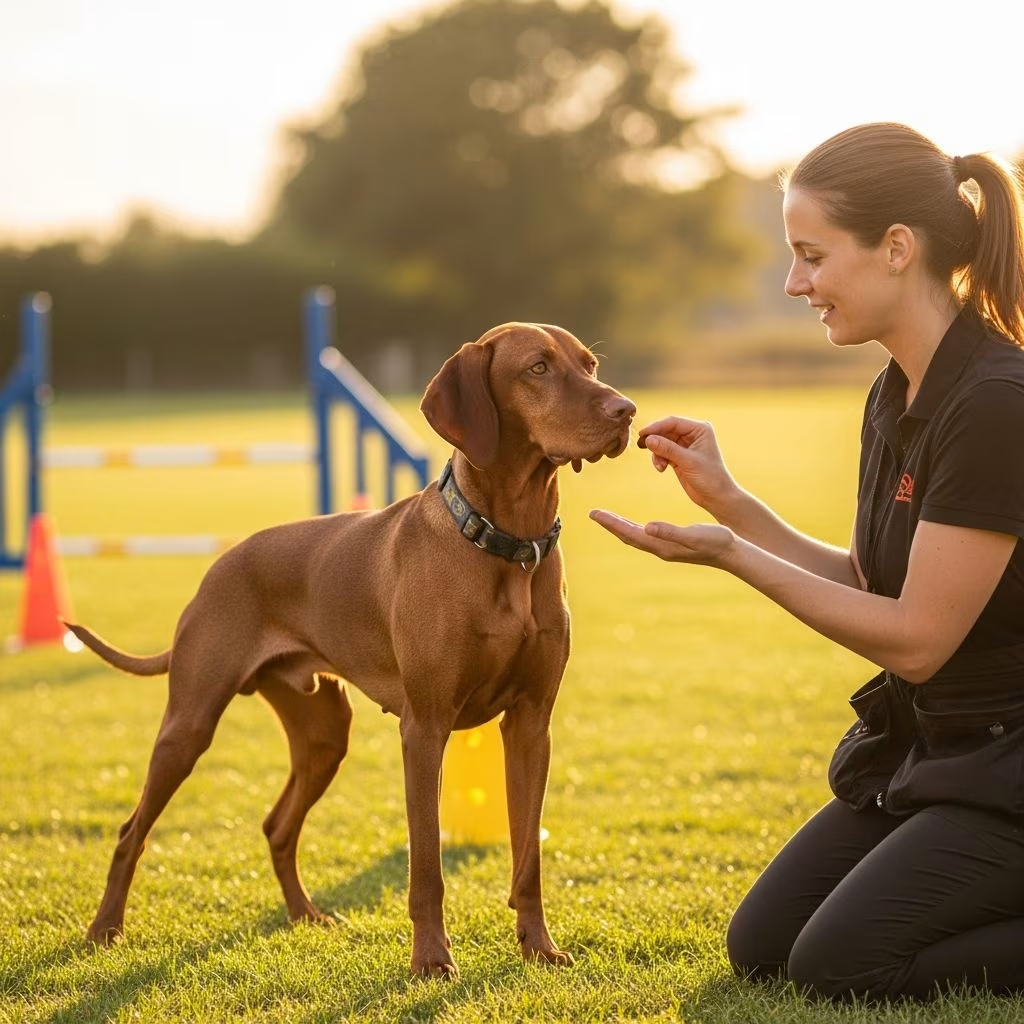
The Vizsla, often called the \”Velcro dog\” for its devotion to owners, combines intelligence, athleticism, and sensitivity in one elegant package. Originating as a Hungarian hunting breed, Vizslas thrive when given clear guidance and engaging activities. Effective training harnesses their eagerness to please while addressing their high energy and occasional distractibility. This guide draws on proven methods to help you raise a well-mannered Vizsla that excels in obedience, agility, and family life.
Understanding the Vizsla Temperament
Vizslas are bred for endurance and alertness, making them exceptional pointers and retrievers. Their sensitive nature means they respond poorly to harsh corrections, preferring praise and rewards that build trust. Smart yet slow to mature, puppies may take up to two years to fully focus, requiring patience from owners. Without proper outlets, their energy can lead to chewing, jumping, or hyperactivity. Channeling this drive through structured training prevents behavioral issues and fosters a deep bond.
Key temperament traits include:
- High intelligence: Quick to learn complex commands once mature.
- Eagerness to please: Motivated by owner approval over food alone.
- Sensitivity: Shuts down with negative feedback.
- Boundless energy: Needs 1-2 hours of daily exercise.
- Velcro tendency: Forms intense attachments, craving companionship.
Foundational Principles of Vizsla Training
Positive reinforcement forms the cornerstone of Vizsla training. Reward desired behaviors with treats, toys, or verbal praise immediately after they occur to create strong associations. Avoid punishment, as it erodes confidence in this breed. Consistency across family members ensures the dog understands expectations. Short sessions—5-15 minutes—match their attention span, especially in puppies.
| Training Principle | Why It Works for Vizslas | Practical Tip |
|---|---|---|
| Positive Reinforcement | Builds trust and motivation | Use high-value treats like chicken for sits/recalls |
| Consistency | Prevents confusion | Same cue word (e.g., \”sit\”) every time |
| Short Sessions | Maintains focus | End on a high note before boredom sets in |
| Exercise First | Reduces hyperactivity | 30-min walk before training |
Establish yourself as a calm leader by controlling resources like food and walks. Feed after commands to reinforce hierarchy without force.
Essential Obedience Commands for Vizslas
Begin with core commands to build reliability. Vizslas excel off-leash due to their hunting heritage, but solid basics prevent mishaps in distracting environments.
Sit, Stay, and Down
Lure with a treat above the nose for \”sit,\” then add the verbal cue. Progress to \”stay\” by stepping back gradually, rewarding calm holds. \”Down\” follows by guiding the lure to the ground. Practice 3-5 times daily.
Recall and Heel
Recall is critical for safety. Start in low-distraction areas, calling enthusiastically and rewarding heavily. Use a long line for reliability building. Heel training involves walking with treats at your side, gradually fading them. Repetition is key—Vizslas forget without practice.
- Practice recall 10x/day in yard.
- Never call for punishment.
- Use whistle for distance.
Leave It and Drop It
These prevent mouthing. For \”leave it,\” place a low-value item down, cover if needed, and reward for ignoring. \”Drop it\” uses trade-ups with better toys.
Training Vizsla Puppies: From 8 Weeks Onward
Puppies arrive full of curiosity but short on focus. House training starts immediately: crate for sleep, frequent potty breaks every 2 hours, praise successes. Establish routines for meals, play, and rest to speed potty mastery, often within weeks with consistency.
Socialization is paramount from 8-16 weeks. Expose to people, dogs, sounds, and surfaces positively. Enroll in puppy classes for controlled interactions. Crate training provides security; feed meals inside to build positive associations.
Puppy Training Milestones
- Weeks 8-12: Potty routine, crate intro, name response.
- Weeks 12-16: Basic sits, socialization outings.
- Months 4-6: Collar/leash manners, short stays.
- Months 6-12: Reliable recall, heel on walks.
Patience pays off; Vizsla pups mature slowly but surpass expectations.
Channeling Energy: Exercise and Mental Stimulation
Vizslas demand vigorous outlets. Aim for 60-90 minutes daily, split into runs, hikes, or fetch. Pre-training exercise burns energy for better focus—not exhaustion.
Mental games tap their problem-solving skills:
- Agility courses: Builds speed and obedience.
- Nose work: Hide treats for sniffing hunts.
- Flirt pole/tug: Satisfies chasing instincts.
- Puzzle toys: Dispense kibble slowly.
Field work suits their heritage: introduce beating lines cautiously, using leads in cover.
Advanced Training for Sporting Vizslas
Mature Vizslas shine in dog sports. Agility leverages athleticism; train weaves and jumps progressively. Hunting drills like quartering teach directional control. Obedience competitions reward precision recalls and heeling.
Off-leash reliability comes from proofing in distractions: parks, trails, then fields. Games like \”find it\” enhance scent work.
Common Vizsla Training Challenges and Fixes
Hyperactivity/Jumping: Ignore until calm, reward four-on-floor.
Pulling on Leash: Stop walking until slack, then proceed.
Separation Anxiety: Gradual alone time with toys; desensitize departures.
Destructiveness: More exercise, chew toys, mental puzzles.
Monitor body language: yawns signal stress, wide eyes excitement. Pause and reassess.
Building a Lifelong Training Routine
Training never ends; maintain skills with daily refreshers. Integrate into life: commands before meals, recalls on walks. Track progress in a journal. Professional help accelerates if plateaus hit.
Vizslas repay investment with loyalty and prowess. Commit to positivity, consistency, and activity for a joyful partnership.
Frequently Asked Questions (FAQs)
How long does it take to train a Vizsla puppy?
Basics in weeks, full obedience 1-2 years due to slow maturity.
Can Vizslas be trained off-leash?
Yes, with solid recall foundation and hunting instincts.
What if my Vizsla ignores commands?
Exercise first, up rewards, check for distractions or health issues.
Are Vizslas good for first-time owners?
Best for active owners; sensitivity requires gentle handling.
How much exercise do Vizslas need?
1-2 hours daily, mixing cardio and brain games.
References
- Vizsla Training Tips — Canna-Pet. 2023. https://canna-pet.com/articles/vizsla-training-tips/
- Introduction to Beating and Field Work Training (HPR) with a Vizsla — Vizsla Boarding. 2022. https://vizslaboarding.co.uk/introduction-to-beating-and-field-work-training-hpr-with-a-vizsla/
- How to Train a Hungarian Vizsla: Temperament, Training Tips — Lyka. 2024. https://lyka.com.au/blog/training-a-hungarian-vizsla
- The Vizsla Guide: Personality, History, Training, Food, and More — The Farmer’s Dog. 2023. https://www.thefarmersdog.com/digest/the-vizsla-guide-personality-history-training-food-and-more/
- Training Library — Summit Vizsla. 2023. https://www.summitvizsla.com/about-vizsla-1/training/training-library



