

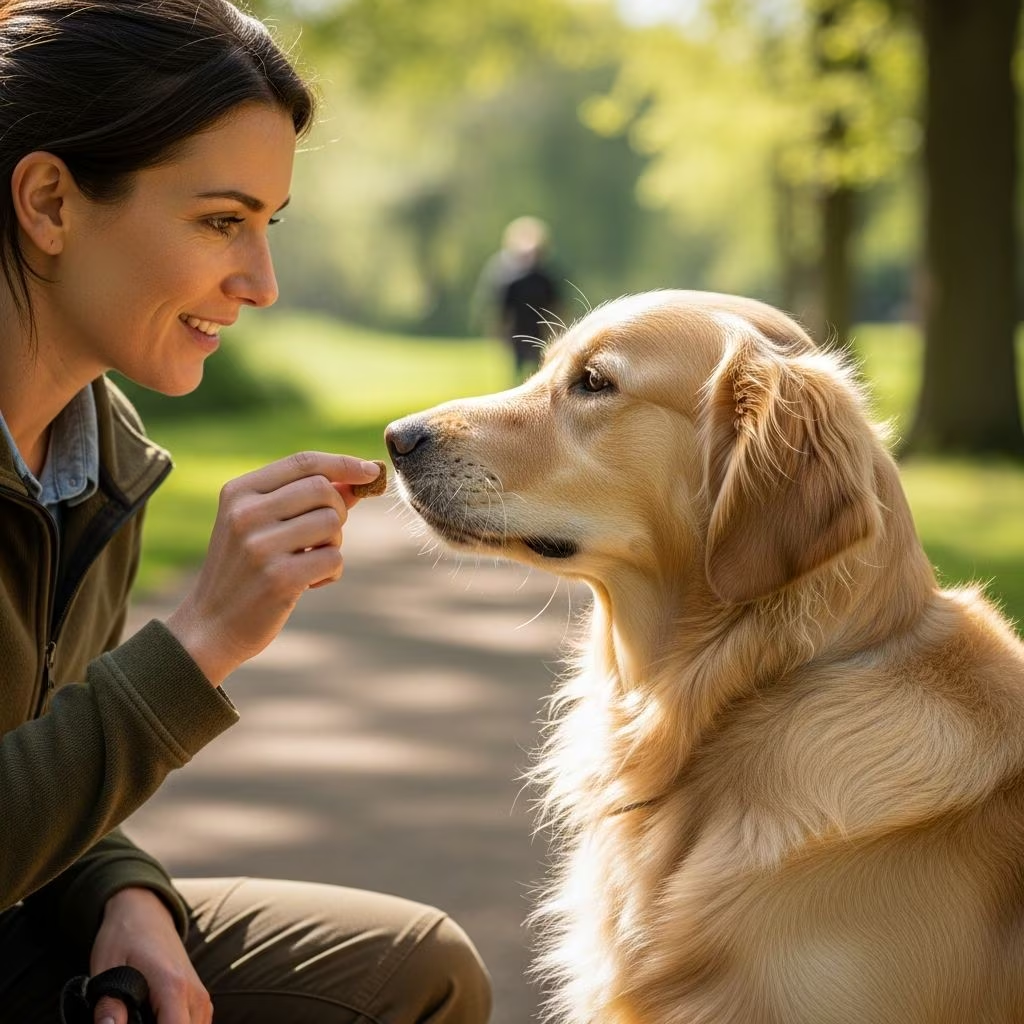
Verbal cues serve as a cornerstone of successful dog training, enabling clear communication between owners and their pets. By thoughtfully introducing words alongside established visual signals, handlers can foster behaviors that respond reliably even in distracting environments. This approach leverages dogs’ natural attentiveness to both sound and motion, creating versatile obedience skills.
Understanding the Role of Cues in Canine Learning
Dogs process information through multiple sensory channels, with visual cues often registering faster than auditory ones due to their evolutionary reliance on body language. Verbal elements add precision, allowing commands to function independently or in tandem. A cue acts not as a direct order but as a predictor of reinforcement, signaling that a specific action will yield rewards.
Effective training begins with consistency. Select short, distinct words like “sit,” “down,” or “stay” that stand out phonetically. Avoid similar sounding terms to prevent confusion, ensuring each cue evokes a unique association in the dog’s mind.
Building Foundational Behaviors Before Adding Words
Start by shaping the desired action without any verbal prompt. For instance, to teach sitting, use a treat to guide the dog’s nose upward, encouraging the hindquarters to lower naturally. Repeat until the motion occurs fluidly on subtle guidance alone. This phase establishes the behavior pattern, free from verbal interference.
- Use high-value rewards to motivate initial learning.
- Practice in low-distraction settings to build confidence.
- Mark correct responses immediately with a clicker or enthusiastic praise.
Once proficiency reaches 80-90% reliability, integrate the cue. Say the word just as the dog initiates the behavior, pairing sound with action repeatedly. This timing helps the dog link the verbal signal to the movement.
Transitioning from Lures to Independent Responses
Eliminate food lures promptly to prevent dependency. Mimic the original hand motion without treats, rewarding only voluntary compliance. If success rates are high, introduce the spoken cue ahead of the gesture.
Follow this sequence:
- Pronounce the cue clearly.
- Immediately follow with the established hand signal.
- Reinforce the completed action.
- Repeat 5-10 times rapidly.
On subsequent trials, test the verbal cue solo. If the dog hesitates, revert to the paired method briefly before retrying. Patience prevents frustration and solidifies understanding.
Combining Verbal and Visual Signals for Reliability
Dogs excel with multimodal cues, responding to voice when vision is obscured or to gestures amid noise. Teach both separately then blend them strategically. Prioritize the verbal cue first in combinations, as dogs may default to visual dominance otherwise.
| Cue Type | Strengths | Best Use Cases |
|---|---|---|
| Verbal | Works in low visibility; hands-free | Busy environments; distant commands |
| Visual (Hand) | Quick uptake; silent | Noisy areas; deaf dogs |
| Combined | Maximum clarity | Training transitions; high distraction |
To add a secondary cue, practice each in rotation. For example, alternate between saying “sit” and signaling manually during sessions, reinforcing equally to maintain balance.
Common Pitfalls and How to Avoid Them
Repeating cues multiple times erodes their value, teaching dogs to ignore until escalation occurs. Deliver once, then assist if needed, but withhold rewards for non-compliance. Varying tone—happy for positives, firm for corrections—enhances discrimination.
Another error involves inconsistent delivery. Mumbling or rapid-fire commands confuses learners. Enunciate deliberately, maintaining steady volume and pitch for familiarity.
- Monitor body language; unintended movements can overshadow words.
- Fade assistance gradually to promote independence.
- Generalize across contexts: home, park, vet visits.
Advanced Techniques for Multiple Cues
Dogs can master several signals for one behavior, such as verbal, hand, or contextual like door approach for “potty.” Introduce novel cues after core reliability, using them during performance initially.
For competition or utility work, preparatory cues like “ready” alert to upcoming tasks, sharpening focus without dictating action. Practice in varied sequences to build adaptability.
Proofing Cues for Real-World Durability
Transition trained behaviors to challenging scenarios. Start with mild distractions—near toys—progressing to crowds or other dogs. Reward heavily at first, thinning schedules as success builds.
Incorporate distance and duration: command from afar or extend holds. Randomize cue order to prevent anticipation, ensuring responses stem from understanding, not patterns.
Special Considerations for Different Dogs
Puppies learn rapidly but distract easily; keep sessions short. Seniors may require slower pacing and familiar environments. For hearing-impaired dogs, emphasize visuals with thumbs-up for affirmation.
High-drive breeds benefit from play-based rewards, while laid-back ones respond to food. Tailor methods to individual temperament for optimal engagement.
Tools and Rewards That Enhance Learning
Clickers provide precise timing, bridging cue and reward. Variable reward schedules—unpredictable treats—boost retention over constant payouts. Toys or praise suit non-food motivated dogs.
Maintain session brevity: 5-15 minutes, multiple times daily, to sustain enthusiasm without fatigue.
Frequently Asked Questions
What if my dog ignores the verbal cue?
Reassess foundations; ensure visual cue solidity first. Use higher rewards and reduce distractions, gradually rebuilding pairing.
Can I change a cue after it’s learned?
Yes, introduce the new word during behavior execution, phasing out the old through non-reinforcement.
How many cues can a dog learn?
Hundreds with consistent practice; focus on essentials for everyday reliability.
Is timing critical when adding verbal cues?
Absolutely—say it as the action begins, not before or after, for strongest association.
What tone works best for verbal commands?
Happy and clear for positives; calm authority for control. Match energy to context.
Long-Term Maintenance of Cue Responsiveness
Periodic reinforcement prevents fading. Incorporate cues into daily routines: sit before meals, down for leashing. Random spot-checks in novel settings sustain sharpness.
Track progress via journals, noting success rates and adjustments. Group classes expose to peer distractions, accelerating generalization.
Ultimately, verbal cues empower harmonious coexistence, transforming potential chaos into cooperative partnership. With methodical training, any dog can achieve responsive, joyful obedience.
References
- Adding Verbal Cues to Hand Signals — Positive Partners Dog Training. 2023-05-15. https://positivepartnersdogtraining.com/adding-verbal-cues-to-hand-signals/
- Clean Up Your Cues! — Whole Dog Journal. 2024-02-10. https://www.whole-dog-journal.com/training/clean-up-your-cues/
- Mastering Commands and Cues: How to Communicate With Your Dog — Porch Potty. 2025-01-20. https://porchpotty.com/blogs/news/mastering-commands-and-cues-how-to-communicate-with-your-dog
- Introducing verbal cues in dog training — Naturally Happy Dogs (YouTube). 2022-08-05. https://www.youtube.com/watch?v=WR-YvPjcyUQ
- A List of Dog Commands & Hand Signals for Beginners — Taste of the Wild Pet Food. 2024-11-12. https://www.tasteofthewildpetfood.com/articles/training-and-behavior/list-of-dog-commands-hand-signals-for-beginners/



