

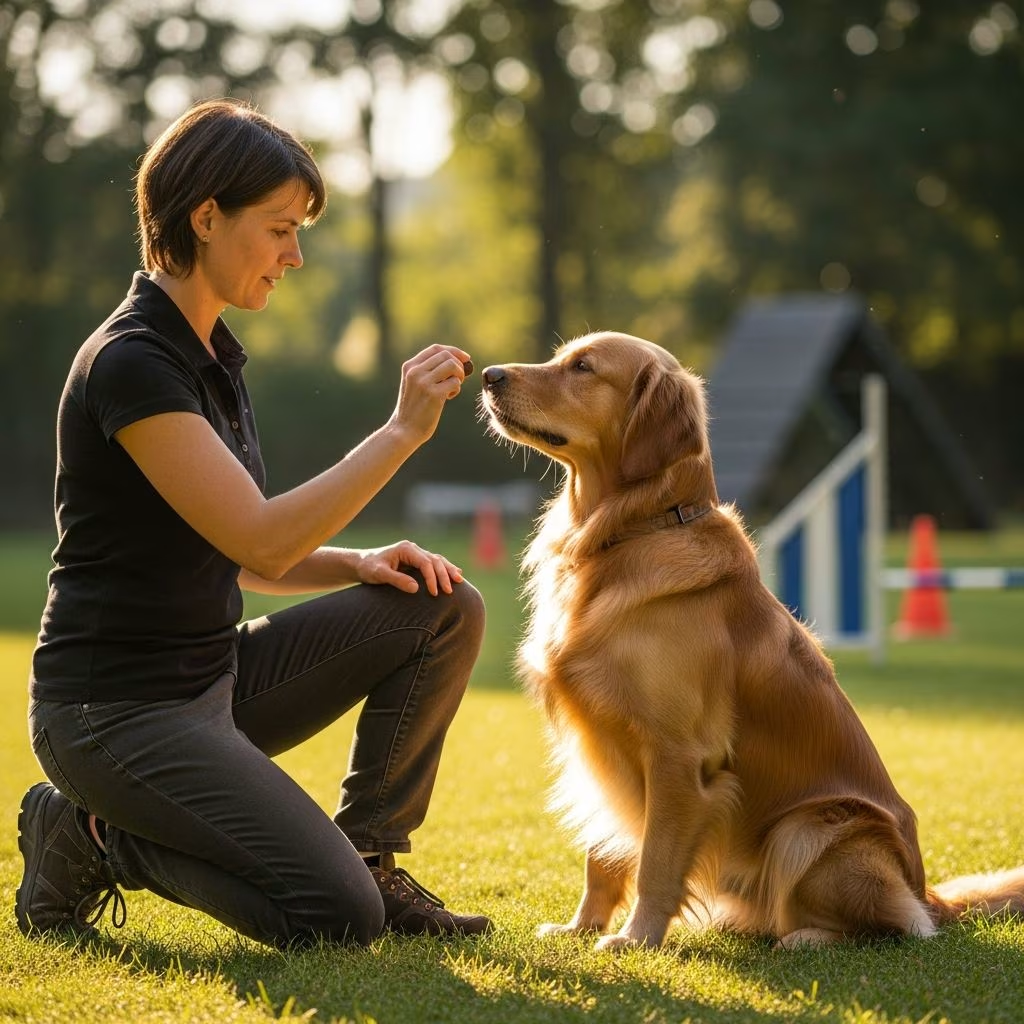
Effective communication forms the foundation of successful dog training. While dogs naturally excel at reading body language, teaching them to respond to spoken words opens up new avenues for control and partnership. This guide explores how to introduce verbal cues systematically, ensuring your dog understands and acts on your instructions reliably, even in distracting environments.
Why Verbal Cues Matter for Canine Communication
Dogs process visual information faster than auditory signals due to their evolutionary reliance on body language. However, humans communicate primarily through speech, making verbal cues essential for everyday interactions. Mastering these allows handlers to issue commands without visible gestures, such as when hands are occupied or at a distance.
Research from animal behavior studies shows that dogs can distinguish hundreds of words, similar to young children, but only when taught progressively. Verbal cues provide clarity and consistency, reducing confusion and enhancing the human-canine bond. They also enable training in low-visibility conditions like darkness or fog.
Building a Strong Foundation: Start with Visual Prompts
Before adding words, establish behaviors using hand signals or lures. This leverages dogs’ visual strengths. For instance, to teach “sit,” hold a treat above the dog’s nose and move it backward, encouraging the rear to lower. Repeat until the motion alone prompts the action without food.
Once reliable (80-90% success rate), transition by pairing the signal with rewards. This creates a predictable association, setting the stage for verbal integration. Patience here prevents overwhelming the dog with too many stimuli at once.
Step-by-Step Guide to Introducing Verbal Cues
Follow this structured process to attach words to established behaviors:
- Capture Natural Behaviors: Observe your dog offering actions like sitting voluntarily. Mark with a clicker or “yes” and reward immediately to build value.
- Pair Word with Action: Say the cue (e.g., “sit”) just before the dog performs it naturally or via prompt. Reward promptly to link sound to behavior.
- Add to Visual Cue: Utter the verbal cue, pause briefly (1-2 seconds), then give the hand signal. This lets the dog process the word without body movement overshadowing it.
- Fade the Signal: Repeat verbal-plus-signal combos 5-10 times. On subsequent trials, say the cue alone. If no response, revert to pairing and retry.
- Reinforce Independently: Gradually increase distance and distractions, rewarding correct verbal responses to solidify reliability.
This method, rooted in positive reinforcement, ensures the verbal cue becomes a clear predictor of the action, not meaningless noise.
Common Commands and Their Verbal-Visual Pairings
Here’s a table of essential commands with suggested verbal cues and corresponding hand signals for seamless training:
| Command | Verbal Cue | Hand Signal Description |
|---|---|---|
| Sit | “Sit” (cheerful tone) | Palm up, move hand from chest to shoulder height |
| Down | “Down” (calm tone) | Palm down, lower hand toward floor |
| Stay | “Stay” (firm tone) | Palm out, fingers up, like a stop sign |
| Come | “Come” (excited tone) | Arm sweeps toward chest |
| Leave It | “Leave it” (sharp tone) | Palm facing dog, shake head no |
Use distinct tones for each: high and happy for fun behaviors, steady for control cues. This auditory variation aids differentiation.
Overcoming Challenges: Troubleshooting Cue Confusion
Dogs often prioritize visuals over words if introduced simultaneously. If your dog ignores “sit” without a hand move, it means the body signal dominates. Solution: Practice verbal-only in quiet settings, rewarding slightest efforts toward compliance.
Another issue is multi-cue overlap. Dogs can learn multiple signals per behavior (verbal, visual, contextual like seeing leashes for walks), but each needs periodic reinforcement. Test by isolating cues: say the word without gesturing; signal without speaking. Adjust based on responses.
For deaf or hearing-impaired dogs, rely solely on visuals, but the principles apply reversely—add verbal to visual foundations.
Advanced Techniques: Multi-Cue Reliability and Proofing
Once basics stick, proof cues against distractions. Start in low-distraction zones, progress to parks or homes with guests. Randomize verbal and visual use to prevent dependency.
Incorporate cue chains: “Sit-stay-come” sequences build complex obedience. Use variable rewards (not every time) to mimic real life, boosting long-term retention.
Pro tip: Record sessions to self-assess timing. Precise pauses between verbal and visual prevent blending, ensuring the word gains prominence.
Integrating Cues into Daily Life
Verbal mastery shines in practical scenarios: calling your dog from play, redirecting jumping guests, or settling during meals. Consistency across family members prevents mixed signals—agree on exact words and tones.
For sports like agility or herding, verbal cues provide hands-free control amid motion. Competition dogs often respond faster to voice in noisy arenas where visuals falter.
The Science Behind Effective Cue Training
Operant conditioning underpins this: cues signal reinforcement opportunities. Studies from the American Kennel Club and veterinary behaviorists confirm dogs learn cues via association, not innate understanding. Positive methods yield faster, happier results than punishment-based ones.
Timing is critical—rewards within 1 second cement links. Over 5,000 dogs trained with dual cues show visuals initially stronger, but verbals equalize with deliberate fading.
Tools and Tips for Success
- Clicker Training: Precise marker bridges cue and reward.
- Treat Variety: High-value foods for new cues, everyday for maintenance.
- Session Length: 5-10 minutes, multiple times daily to avoid fatigue.
- Progress Tracking: Log success rates; aim for 90% before advancing.
Frequently Asked Questions (FAQs)
Can I teach verbal cues to an older dog?
Yes, adults learn quickly if behaviors are solid. Start simple, use high motivation.
What if my dog responds better to visuals?
Normal—fade visuals slowly over weeks. Practice verbal in novel contexts.
How many cues can a dog learn?
Over 100 with consistent training; focus on 10-15 core ones first.
Should I use the same cue for similar behaviors?
No—distinct words prevent confusion, e.g., “down” for lie down, “off” for jumping.
Is tone important?
Absolutely; match energy to context for intuitive understanding.
Long-Term Maintenance and Fun Variations
Reinforce sporadically lifelong. Introduce novelty cues like foreign words or whistles for engagement. Games like “Simon Says” (respond only on cue) sharpen discrimination.
Ultimately, verbal cues foster independence, letting dogs anticipate needs. Celebrate milestones—your partnership deepens with every reliable response.
References
- Adding Verbal Cues to Hand Signals — Positive Partners Dog Training. 2023. https://positivepartnersdogtraining.com/adding-verbal-cues-to-hand-signals/
- Learn How to Attach Verbal Cues to Behaviors — Golden Paws Dog Training. 2024. https://goldenpawsdogtraining.com/learn-how-to-attach-verbal-cues-to-behaviors/
- Clean Up Your Cues! — Whole Dog Journal. 2022-05-15. https://www.whole-dog-journal.com/training/clean-up-your-cues/
- Importance of Verbal and Visual Cues in Dog Training — Off Leash K9 Training. 2023. https://www.offleashk9training.com/importance-of-verbal-and-visual-cues-in-dog-training/
- A List of Dog Commands & Hand Signals for Beginners — Taste of the Wild Pet Food. 2024. https://www.tasteofthewildpetfood.com/articles/training-and-behavior/list-of-dog-commands-hand-signals-for-beginners/



