

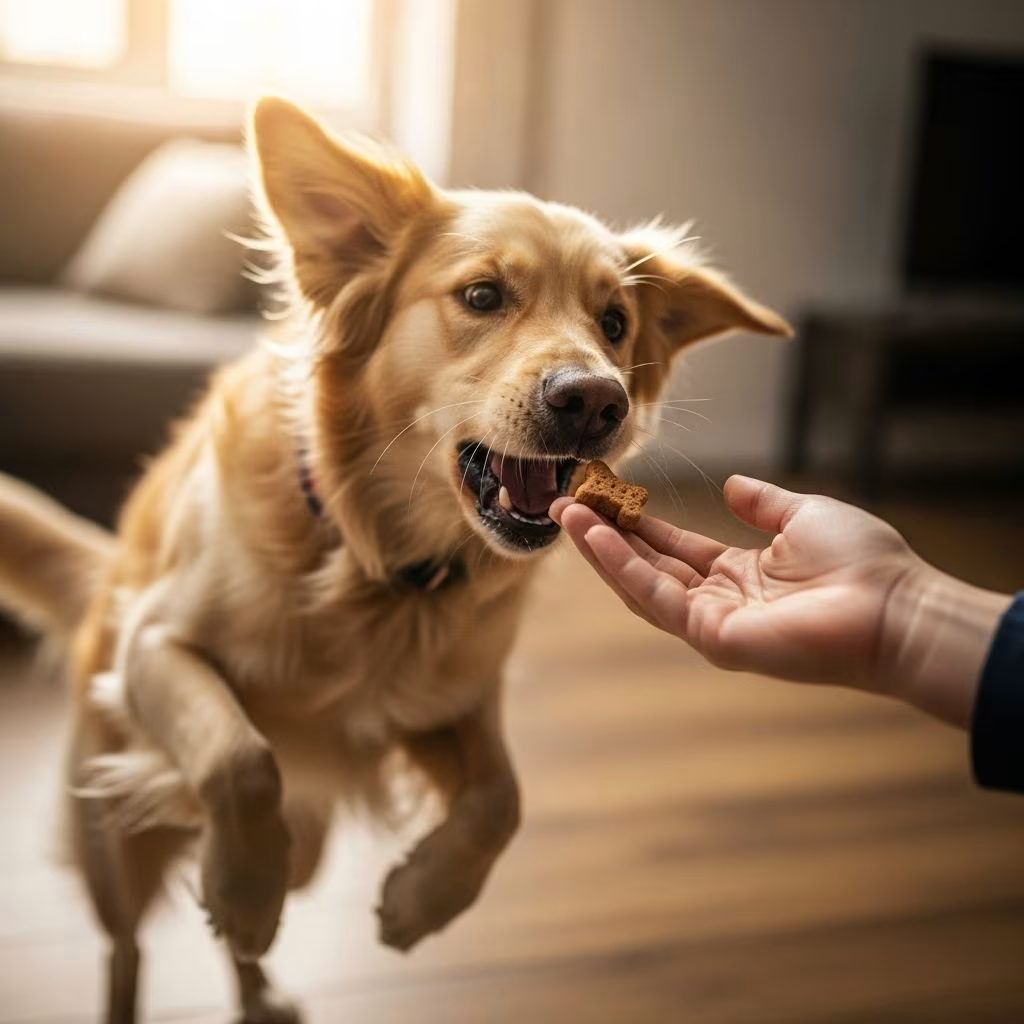
Treat-based training stands as one of the most effective and humane approaches to teaching dogs desired behaviors. When executed correctly, offering treats becomes a powerful communication tool that helps your dog understand which actions earn rewards. However, simply handing over a treat whenever your dog behaves well is only part of the equation. The method, timing, and strategy behind treat delivery can significantly impact training success and your dog’s long-term responsiveness to commands.
Understanding the Foundation of Positive Reinforcement Training
At its core, positive reinforcement training operates on a straightforward principle: behaviors that result in rewarding consequences are more likely to be repeated. This approach is both dog-friendly and accessible to trainers of all skill levels, from first-time dog owners to experienced handlers. The beauty of this method lies in its simplicity—your dog naturally gravitates toward actions that produce favorable outcomes, whether those outcomes are food-based, social, or activity-oriented.
Treats represent just one category of rewards available to you. While high-value food treats often serve as the most straightforward starting point, effective training incorporates multiple reward types including verbal praise, physical affection, playtime, and access to desired activities. Understanding your individual dog’s preferences helps you build a diverse reward arsenal that keeps training sessions engaging and maintains your dog’s motivation.
The Proper Mechanics of Offering a Treat
How you physically present a treat to your dog influences not only their ability to accept it gracefully but also their training trajectory. The fundamental technique involves positioning the treat at your dog’s eye level rather than holding it above their head or allowing them to lunge upward. This positioning naturally discourages jumping behavior while making it easy for your dog to accept the reward without excessive movement.
When presenting treats directly from your hand, consider using a closed fist initially. Allow your dog to investigate and gently touch their nose to your fist. Only when they display calm behavior should you gradually open your hand to reveal the treat. This sequence teaches your dog that gentleness and restraint are the prerequisites for receiving rewards, establishing a positive association between controlled behavior and treat delivery.
For dogs prone to nipping or those with owners concerned about hand sensitivity, alternative presentation methods prove valuable. Tossing treats gently on the ground in front of your dog minimizes jumping behavior and reduces the risk of accidental nipping. If hand contact remains preferred, wearing a garden glove provides a practical barrier while maintaining direct interaction.
Timing: The Critical Variable in Training Success
Perhaps no single factor influences training effectiveness more than timing. Your dog must connect the treat reward to the specific behavior they just performed—this connection forms the foundation of learning. Research and practical experience consistently demonstrate that delivering a treat within two seconds of correct behavior produces optimal results.
Consider what happens when timing suffers. Imagine teaching your dog to sit. They sit beautifully, but you delay the treat delivery by five seconds. During that delay, your dog may stand up, sniff the ground, or look away. If the treat arrives after they’ve changed positions, your dog receives reinforcement for a “sit-stand combination” or some other behavior rather than for sitting specifically. This creates confusion and slows the learning process considerably.
The timing principle extends beyond the initial reward moment. Pay close attention to your dog’s position when you deliver the treat. If teaching a down position, ensure your dog remains horizontal when the treat arrives. This reinforces the exact posture you’re trying to establish rather than rewarding a dog that performed the behavior correctly but then changed position.
Combining Treats with Verbal and Physical Reinforcement
Treats become exponentially more powerful when paired with enthusiasm, verbal praise, and physical affection. The emotional content you inject into reward delivery matters significantly. Praising your dog genuinely while presenting the treat creates a richer learning experience than simply dispensing treats in a mechanical, emotionless manner.
This combination approach serves another important purpose: it gradually elevates the value of non-food rewards through a process called classical conditioning. Over time, your praise, petting, and affection become intrinsically rewarding because they’ve been consistently paired with treats. This means that as your dog matures and advances in training, you can gradually reduce treat frequency while maintaining strong motivation through praise and physical affection alone.
When your dog achieves a breakthrough moment or demonstrates exceptional effort, consider delivering multiple treats in succession while offering enthusiastic praise and gentle petting. These “jackpot rewards” can extend over 10-15 seconds and prove particularly motivating. However, reserve jackpot rewards for truly special moments—overusing them diminishes their value and reduces training effectiveness.
Fading Lures and Building Independent Behavior
Many training methods begin with “luring”—using a treat to guide your dog into the desired position. While effective initially, relying on treats as perpetual lures creates dependency. A dog that only performs commands when they see a treat in your hand hasn’t truly learned the behavior; they’ve learned a conditional response to visible food.
Effective trainers fade the lure as quickly as possible. Once your dog confidently follows a food lure into proper position through repeated practice, begin experimenting with lure-free repetitions. Use the same hand motion and verbal cue but without food visible in that hand. Reward success with a treat delivered from your opposite hand, creating surprise and maintaining engagement.
This fading process teaches your dog that the behavior itself—not the presence of visible food—generates rewards. It builds genuine command comprehension and creates dogs that respond reliably regardless of whether treats are visible or even available at that moment.
Strategic Reward Scheduling and Consistency
During initial training phases, reward every correct response consistently. This frequent reinforcement helps your dog clearly understand cause and effect. However, as competence develops, gradually transition to intermittent rewarding. Dogs that receive rewards every single time may become frustrated when rewards become less frequent, while dogs trained with variable reward schedules maintain consistent motivation even when treats arrive unpredictably.
Once your dog reliably performs established behaviors like sit and down, integrate “life rewards” into your training strategy. If your dog desires outdoor access, ask for a sit before opening the door—the door opening becomes the reward. When walking and meeting a friend, request a down position before releasing your dog to visit—the social interaction serves as the reward. This approach reinforces that obedience generates access to activities and experiences your dog naturally enjoys.
Selecting and Preparing Appropriate Training Treats
Not all treats suit training purposes equally. Small, soft treats prove most effective because training sessions involve considerable repetition. Breaking larger treats into 10-20 small pieces per treat maintains training momentum without overwhelming your dog or causing overfeeding. Soft treats encourage quick consumption, allowing your dog to reset focus for the next training repetition immediately.
Aromatic treats—those with strong, appealing scents—capture and maintain your dog’s interest more effectively than bland options. Your dog’s motivation remains high when they genuinely desire the reward. Rotating between different treat types during training sessions prevents habituation and keeps novelty alive. A dog that finds the same treat boring every session will demonstrate less training enthusiasm than one encountering variety.
Common Training Mistakes to Avoid
Inconsistent training schedules represent one of the most common obstacles to success. Dogs require routine, predictable training at least two to three times weekly. Sporadic, infrequent training creates confusion about what behaviors warrant rewards. Additionally, rewarding partial compliance creates confusion. If your dog only partially executes a command—such as lowering partway into a sit instead of fully sitting—withholding the reward teaches them that incomplete execution doesn’t merit reinforcement.
Becoming a “treat vending machine” that mindlessly distributes rewards without enthusiasm, timing consideration, or genuine engagement undermines training effectiveness. Your emotional investment matters. Dogs respond to your energy, your timing precision, and your genuine celebration of their successes. Training represents bonding time, not a mechanical transaction.
Building Long-Term Training Success
The most effective time to introduce treat-based training is immediately upon bringing your dog home, whether as a young puppy or adult rescue. Beginning early prevents the establishment of unwanted behaviors and creates a foundation of positive association with learning. Training becomes a natural, expected part of your dog’s daily experience rather than an introduced addition.
Remember that training effectiveness depends partially on your dog’s physical state. Dogs respond most enthusiastically to treats when they’re hungry, making pre-meal training sessions or sessions following adequate exercise ideal. A dog that’s recently eaten or is overstimulated from play demonstrates less treat motivation and reduced focus.
When uncertainty arises about appropriate treat quantities or training methodology, consulting your veterinarian provides valuable guidance. Veterinarians understand your individual dog’s nutritional needs, potential dietary sensitivities, and overall health status, ensuring that treats enhance rather than compromise wellbeing.
Frequently Asked Questions
How quickly should I deliver a treat after my dog performs correctly?
Deliver treats within two seconds of the correct behavior. This timing window allows your dog to clearly connect the reward to the specific action they just performed.
Should I always use treats for training, or are other rewards sufficient?
While treats serve as powerful initial motivators, incorporating multiple reward types—praise, affection, playtime, and activity access—creates more sustainable long-term motivation and prevents treat dependency.
What should I do if my dog becomes too enthusiastic and nips when taking treats?
Present treats in a closed fist initially, rewarding only gentle investigation with nose contact. Alternatively, toss treats on the ground or wear a garden glove during hand presentation.
Can treats cause weight problems in dogs?
Treats should comprise only a portion of your dog’s daily caloric intake. Using small pieces, selecting low-calorie options, and consulting your veterinarian about appropriate treat quantities helps prevent overfeeding.
When should I stop using treats in training?
Rather than stopping treats entirely, gradually shift to intermittent rewards as your dog demonstrates reliable command performance. Maintain treats as occasional reinforcement for exceptional performance or breakthrough moments.
Conclusion: Building Stronger Bonds Through Thoughtful Training
Mastering treat delivery transforms training from a task into an opportunity for meaningful interaction and communication. By understanding the mechanics of proper presentation, the critical importance of precise timing, and the power of combining food rewards with emotional engagement, you create an environment where your dog thrives. Your dog learns that cooperation, attention, and desired behaviors generate positive consequences, building confidence and eagerness to engage with you.
The techniques outlined here apply across all training stages, from puppyhood through adulthood, creating a consistent framework that your dog can understand and navigate successfully. Whether teaching basic commands or advanced behaviors, the principles remain constant: precise timing, appropriate reward selection, genuine enthusiasm, and genuine partnership between handler and dog.
References
- 6 Tips for Training With Treats — Whole Dog Journal. 2024. https://www.whole-dog-journal.com/training/6-tips-for-dog-training-with-treats/
- The Right Way to Give Your Dog a Treat — Countryside Veterinary Services. 2024. https://www.countrysidevets.net/blog/the-right-way-to-give-your-dog-a-treat/
- Dog Treat Training: When & How to Reward Dogs — Purina. 2024. https://www.purina.com/articles/dog/puppy/training/dog-treat-training



