

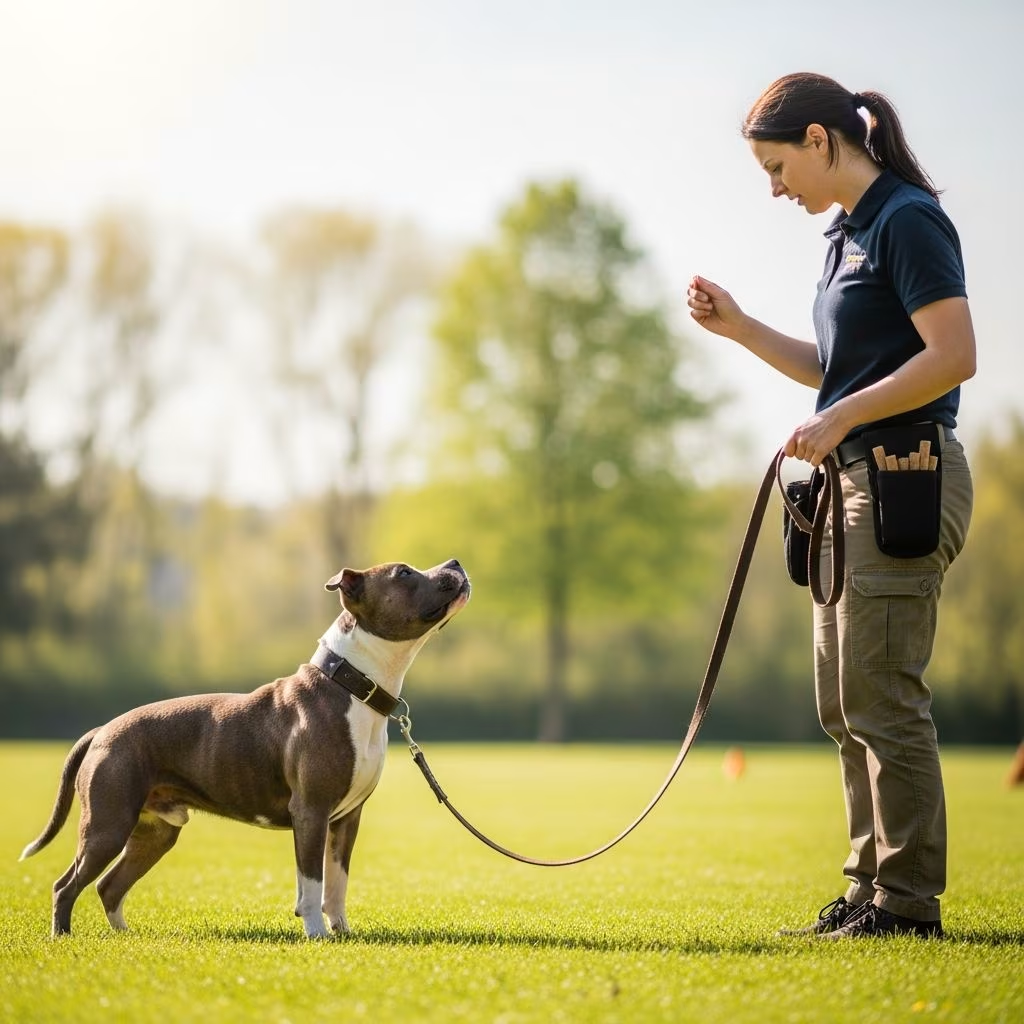
Training a dog that resists commands requires understanding their motivations and applying targeted strategies. Willful behavior often stems from natural instincts rather than defiance, and with the right approach, any dog can learn to respond reliably.
Understanding the Roots of Resistance in Dogs
Dogs exhibiting stubborn traits may do so due to breed-specific independence, unmet needs like exercise, or environmental factors. Independent breeds such as hounds or herding dogs often prioritize their instincts over owner cues, while anxiety or boredom can manifest as ignoring commands. Recognizing these causes allows owners to address underlying issues rather than labeling the dog as defiant.
- Breed tendencies: Some genetics favor self-reliance, making compliance slower.
- Energy surplus: Unexercised dogs redirect focus elsewhere.
- Fear responses: Past experiences lead to avoidance.
- Motivation gaps: Low-value rewards fail to compete with distractions.
Observing patterns helps tailor training. For instance, a dog ignoring recall outdoors might respond better at home first, building confidence gradually.
Building a Foundation with Positive Reinforcement
Positive reinforcement strengthens desired actions by pairing them with appealing outcomes, boosting a dog’s eagerness to engage. This method outperforms punishment, fostering trust and long-term habits.
Start by identifying high-value motivators: premium treats, toys, or play sessions that outshine distractions. Use a marker like a clicker or cheerful word to signal the exact moment of success, followed immediately by the reward.
| Reward Type | Best For | Example Use |
|---|---|---|
| Food | Food-motivated dogs | Tiny pieces of chicken for sits |
| Play | High-energy breeds | Tug-of-war after heel command |
| Praise/Touch | Affection seekers | Belly rubs for come command |
Consistency in timing prevents confusion; reward only correct responses to shape behavior precisely.
Establishing Daily Routines for Predictability
Dogs flourish in structured environments where expectations remain constant. A fixed routine for meals, walks, and training sessions reduces uncertainty, making compliance more natural.
Map out a sample day:
- Morning: 10-minute command review with breakfast treats.
- Midday: Short play and mental games.
- Evening: Calm recall practice before bed.
Repeat cues identically each time—’sit’ never varies to ‘park the butt’—to embed them deeply. Inconsistencies erode progress, so all household members must align.
Mastering Core Commands Through Repetition
Basic skills like sit, stay, come, and heel form the bedrock. Practice in low-distraction settings first, advancing as proficiency grows.
- Begin indoors: 5 reps per session.
- Add distance: Step back gradually.
- Incorporate distractions: Mild noises or toys.
For recall, a standout challenge, use a unique cue like ‘here’ reserved solely for this command. Pair with jackpots—extra rewards—for quick responses. Progress to long-leash walks in open areas, reeling in gently if needed until reliability hits 100%.
Leveraging High-Appeal Incentives
Not all treats motivate equally; reserve top prizes for tough scenarios. Outdoors, where squirrels beckon, deploy steak bits over kibble.
Experiment systematically:
- Test toys vs. food in various settings.
- Rotate options to sustain interest.
- Ensure rewards exceed current activity’s appeal, like a chew toy trumping a ball.
This keeps sessions dynamic, preventing habituation.
Optimizing Session Length and Frequency
Brief, frequent encounters trump marathon drills. Aim for 5-10 minutes, 3-5 times daily, to match attention spans and avoid fatigue.
End on highs: Quit after successes to build positive associations. Track progress in a journal to adjust pacing.
Incorporating Physical and Mental Workouts
Excess energy fuels resistance; channel it via exercise. Daily 30-60 minute walks, fetch, or agility drills burn steam, priming dogs for focus.
Mental puzzles like treat-dispensing toys or scent games tire brains equivalently to runs, ideal for apartment dwellers.
- Sniff walks: Let exploration lead with check-ins rewarded.
- Obstacle courses: Build at home for fun challenges.
- Training as play: Hide-and-seek for recall.
Navigating the 3Ds: Distance, Duration, Distraction
Proof commands against real-world variables using the 3Ds framework.
| D | Strategy | Progression Example (Recall) |
|---|---|---|
| Distance | Start close, extend | 3ft → 20ft → across yard |
| Duration | Hold response longer | 1sec stay → 30sec |
| Distraction | Add stimuli gradually | Quiet room → park with dogs |
Master one before advancing; backtrack if failures exceed 20%.
Techniques for Outdoor Recall Challenges
Off-leash defiance often arises from premature freedom. Employ long lines (30-50ft) for safety while practicing.
Body language matters: Crouch invitingly, avoid staring, or walk away to lure pursuit. Games like ‘puppy ping-pong’—calling between two people—accelerate learning.
Addressing Resistance Without Force
Never chase or yell; these amplify avoidance. Instead, make ignoring costly by withdrawing attention, then rewarding engagement.
If a dog fixates on scents, structure it: Brief eye contact earns sniff time, flipping distraction into reward.
Fostering Patience and Long-Term Persistence
Progress ebbs; celebrate micro-wins. Daily logs track improvements, motivating owners through plateaus.
Consult professionals for entrenched issues, ensuring humane methods.
Common Pitfalls and Fixes
- Over-repetition: Saying ‘come’ multiple times dilutes it—change cues if ignored.
- Inconsistent family rules: Align all handlers.
- Skipping basics: No advanced tricks sans foundations.
FAQs
What breeds are most stubborn?
Breeds like Huskies, Bulldogs, and Terriers often show independence, but training succeeds with any.
How long until results?
Weeks to months with daily practice; consistency accelerates change.
Is my dog truly stubborn?
Rarely—often skill gaps or unmet needs masquerade as defiance.
Can older dogs learn?
Yes, adaptability persists lifelong with positive methods.
What if rewards fail?
Upgrade value or add play; ensure needs like exercise are met first.
References
- How To Train A Stubborn Dog | An Expert’s 13 Best Strategies — Dog Dynamics. 2023. https://dogdynamics.org/training-tips/how-to-train-stubborn-dog/
- How to Train a Stubborn Dog to Come — LAY LO Pets. 2023. https://www.laylopets.com/blogs/barkives/how-to-train-a-stubborn-dog-to-come
- How to Train a Stubborn Dog — 3 Lost Dogs. 2023. https://www.3lostdogs.com/how-to-train-a-stubborn-dog/
- Do You Have A Stubborn Dog? 5 Easy Steps to Training Any Dog! — McCann Dogs. 2023. https://www.mccanndogs.com/blogs/articles/do-you-have-a-stubborn-dog-5-easy-steps-to-training-any-dog
- The Real Reason Your Dog is “Difficult” (And How to Fix It) — McCann Dogs (YouTube). 2023. https://www.youtube.com/watch?v=Zed7G_Y_Ds4
- Is Your Dog Stubborn? Probably Not! — American Kennel Club. 2024-10-15. https://www.akc.org/expert-advice/training/is-your-dog-stubborn/



