

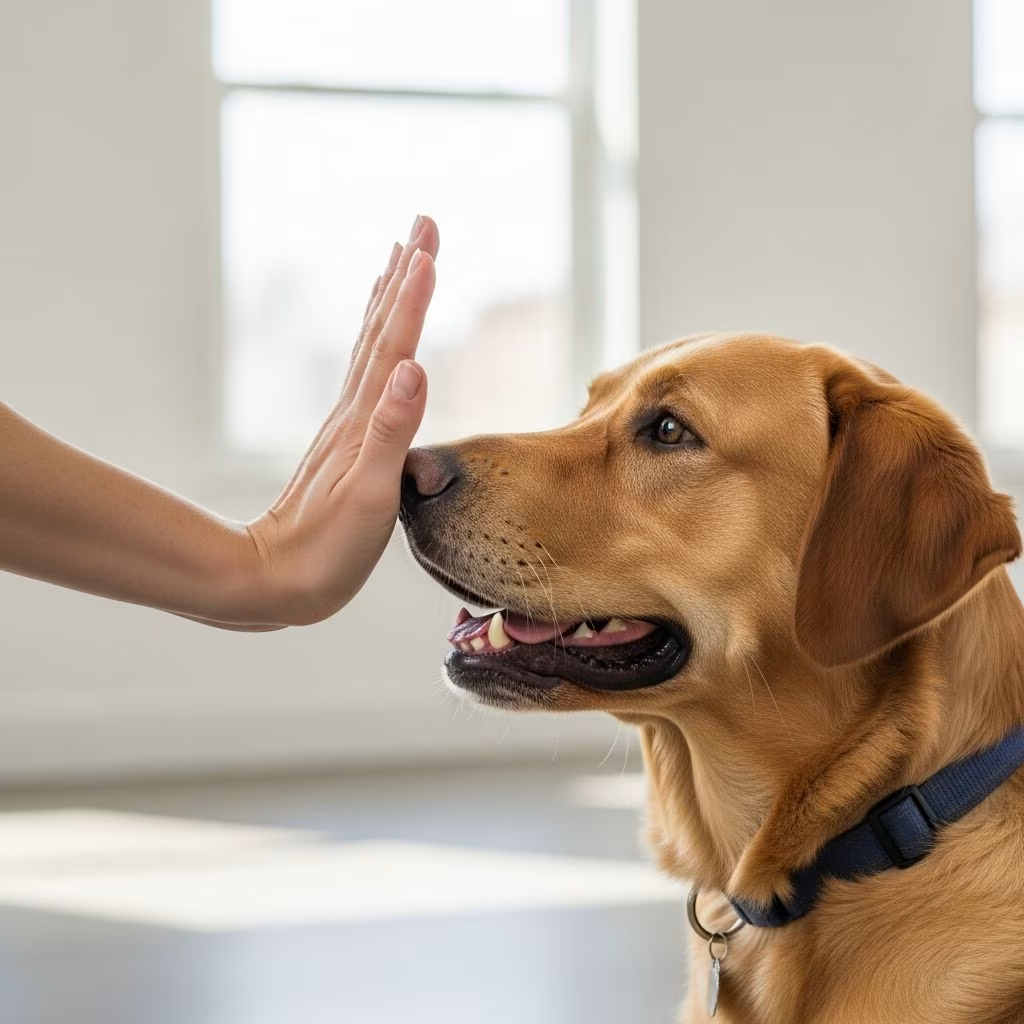
The touch command, also known as nose targeting, is a foundational skill in dog training that encourages your dog to make nose contact with your hand or a designated object. This simple yet powerful cue fosters attention, aids in recall, and serves as a building block for more advanced behaviors. By using positive reinforcement techniques, you can teach this command quickly, helping even shy or distracted dogs gain confidence and focus.
Why the Touch Command is Essential for Every Dog Owner
Teaching your dog to touch promotes mental engagement and strengthens the handler-dog bond. It redirects attention from distractions, making it invaluable in high-stimulation environments like parks or crowded streets. For reactive dogs, it provides a clear way to refocus on you rather than triggers. Additionally, touch facilitates teaching positions such as sit-to-stand transitions or heeling, as the dog’s nose naturally leads the body.
Experts emphasize its versatility: it acts as a mini-recall across rooms, clarifies spatial cues (e.g., move off the couch), and offers fearful dogs a safe greeting method with strangers by targeting a palm instead of direct petting. Organizations like the American Kennel Club (AKC) highlight its role in obedience and trick training.
Essential Tools and Preparation for Success
Before starting, gather high-value treats (e.g., small pieces of cheese or chicken), a clicker if preferred for marking, and choose a quiet, distraction-free space. Sessions should last 5-10 minutes, 2-3 times daily, to keep your dog eager. Use a calm, enthusiastic tone to build excitement. Puppies as young as 8 weeks can learn this, while adult dogs benefit from consistent practice.
- Treats: Smelly, soft options motivate sniffing.
- Clicker or Marker Word: “Yes!” or click precisely at nose contact.
- Hand Position: Palm up, fingers down to avoid confusion with stay or shake cues.
Step-by-Step Guide to Teaching Hand Touch
Follow these progressive steps to build reliability. Repeat each 5-10 times per session before advancing.
Introduce the Behavior: Sit your dog, extend your palm 1-2 inches from their nose (fingers down). Most dogs investigate naturally. Mark (click or “Yes!”) the instant their nose touches, then treat from your other hand. Praise warmly. If hesitant, rub peanut butter on your palm initially.
Add the Verbal Cue: Say “Touch!” just before presenting your hand. Mark and reward contact. Repeat until they respond proactively to the word alone.
Increase Challenge: Pull your hand slightly away, requiring a step forward. Vary height and position (e.g., above head, to the side). Reward enthusiastic touches, fade tentative ones.
Chain Repetitions: Ask for 2-3 touches in a row, withdrawing hand between each, rewarding at the end. This builds duration and reliability.
Introduce Distance: Start 2-3 feet away, cue “Touch,” present hand. Gradually increase to room-spanning recall.
| Step | Focus | Reps per Session | Tips |
|---|---|---|---|
| 1. Intro | Nose to close palm | 5-10 | Scent palm if needed |
| 2. Verbal | Cue before hand | 5-10 | Enthusiastic praise |
| 3. Challenge | Movement required | 5-8 | Vary positions |
| 4. Chain | Multiple touches | 3-5 sets | End with jackpot treat |
| 5. Distance | Feet away | 5 | Low distractions first |
Overcoming Common Training Hurdles
Dogs may paw instead of nose-touch, confuse with shake, or ignore in distractions. Solutions:
- Pawing Issue: Hold a fist target instead of open palm; mark only nose contact.
- Confusion with Other Cues: Use distinct hand signals—fingers down strictly for touch.
- Lack of Interest: Upgrade treats, shorten sessions, or shape gradually: reward looks, then approaches, then touches.
- High Distractions: Return to basics in new environments; proof with mild distractions first.
For shy dogs, pair with gentle encouragement; avoid forcing. Consistency across family members prevents mixed signals.
Expanding to Object Targeting
Once hand touch is solid (90% reliability), generalize to objects like lids or sticky notes for advanced utility.
- Hold object over palm, cue “Touch.” Dog targets object.
- Slowly separate object from hand, then place independently.
- Add distance/distraction; use for sends to mats or agility.
This transfers to rally obedience or positioning (e.g., touch low target for down-stay).
Real-World Applications and Benefits
Beyond basics, touch enhances daily life:
- Recall in Noise: Visual hand cue cuts through distractions.
- Fearful Greetings: “Say Hi!” to stranger’s palm builds safe interactions.
- Body Handling: Direct to vet table or car entry.
- Trick Foundation: Leads to heel, spin, or hold.
In obedience, it teaches pivots or stands by strategic hand placement.
Integrating Touch into Daily Routines
Practice during walks (touch for focus), mealtimes (touch before bowl), or play. Fade treats to 70/30 random schedule for fluency. Track progress: aim for off-leash reliability in varied settings within 2-4 weeks.
Frequently Asked Questions (FAQs)
Can all dogs learn touch?
Yes, adaptable for puppies, seniors, or reactive dogs with patience and adjustments.
How long until mastery?
Basic hand touch in days; advanced applications in weeks with daily practice.
Clicker vs. Verbal Marker?
Both effective; clicker offers precision for beginners.
What if my dog licks instead of touches?
Mark only firm nose contact; withhold rewards for licks.
Is touch useful for service dogs?
Absolutely—builds targeting for tasks like light switches.
Advanced Variations for Expert Trainers
Progress to dual targets, rapid-fire touches, or integration with agility. Use for emergency recalls by pairing with high-value jackpots. Video sessions for self-review.
References
- Dog Training: How to Teach Touch to a Dog — Purina. 2023. https://www.purina.com/articles/dog/behavior/training/how-to-teach-touch-command-dog
- How To Teach a Dog the “Touch” Command — Rover.com. 2023. https://www.rover.com/blog/one-simple-cue-will-make-life-dog-lot-easier/
- Touch (Hand Targeting) — Positively.com. 2023. https://positively.com/dog-training/article/canine-life-skills-touch-hand-targeting
- How to Teach Your Dog to Nose Target or ‘Touch’ — American Kennel Club (AKC). 2024-01-15. https://www.akc.org/expert-advice/training/teach-dog-nose-target-touch/
- Go Touch! Teaching Your Dog a Target Send Behavior — Golden Paws Dog Training. 2023. https://goldenpawsdogtraining.com/go-teaching-a-send-to-a-target/



