

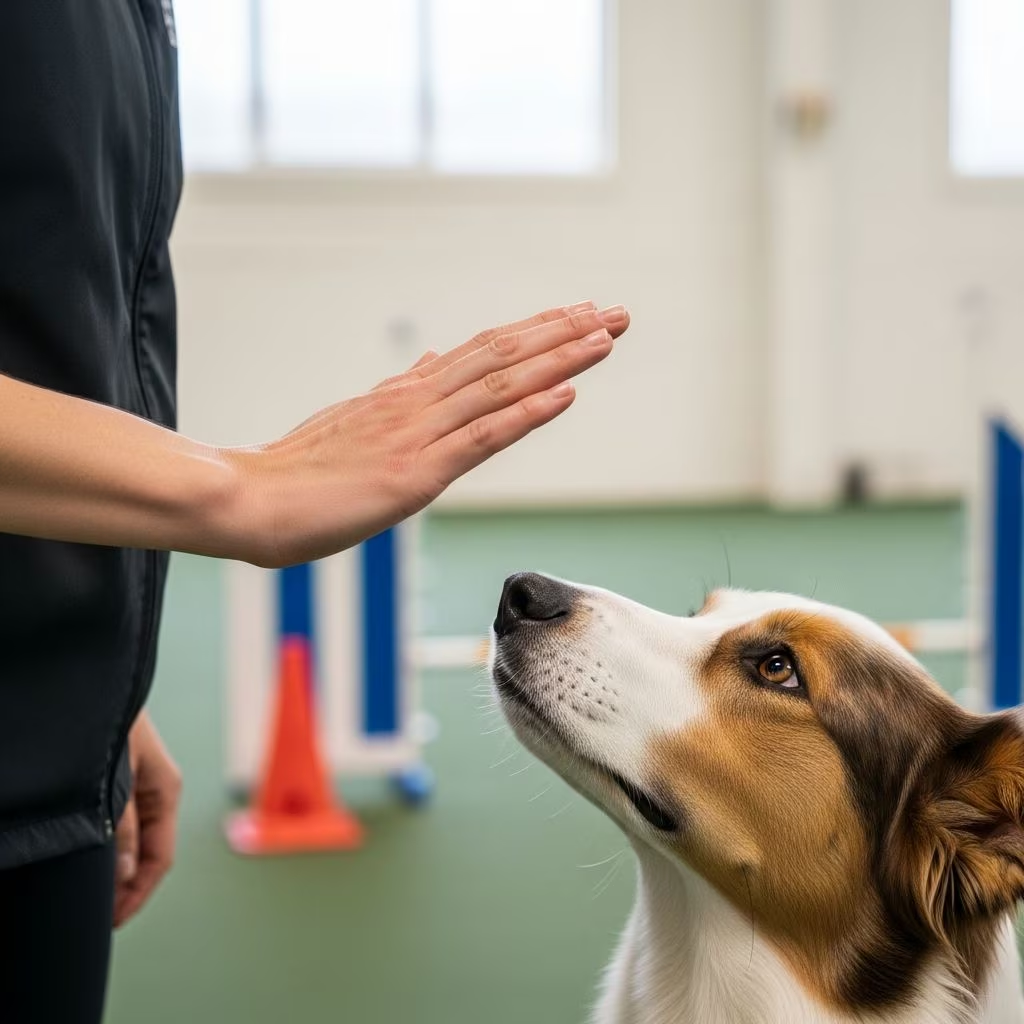
The touch command, also known as nose targeting, is a foundational skill in dog training that encourages your dog to make deliberate contact with their nose on your hand or a specified target. This simple yet powerful cue enhances focus, improves recall, and serves as a gateway to more complex behaviors. By using positive reinforcement techniques, you can teach this command quickly, fostering a stronger bond with your canine companion.
Why the Touch Command Matters in Dog Training
At its core, the touch command directs your dog’s attention to you, cutting through distractions and building impulse control. It leverages a dog’s natural curiosity about scents and movement, turning it into a reliable response. Trainers value it for its versatility: it underpins obedience exercises like heeling and emergency recalls while enabling creative tricks such as spinning or operating simple mechanisms.
Research from animal behavior experts highlights how such targeting skills improve learning efficiency. Dogs trained with clear, physical cues like touch show faster acquisition of new commands compared to verbal-only methods. This is because the nose leads the body, naturally guiding posture changes and movement.
- Boosts attention: Redirects focus in busy environments.
- Enhances safety: Useful for calling your dog away from hazards.
- Foundation for agility: Helps with obstacle navigation and precise positioning.
- Fun for tricks: Opens doors to engaging activities that keep dogs mentally stimulated.
Essential Tools and Preparation
Before starting, gather high-value treats—small pieces of soft, smelly food like cheese or chicken work best to motivate eager responses. Choose a quiet, familiar space free from interruptions to build confidence. Optional tools include a clicker for precise marking of correct actions, though a enthusiastic “yes!” serves the same purpose.
Position your dog in a sit or stand, ensuring they are calm and engaged. Sessions should last 5-10 minutes, 3-5 times daily, to maintain enthusiasm without fatigue. Consistency in your hand signal—a flat palm with fingers pointing downward—is crucial to avoid confusion with other cues like stay.
Step-by-Step Guide to Teaching Touch
Begin with close proximity and gradually increase challenges. Two primary methods exist: capturing natural behavior and luring with treats. Capturing suits dogs naturally inclined to investigate hands, while luring helps shy or paw-offering dogs.
Capturing the Natural Touch
- Present your flat palm at nose level, about 1-2 inches away. Wait patiently for your dog to sniff or touch it.
- The instant their nose makes contact, mark with a click or “yes!” and deliver a treat.
- Withdraw your hand, pause 2-3 seconds, then repeat. Aim for 80% success rate before advancing.
- Introduce the verbal cue “Touch!” just before presenting your hand. Mark and reward the contact.
Practice 10-15 repetitions per session. Once reliable, vary hand height slightly and switch hands to promote generalization.
Luring for Reluctant Learners
If no natural interest appears, use a treat lure.
| Step | Action | Tips |
|---|---|---|
| 1 | Tuck a treat between fingers, present palm at nose level. | Dog’s nose will follow the scent to touch. |
| 2 | Mark contact, feed the treat, then pause. | Keep palm steady; avoid pulling away early. |
| 3 | Say “Touch!” with lure, then try empty hand. | Phase out lure within 3-5 successes. |
| 4 | Repeat with verbal cue only, rewarding from opposite hand. | If hesitation, briefly revert to lure. |
Building Reliability: Distance and Distractions
With the basics solid, fade proximity. Start by saying “Touch!” from 6 inches away, presenting palm midway. Gradually extend to 3-5 feet, using a happy tone to encourage movement. Introduce mild distractions like toys or family members, rewarding only enthusiastic nose bumps.
Ignore half-hearted attempts to shape stronger responses. Train across environments—living room to yard to park—to ensure the cue transfers. Alternate hand usage and positions (e.g., palm at shoulder height) for robustness.
Advanced Applications of Nose Targeting
Transferring to Objects
Once hand targeting is fluent, generalize to items like a sticky note or plastic lid. Cover your palm with the object, cue “Touch!”—your dog will nose the new target. Scent it with treat residue if needed. Fade the hand by holding the object alone, rewarding precise contact.
- Light switch flips
- Door closing
- Bell ringing for potty signals
Obedience Enhancements
Use touch for position shifts: from sit to stand by targeting above; down-stay by placing palm low under furniture. For heeling, present palm at side while walking, guiding smooth following.
Trick Innovations
Spin: Circle palm parallel to ground. Over obstacles: Target on the far side. Combine with other cues for chains like “touch, spin, sit.” These build problem-solving and joy in training.
Troubleshooting Common Challenges
Not all dogs learn at the same pace. If pawing occurs, withhold rewards until nose contact; capture ignores paws naturally. Shy dogs benefit from lures or smelly palms. Over-excited dogs may bump too hard—reward gentler touches to refine.
For non-responsive dogs, shape incrementally: reward nose turns first, then approaches, building to full contact. Always end on success to preserve motivation.
Frequently Asked Questions
Can puppies learn touch?
Yes, start as young as 8 weeks. Short sessions match short attention spans.
How long until mastery?
Most dogs grasp basics in 1-2 weeks with daily practice; fluency takes 4-6 weeks.
Does breed matter?
No, but scent-driven breeds like hounds may excel faster.
Clicker necessary?
Not required; verbal markers work well for beginners.
Benefits for reactive dogs?
Absolutely—redirects focus, reduces leash reactivity over time.
Long-Term Maintenance and Fun
Incorporate touch into daily routines: before meals, walks, or play. Randomize rewards (variable schedule) to sustain reliability. Track progress in a journal to celebrate milestones. This command not only improves behavior but enriches your dog’s life through mental exercise.
Explore competitions like rally obedience where targeting shines. Share videos with training communities for feedback and inspiration.
References
- How to Teach Your Dog to Nose Target or ‘Touch’ — American Kennel Club (AKC). 2023-05-15. https://www.akc.org/expert-advice/training/teach-dog-nose-target-touch/
- Touch (Hand Targeting) — Positively.com (Victoria Stilwell). 2022-11-08. https://positively.com/dog-training/article/canine-life-skills-touch-hand-targeting
- How to Train Your Dog ‘Touch’ or Nose Targeting — Happy Hounds Dog Training. 2024-02-20. https://happyhoundsdogtraining.ca/how-to-train-your-dog-touch-or-nose-targeting/
- Dog Training: How to Teach Touch to a Dog — Purina US. 2023-09-12. https://www.purina.com/articles/dog/behavior/training/how-to-teach-touch-command-dog
- Teach your dog a nose “touch” — Battersea Dogs & Cats Home. 2024-01-10. https://www.battersea.org.uk/pet-advice/dog-advice/teach-your-dog-nose-touch



