

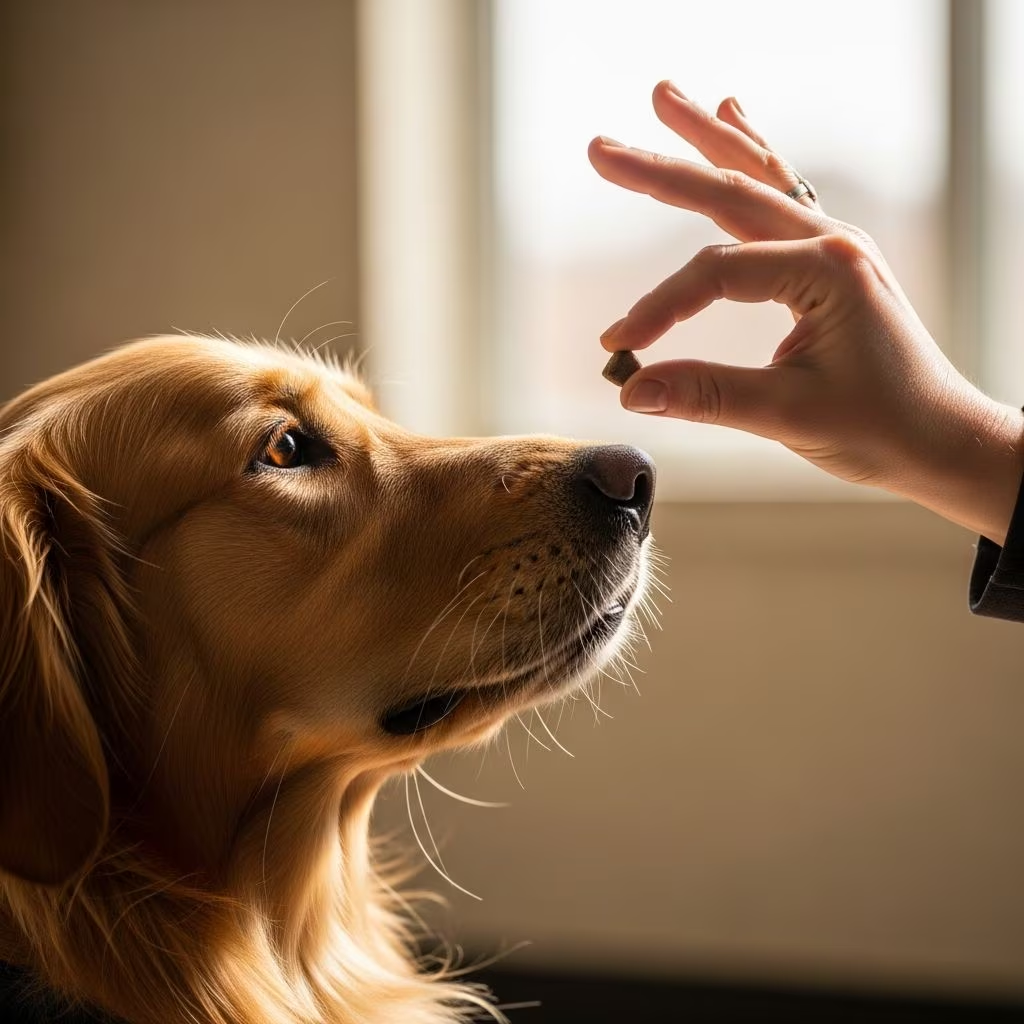
Effective dog training hinges on more than just commands and rewards—it’s about reading your dog’s signals and knowing precisely when to pause or end a session. This skill prevents burnout, fosters trust, and accelerates progress by aligning training with your dog’s mental and emotional state.
Why Timing Matters More Than Repetition
In dog training, endless repetition without breaks can lead to confusion or resistance. Dogs thrive on short, focused sessions where success builds confidence. Research from animal behavior experts emphasizes that sessions capped at 10-15 minutes yield better retention than longer ones, as attention spans wane quickly.
Consider a puppy learning ‘sit’: initial successes reinforce the behavior, but pushing beyond focus leads to errors. Timing your stops ensures each session ends on a high note, making your dog eager for the next one.
Spotting the Signs Your Dog Needs a Break
Dogs communicate discomfort or overload through body language. Key indicators include:
- Yawning or lip licking: Stress signals, not tiredness.
- Avoiding eye contact: Disengagement from the task.
- Pawing at you or the ground: Frustration or plea for attention shift.
- Hyperactivity or zooming: Overarousal masking confusion.
- Refusal to respond: Mental fatigue setting in.
Observing these early allows you to intervene before bad habits form. For instance, during a ‘down-stay’ exercise, if your dog starts sniffing excessively, it’s time to reset rather than correct harshly.
Implementing Time-Outs Effectively
Time-outs remove the dog from rewarding stimuli calmly and immediately when unwanted behavior occurs. Escort your dog to a quiet spot for 30 seconds without anger or words—let the action teach the lesson.
Consistency is vital: apply it every time the behavior starts. This method extinguishes issues like jumping by denying attention, promoting self-control over time.
| Scenario | Time-Out Trigger | Expected Outcome |
|---|---|---|
| Jumping on guests | Moment paws leave ground | Dog learns jumping ends fun |
| Chewing furniture | Contact with item | Redirects to appropriate toys |
| Barking for attention | First bark | Quiets for release |
Building an ‘Off Switch’ for Calm Behavior
An ‘off switch’ trains dogs to transition from high energy to relaxation on cue. Start in low-distraction areas: command ‘settle,’ guide to a down position, and reward calm. Gradually extend durations, fading treats as the behavior solidifies.
This is crucial for high-drive breeds. Structure daily routines with clear start/stop signals, turning play into purposeful mental work that tires dogs faster without exhaustion.
Short Sessions: The Gold Standard for Progress
Limit sessions to 5-20 minutes multiple times daily. This respects canine attention limits and prevents aversion to training. Begin in quiet spaces, proofing in distractions only after mastery.
Positive reinforcement shines here: reward small wins, like head lowering before full ‘down,’ building incrementally. If progress stalls, simplify—never escalate frustration.
Teaching Precision Stops for Safety and Control
In herding or obedience, a rock-solid ‘stop’ command saves situations. Use a long line (10-15 feet) in open areas: call ‘stop,’ apply gentle pressure if needed, praise compliance. Allow sits, stands, or downs initially for flexibility.
Repetition with patience refines it. Balance with varied drills to avoid fixation, keeping sessions brief for retention.
Resetting Silliness with Leash Techniques
When dogs veer into unwanted antics, use leash control: circle counterclockwise to your side, cue sit, then release tension. Wait for calm choice—repeat as needed without emotion.
This enforces boundaries calmly, teaching impulse control. Dogs test limits briefly before complying, strengthening handler leadership.
Common Mistakes and How to Avoid Them
Avoid these pitfalls for smoother training:
- Pushing past frustration: End sessions proactively.
- Inconsistent cues: Use one word/phrase always.
- High-distraction starts: Build from basics.
- Punishment over positives: Fear erodes trust.
Track sessions in a journal: note duration, successes, and stop reasons to refine your approach.
Advanced Strategies for Long-Term Success
Once basics stick, layer challenges: add movement to stays or multi-command chains. Monitor for regression—backtrack if needed, always prioritizing calm states.
Incorporate relaxation protocols: pair cues with massage or chews, associating settle with positivity. For reactive dogs, avoidance training builds proactive control.
FAQs on Dog Training Timing
Q: How long should puppy sessions last?
A: 5-10 minutes, 3-5 times daily for best focus.
Q: What if my dog ignores time-outs?
A: Ensure immediacy and consistency; combine with rewards for compliance.
Q: Can overtraining cause aggression?
A: Yes, frustration from overload may lead to shutdowns or reactivity—watch stress signs.
Q: How to end on a high note?
A: Stop after 2-3 successes, before errors accumulate.
Q: Is this suitable for all breeds?
A: Yes, adapt intensity to drive level; high-energy dogs need more structure.
Real-World Applications and Case Studies
Take Max, a Border Collie herder: erratic stops endangered stock. Long-line drills with instant praise fixed it in weeks, emphasizing balanced, short reps.
Or Luna, a shelter rescue with jumping issues: time-outs every incidence dropped it 90% in a month, restoring calm greetings.
These underscore timing’s transformative power across contexts.
References
- Using The Time-out in Dog Training — Manners For Mutts. 2016-06-21. https://mannersformutts.com/blog/2016/06/21/using-the-time-out-in-dog-training/
- Teaching the Stop Command — American Kennel Club. N/A. https://www.akc.org/sports/herding/articles/teaching-the-stop-command/
- The Art of Dog Training: A Calm State of Mind — 4Knines. N/A. https://4knines.com/blogs/4knines-blog-home-page/the-art-of-dog-training-a-calm-state-of-mind
- Dog Behavior and Training: Teaching Settle and Calm — VCA Animal Hospitals. N/A. https://vcahospitals.com/know-your-pet/dog-behavior-and-training—teaching-calm—soft-and-handling-exercises
- Dog Training Tips: Do’s and Don’ts — Best Friends Animal Society. N/A. https://bestfriends.org/pet-care-resources/dog-training-tips-dos-and-donts
- The Importance of Relaxation – Training Your Dog’s ‘Off’ Switch — Grayhouse Dog Training. N/A. https://grayhousedogtraining.com/the-importance-of-turning-off/
- When Should You STOP Your Dog Training Session? — YouTube (Best Friends Animal Society). N/A. https://www.youtube.com/shorts/UgWYZM5NWQI



