

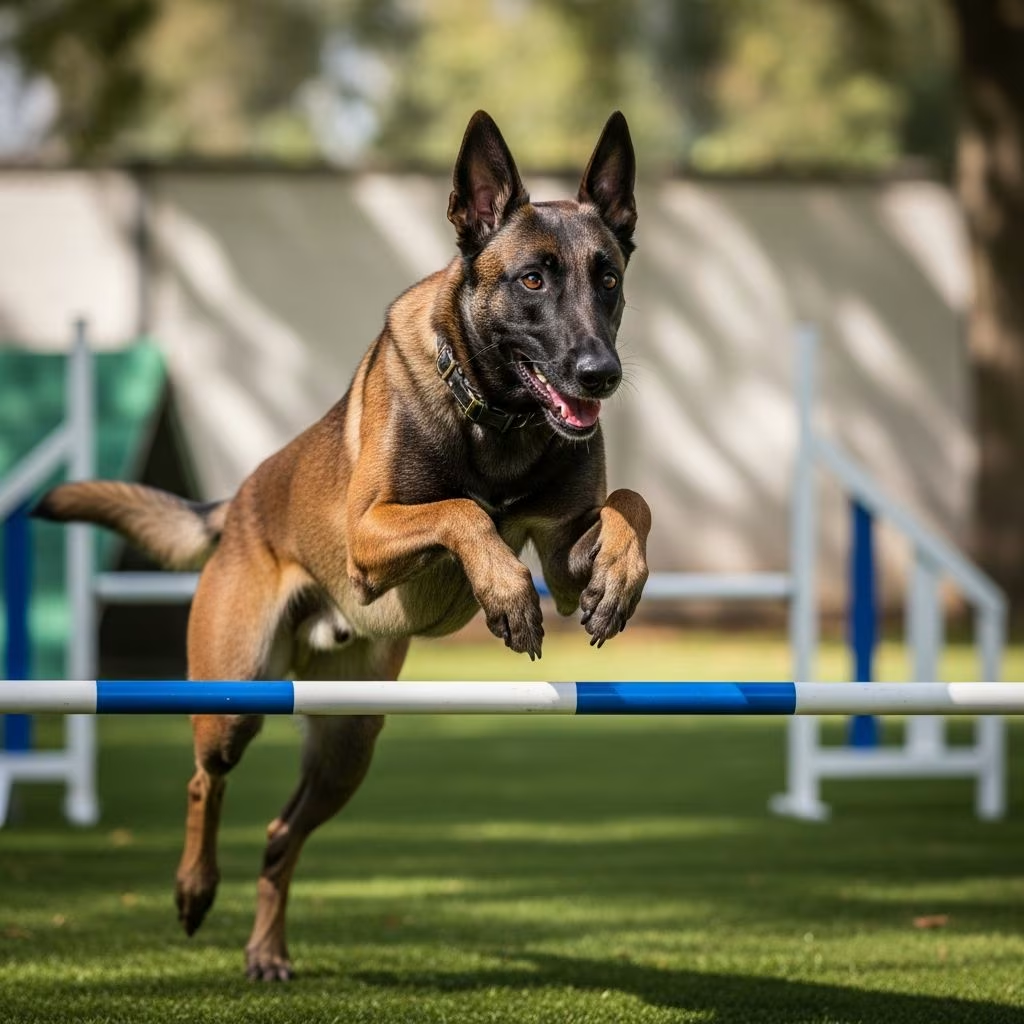
Dogs labeled as “stubborn” often simply lack proper motivation or clear communication from their owners. This comprehensive guide explores the root causes of resistant behaviors and provides actionable, positive reinforcement strategies to foster cooperation and strengthen your bond.
Understanding Resistance in Dogs
What owners perceive as defiance is rarely intentional rebellion. Dogs operate on a simple antecedent-behavior-consequence model: they repeat actions that yield rewards and ignore those that don’t. If a cue like “come” leads to the end of fun or a leash tug, the dog learns to tune it out.
Breeds with high independence, such as hounds or terriers, may seem more willful due to selective breeding for self-reliance. However, any dog can appear uncooperative without structured training that accounts for their drives—food, play, or attention.
Reframing the ‘Stubborn’ Label
Calling a dog stubborn shifts blame from training gaps to personality flaws, stalling progress. Instead, assess if the dog understands the cue and finds value in complying. Signs of true issues include ignoring repeated commands or wandering off, often fixed by rebuilding associations.
- Motivation mismatch: Home treats fail outdoors where squirrels trump kibble.
- Unclear cues: Overused words lose meaning through habituation.
- Premature freedom: Off-leash before reliability invites ignoring.
Positive reinforcement experts emphasize that dogs are problem-solvers; they choose options with the best payoff. Train to make obedience the highest-value choice.
Building a Strong Foundation Indoors
Start training in low-distraction home settings to stack successes. Short, frequent sessions—1-2 minutes—keep engagement high and prevent fatigue.
- Select a fresh cue: Choose a new word like “here” reserved solely for recall to avoid negative history.
- Pair with visuals: Use lure-reward: hold a treat at nose level, guide to you, then reward. Add verbal cue once motion happens.
- High-value rewards: Use meat, cheese, or liver when hungry, pre-walk.
Practice 10-20 reps daily, always rewarding. End sessions on wins to build positive momentum.
Recall Mastery: Step-by-Step Protocol
Reliable recall is a marathon requiring patience. Progress through environments matching your dog’s pace.
| Phase | Environment | Key Tactics | Success Metric |
|---|---|---|---|
| 1: Foundation | Home, quiet | New cue + jackpot treats; 100% success calls only | Comes from 10ft reliably |
| 2: Momentum | Other rooms | Responds amid mild play | |
| 3: Proofing | Leashed yard | 3Ds: distance, duration, distraction; calm body language | Ignores low distractions |
| 4: Real World | Park, long line | High-value trades; redirect focus | Recalls past dogs/squirrels |
Incorporate games: Call from hiding, reward with tug or chase. This leverages play drives, reducing stress and boosting retention.
Navigating the 3Ds of Proofing
Generalize skills using Duration (hold stay), Distance (farther calls), and Distraction (noisy areas). Failures here indicate rushing; regress one level.
Outdoor tips:
- Bend to dog’s level, avoid staring—use inviting posture.
- Walk away to trigger chase instinct.
- Long line for safety: Gentle tugs redirect without yanking.
Always offer superior rewards. If chasing a ball, counter with a bully stick. Unpredictability keeps dogs eager.
Common Pitfalls and Fixes
Avoid these errors that undermine progress:
- Repeating cues: Weakens command; pause, then assist or reset.
- Post-fun calls: Train before play ends, not after.
- Inconsistency: Mixed signals teach selective listening.
- Frustration: Stay calm; dogs mirror tension.
If cue is poisoned, switch to a new one and reteach from scratch.
Boosting Motivation for Tough Cases
Food-motivated? Escalate treats by value and surprise. Play-driven? Turn commands into fetch relays.
For strong wills, become the ultimate source of fun. Pre-training hunger amplifies drive; train before meals or walks.
“Dogs don’t refuse out of spite—they choose better options. Provide them, and choices align.”
Breed-Specific Considerations
While universal, tailor to traits:
| Breed Group | Traits | Adaptations |
|---|---|---|
| Herders | High energy, bossy | Channel into jobs like agility drills |
| Hounds | Scent-focused | Use scent games in rewards |
| Terriers | Independent hunters | Short, high-reward bursts |
Focus on life-relevant skills: solid recall trumps fancy tricks.
Advanced Techniques for Reliability
Once basics stick, layer collars (vibrate for attention, not punishment) or clicker for precision.
Maintain with random rewards; fade treats gradually. Practice in novel spots weekly to prevent regression.
FAQs
What if my dog ignores recall outdoors?
Go back to leashed practice with 3Ds. Ensure rewards outcompete distractions.
How long until results?
Weeks to months with daily consistency. Track progress per phase.
Is force ever needed?
No—positive methods build willing compliance without fear.
My dog was perfect before; what changed?
Age, routine shifts, or weakened cues. Retrain systematically.
Best tools for stubborn pups?
Long lines, high-value treats, clickers. Avoid prongs.
Long-Term Success Strategies
Sustain gains by integrating training into daily life: recall before meals, walks, play. Consistency across family members prevents confusion.
Monitor for fear or pain mimicking stubbornness—consult vets. Celebrate milestones to reinforce human-dog teamwork.
With patience, any dog responds. Shift from frustration to fun, and watch cooperation emerge.
References
- How to Train a Stubborn Dog to Come — LAY LO Pets. 2023. https://www.laylopets.com/blogs/barkives/how-to-train-a-stubborn-dog-to-come
- Is Your Dog Stubborn or Just Unmotivated? — Wag and Train. 2022. https://www.wagandtrain.com/is-your-dog-stubborn-or-just-unmotivated
- How To Train A Stubborn Dog — So Much PETential. 2023. https://somuchpetential.com/how-to-train-a-stubborn-dog/
- The Real Reason Your Dog is “Difficult” (And How to Fix It) — McCann Dogs (YouTube). 2022-10-15. https://www.youtube.com/watch?v=Zed7G_Y_Ds4
- Do You Have A Stubborn Dog? 5 Easy Steps to Training Any Dog — McCann Dogs. 2023. https://www.mccanndogs.com/blogs/articles/do-you-have-a-stubborn-dog-5-easy-steps-to-training-any-dog
- Teaching A Stubborn Dog To Come Guaranteed — Standing Stone Kennels (YouTube). 2021. https://www.youtube.com/watch?v=2J1DeXKqMW0
- Is Your Dog Stubborn? Probably Not! — American Kennel Club. 2024-01-10. https://www.akc.org/expert-advice/training/is-your-dog-stubborn/



