

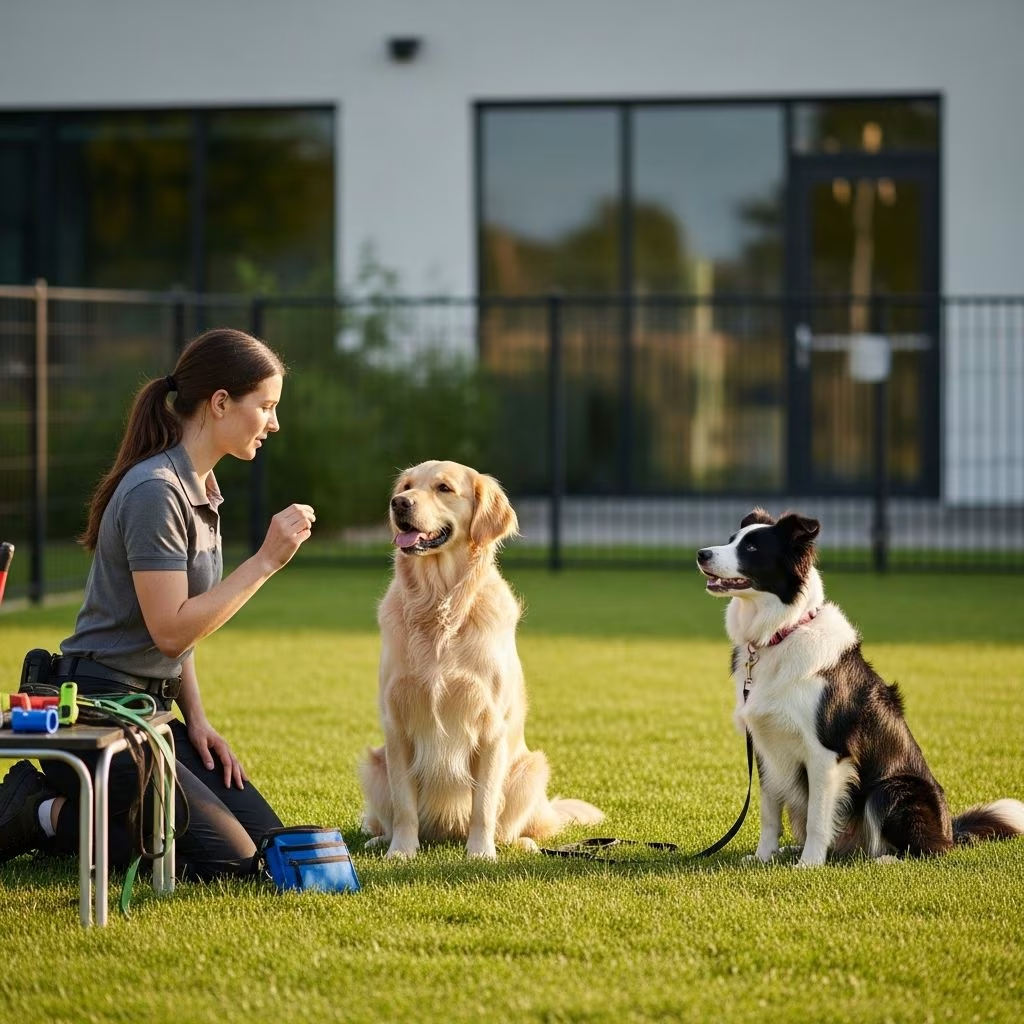
Teaching dogs to exchange items willingly transforms potential conflicts into cooperative moments. This skill, often called “trade-up” or simply “trade,” encourages dogs to release low-value objects for higher-value rewards, reducing risks associated with resource guarding and making everyday life smoother for both pet and owner.
Why Trading Matters in Dog Ownership
Resource guarding occurs when dogs perceive threats to their possessions, leading to behaviors like growling, snapping, or biting. Trading builds positive associations, showing dogs that giving up an item leads to something better. This approach outperforms commands like “leave it” because it provides a clear action rather than mere restraint.
Benefits extend beyond safety: it prevents “stealing” games where dogs grab valuables for attention, promotes polite play during fetch, and strengthens the owner-dog bond through consistent rewards. Early training yields lifelong compliance, especially for puppies or newly adopted dogs.
Understanding Your Dog’s Value Hierarchy
Dogs rank items and treats by appeal. Low-value items might include forgotten toys or household objects like books; high-value ones are favorite chew toys or meat treats. Assess this hierarchy to pair appropriately—trading a low-value sock for chicken ensures success without frustration.
| Value Level | Examples | Purpose in Training |
|---|---|---|
| Low | Plain toy, book, sock | Start here for confidence building |
| Medium | Standard toy, kibble | Bridge to more challenging trades |
| High | Chew bone, liver treats | Test and reinforce advanced skills |
Use this table to plan sessions. Always return the original item after a successful trade (except forbidden objects) to maintain trust.
Preparation: Setting Up for Success
Gather supplies: low-value items, high-value treats (e.g., meat over kibble), a leash or tether for safety, and a quiet space. Evaluate guarding severity—if your dog freezes, growls, or has bitten, consult a force-free trainer immediately.
- Safety first: Tether to furniture if needed, keeping distance from potential guarding signs.
- Treat readiness: Have plenty on hand; start with handfuls for enthusiasm.
- Mindset: Sessions should be short (5-10 minutes), positive, and end on success.
Step-by-Step Training Guide
Progress gradually, repeating steps until reliable before advancing. Use positive reinforcement—no force or punishment.
Phase 1: Build Positive Associations
Tether dog if necessary. Place low-value item in reach. Offer treats while casually removing the item. Repeat, creating a treat trail away if they show interest in your action. Goal: dog ignores item for treats.
Phase 2: Simultaneous Exchange
Approach with treats in one hand, remove item with the other simultaneously. Repeat until dog anticipates your approach excitedly and releases voluntarily.
Phase 3: Delayed Reward
Remove item first, wait 2-3 seconds, then treat. If hesitation, revert to Phase 2. Success looks like eager scanning for treats upon approach.
Phase 4: Introduce the Cue
Say “Trade,” “Give,” or “Swap” just before they release. Mark with a clicker or “yes,” then reward. Return item post-trade. Practice with low-value only initially.
Phase 5: Escalate Value and Real-Life Application
Introduce medium-value items, then high-value. For off-limits grabs, distract with treats from afar, remove item safely, then trade. Never return dangerous objects.
Incorporate games: During fetch, cue trade for another toy. This prevents keep-away antics.
Common Challenges and Fixes
Training hitches are normal; troubleshoot patiently.
| Challenge | Solution |
|---|---|
| Dog runs off with item | Tether or step on leash; use even lower-value start. |
| Refuses to drop | Upgrade treats (e.g., cheese); ensure value gap. |
| Guarding signs appear | Stop, consult professional trainer. |
| Over-excitement | Shorten sessions, add calm-settling cues. |
Consistency across family members prevents confusion. Children should never approach a dog with items—teach supervision rules.
Advanced Techniques: From Basics to Mastery
Once solid, generalize: Practice in varied locations, with distractions. Teach “Walk Away” by luring treats leading from the item, rewarding distance. Concept training enhances this—train broad ideas like “better things come” for flexible responses.
For fetch enthusiasts, trade mid-game builds impulse control. Multi-dog homes benefit from paired trades, reducing toy rivalries.
Real-World Scenarios and Prevention
Prevent issues by management: Limit access to valuables until trained. If dog grabs socks, cue trade calmly—no chase, which reinforces stealing.
- Household hazards: Trade chemicals or cords safely.
- Mealtime: Pair approach with treats to counter food guarding.
- Playtime: Rotate toys via trades for fairness.
Long-term, dogs offer items proactively, viewing humans as trade partners.
Integrating with Other Training
Combine with “drop it”: Use trade after initial release cue. Positive reinforcement chains (sit-stay-trade) build comprehensive obedience. Track progress in a journal for motivation.
FAQs
What if my dog is aggressive with items?
Cease training; seek certified force-free professional. Management (no unsupervised access) until resolved.
How often should I practice?
3-5 sessions daily, 5 minutes each. Daily consistency trumps marathon sessions.
Can puppies learn this?
Yes, start at 8-12 weeks. Builds lifelong habits.
What treats work best?
High-value: boiled chicken, hot dogs, freeze-dried liver. Avoid overfeeding—use portion-controlled.
Does this fix all guarding?
No, severe cases need vet behaviorist check for medical causes.
Long-Term Maintenance
Randomize trades monthly. Fade treats gradually, using praise/toys. Re-test high-value yearly. Celebrate milestones—your dog’s trust is the true reward.
References
- How to Teach a Dog to Trade — Best Friends Animal Society. Accessed 2026. https://bestfriends.org/pet-care-resources/how-teach-dog-trade
- How to Teach Your Dog to Trade — Whole Dog Journal. Accessed 2026. https://www.whole-dog-journal.com/training/how-to-teach-your-dog-to-trade/
- Teach Your Dog to Trade Items With You — American Kennel Club. Accessed 2026. https://www.akc.org/expert-advice/training/teach-dog-to-trade-items-with-you/
- How to trade with your dog! – Training Tip Tuesday — Santa Fe Animal Shelter (YouTube). Accessed 2026. https://www.youtube.com/watch?v=K3Uon9RGlR0
- Trade – Teach Your Dog to Give Up a Prized Possession — Cold Nose College (YouTube). Accessed 2026. https://www.youtube.com/watch?v=ZlNKM68Gw-I



