

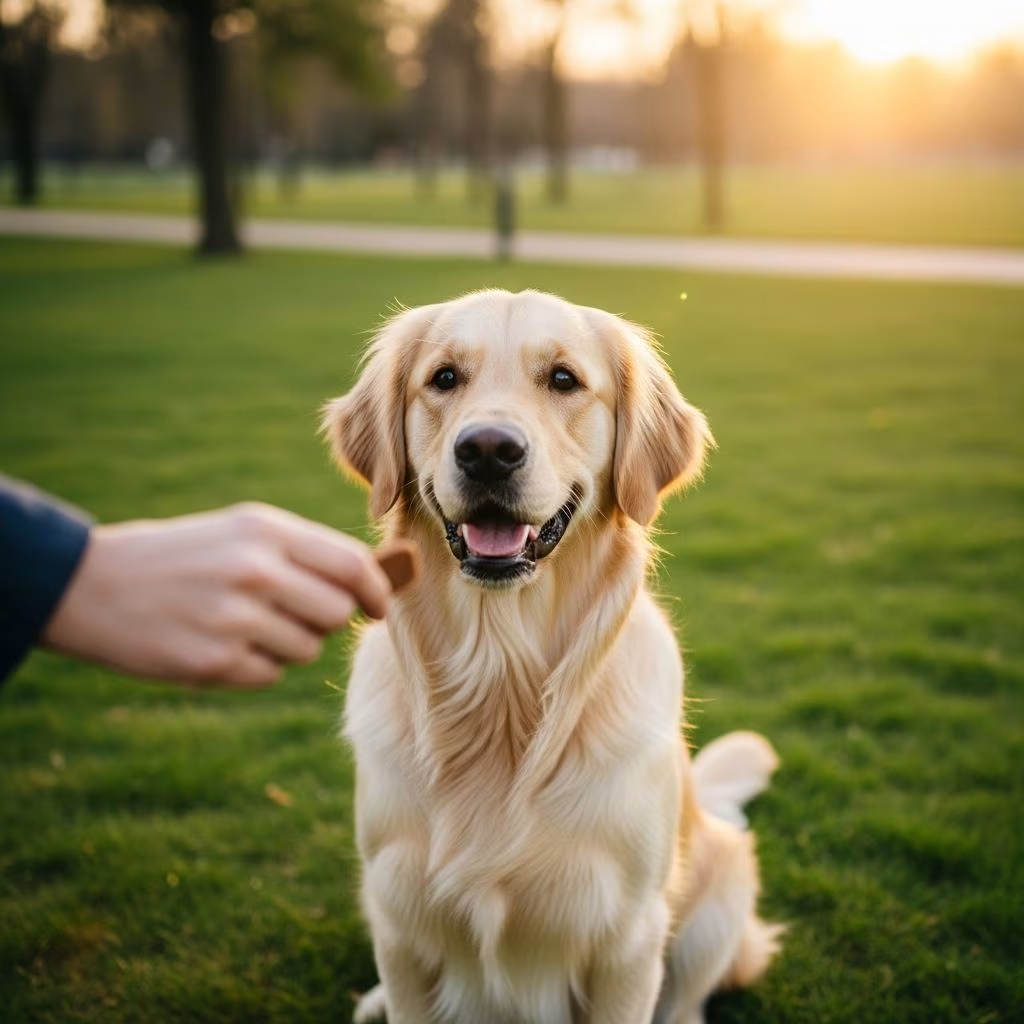
The sit command stands as one of the foundational skills in dog training, offering numerous benefits for both pet and owner. It promotes impulse control, enhances safety during walks or interactions, and serves as a gateway to more complex behaviors. By consistently practicing this command, dogs learn to pause and focus, reducing unwanted jumping or bolting. This guide provides a fresh approach to teaching sit, drawing from established positive reinforcement principles to ensure success across various breeds and ages.
Why the Sit Command Matters in Canine Obedience
Teaching a dog to sit goes beyond a simple trick; it establishes clear communication and reinforces the human-canine relationship. In everyday scenarios, such as greeting guests or waiting at doors, a reliable sit prevents chaos and fosters politeness. Experts emphasize that early mastery of sit builds confidence in both trainer and dog, paving the way for commands like stay or down.
From a behavioral standpoint, sit encourages self-control, which is crucial for high-energy breeds or excitable puppies. It also minimizes risks, like dashing into traffic, by conditioning the dog to respond to cues under distraction. Long-term, dogs that know sit well often exhibit fewer behavioral issues, as the command becomes a default ‘please’ behavior before receiving rewards like toys or attention.
Essential Tools and Environment Setup
Before starting, gather high-value treats—small, soft pieces of chicken, cheese, or commercial training rewards that your dog finds irresistible. Opt for a quiet, distraction-free space like a living room or backyard to maximize focus. Sessions should last 10-20 minutes, ideally when your dog is hungry but not overly tired or excited.
- Treats: Pea-sized, flavorful morsels for quick delivery.
- Clicker (optional): Marks the exact moment of correct behavior for faster learning.
- Leash: Useful for added control in early stages.
- Timer: Keeps sessions short and positive.
Choose times like before meals when motivation peaks. Consistency in location and routine accelerates progress, as dogs thrive on predictability.
Core Techniques: Lure and Reward Method
The most accessible approach uses food luring to guide the dog into position naturally. This method leverages a dog’s instinct to follow scents, making it intuitive and force-free.
- Capture Attention: Stand with your dog, palm up, holding a treat at nose level. Let them sniff without releasing it yet.
- Guide the Motion: Slowly arc the treat upward and slightly back over their head, about 3-6 inches high. Their nose follows, tilting the head up and tucking the rear down.
- Mark and Reward: The instant hindquarters hit the ground, say “Yes!” or click, then deliver the treat while praising enthusiastically (e.g., “Good sit!”).
- Release and Repeat: Use an “Okay” or toss a treat away to reset. Aim for 10-15 reps per session.
Practice daily, gradually fading the treat by using an empty hand for the lure and rewarding from the opposite side. This transitions to a hand signal—a swift upward palm motion.
Adding Verbal and Visual Cues
Once luring yields consistent sits (after 3-5 sessions), introduce the verbal cue. Say “Sit” just before the hand motion, rewarding only on cue. Over time, phase out the hand signal for verbal-only response. For hearing-impaired dogs, prioritize visual cues like a flat palm rising to eye level.
Pro Tip: Pair cues with real-life rewards. Ask for sit before meals, leashing, or play to generalize the behavior across contexts.
Adapting for Puppies, Adults, and Senior Dogs
| Age Group | Key Adjustments | Session Tips |
|---|---|---|
| Puppies (8-16 weeks) | Short sessions (5-10 mins); high enthusiasm. | Use puppy-specific soft treats; frequent breaks to prevent overwhelm. |
| Adults | Incorporate distractions gradually; longer holds. | Build duration with stay integration; vary treat value. |
| Seniors | Hand signals over voice; gentle lures. | Account for arthritis—avoid force; praise heavily for effort. |
Puppies learn fastest but have short attention spans, so end on successes. Adults may test boundaries, requiring firmer consistency. Seniors benefit from low-impact methods, focusing on comfort.
From Down to Sit: Transition Training
To teach sit from a down position, start with your dog lying down. Hold a treat at nose level and slowly lift it straight up. Reward incremental lifts: head first, then chest, until full sit. Add the cue as they rise reliably. Alternatively, wait for spontaneous sits from down and capture with praise.
Advanced Variations: Sit Pretty and Polite Sits
Elevate basic sit into “Sit Pretty” (begging position) for engagement:
- Lure from sit by raising treat higher, rewarding front paw lifts.
- Build height gradually until balanced on hind legs.
- Fade lure to hand signal, then verbal cue like “Pretty.”
For polite sits, reinforce offering sit unprompted before doors, food, or pets. This turns sit into a default manners cue.
Troubleshooting Common Challenges
Even with best efforts, hurdles arise. Here’s how to overcome them:
- Dog Backs Up Instead of Sitting: Step into their space or use a wall to limit retreat.
- No Interest in Treats: Switch to higher-value rewards or train pre-meal.
- Jumping or Popping Up: Lure slower; reward only full sits, ignoring partial efforts.
- Distraction-Heavy Environments: Start indoors, progress outdoors; use life rewards like walks.
- Forgetfulness: Revert to luring briefly; never punish—patience is key.
Avoid common errors: no pushing hips down (creates resistance), no long sessions (leads to frustration), and always positivity.
Integrating Sit into Daily Routines
Generalize by practicing in varied settings: kitchens, parks, vet visits. Use sit for transitions like before crossing streets or during play pauses. Track progress in a journal, noting success rates per environment. Within weeks, sit becomes automatic, enhancing safety and enjoyment.
Frequently Asked Questions (FAQs)
How long does it take to teach a dog to sit?
Most dogs grasp basics in 1-2 weeks with daily 15-minute sessions. Consistency and motivation speed results.
Can I teach sit without treats?
Yes, use praise, toys, or petting, but treats accelerate learning via clear rewards.
What if my dog only sits for treats?
Fade treats by randomizing rewards; intersperse with life reinforcers like leashes or balls.
Is clicker training necessary?
No, but it precisely marks behavior, ideal for quick learners.
How do I stop my dog from sitting crooked?
Use two-handed luring for symmetry; gently adjust position while rewarding straight sits.
Sustaining Progress and Next Steps
Once mastered, combine sit with stay for duration training or heel for walks. Enroll in group classes for socialization. Regular refreshers prevent regression, keeping your dog sharp and responsive.
References
- How to Teach a Dog to Sit: A Step-by-Step Guide — Chewy. 2023. https://www.chewy.com/education/dog/training-and-behavior/basic-dog-training-commands-sit
- Learn How To Train Your Dog To Sit — RSPCA. 2024. https://www.rspca.org.uk/adviceandwelfare/pets/dogs/training/sit
- Teach Your Dog to Sit — American Kennel Club (AKC). 2024. https://www.akc.org/expert-advice/training/how-to-teach-your-dog-to-sit/



