

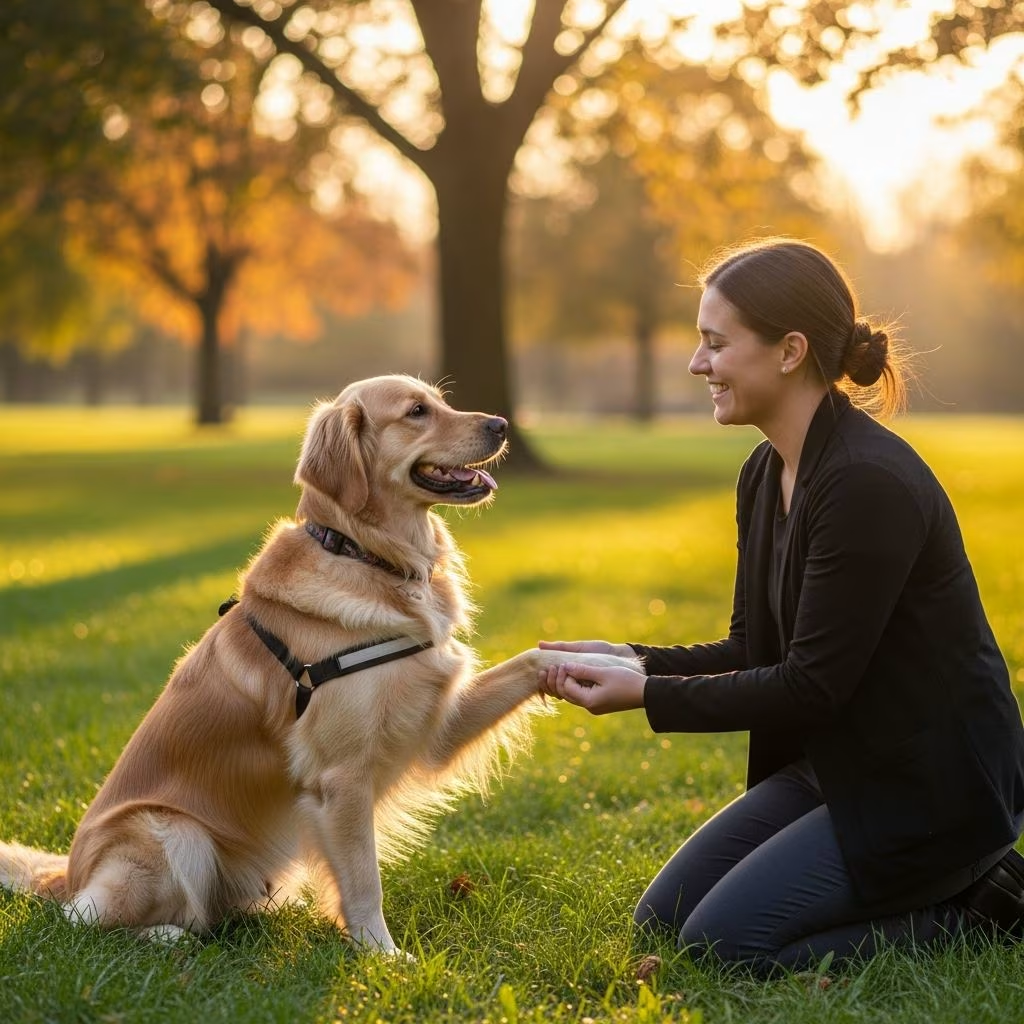
Teaching your dog to shake paws is a delightful way to enhance your relationship and showcase their intelligence. This simple yet charming trick involves your dog lifting a front paw to place it in your hand on command, often accompanied by a verbal cue like “shake” or “paw.” It’s accessible for dogs of various ages and breeds, requiring only patience, consistency, and positive reinforcement. Methods such as capturing spontaneous behaviors, shaping gradual improvements, luring with treats, and gentle prompting offer flexibility to match your dog’s learning style.
Why Train Your Dog to Shake Paws?
Beyond the cuteness factor, the paw shake trick provides multiple benefits. It improves focus and impulse control, as dogs learn to respond precisely to cues amid distractions. Regular practice reinforces basic obedience like sitting, which is a prerequisite for most methods. This trick also boosts your dog’s confidence, especially for shy or hesitant pups, through repeated successes and rewards. Studies from canine behavior experts highlight how such interactive training reduces anxiety and promotes mental stimulation, akin to puzzle toys but with human engagement.
Additionally, it’s a social icebreaker. A dog that shakes paws reliably impresses guests and eases introductions at parks or events. For service or therapy dogs, variations can build toward more advanced handling skills. Owners report stronger bonds, with dogs becoming more attuned to non-verbal signals during sessions.
Essential Preparations Before Training
Success starts with the right setup. Choose high-value treats like small pieces of chicken, cheese, or commercial training rewards to maintain motivation. A clicker or verbal marker (e.g., “yes!”) precisely times rewards, bridging the gap between action and treat delivery. Train in a quiet, familiar space free from distractions to build a strong foundation.
Your dog should already know “sit” reliably, as most methods begin from this position. Sessions should last 5-10 minutes, 3-5 times daily, ending on a high note. Puppies can start as young as 8 weeks, while older dogs or rescues may need extra patience to overcome past experiences. Track progress in a notebook to note which paw (left or right) responds best initially.
- Tools needed: Treats, clicker/marker, leash (for control if needed).
- Best time: When your dog is hungry but not starving, ideally before meals.
- Mindset: Stay positive; end if frustration arises.
Capturing the Natural Paw Lift
This passive technique rewards behaviors your dog offers spontaneously, ideal for eager learners who lift paws during play or greetings. Sit with your dog in front of you and observe patiently. When a paw lifts—even slightly—mark it immediately with your clicker or “yes!” and deliver a treat.
Repeat over multiple sessions until the dog associates the lift with rewards and offers it more frequently. Introduce your cue (e.g., “shake”) just before the lift occurs. Gradually present your open palm at knee height for the paw to touch, marking contact. Fade treats by rewarding every other success, then randomly. This method shines with confident dogs, often yielding results in days.
Shaping Progressive Paw Movements
Shaping builds complex behaviors by reinforcing successive approximations. Start with your dog sitting squarely. Mark and treat the tiniest foot twitch on your target paw (choose one to avoid confusion).
Raise criteria incrementally: first, a 1-inch lift; then 2 inches; eventually a full extension toward your hand. Add the verbal cue once lifts are consistent without prompts. This suits thoughtful dogs who ponder actions, fostering problem-solving skills. Sessions might take 1-2 weeks, but the reliability is unmatched.
| Shaping Stage | Criteria | Expected Reps |
|---|---|---|
| 1 | Tiny twitch | 10-20 |
| 2 | 1-inch lift | 15-30 |
| 3 | Full paw raise | 20+ |
| 4 | Paw to hand | Until fluent |
Luring with Treats for Quick Results
Luring uses food to guide the motion, perfect for food-motivated dogs. Hold a treat at nose level, slowly arc it upward and sideways over the target paw. As weight shifts and the paw lifts, mark and treat.
Repeat until the lift happens with minimal lure movement. Transition to an empty hand mimicking the motion, rewarding from your pocket. Introduce your palm for paw placement, then the verbal cue. Fade the lure entirely within sessions to prevent dependency. This visual method accelerates learning for puppies or visual learners.
- Present treat at chest height.
- Arc slowly to side, marking lift.
- Repeat 5-10x per session.
- Fade treat, add hand target.
Gentle Prompting for Hesitant Dogs
For reluctant pups, lightly tap or tickle the back of the pastern (ankle area) while saying the cue. Mark the instant the paw shifts, rewarding generously.
Avoid forceful grabbing; the goal is voluntary response. Once offered proactively, switch to shaping or luring. Pair with tapping under the wrist for front paws or lower leg for rears. This builds trust quickly with rescue dogs or those wary of touch.
Refining the Handshake Motion
Once paw placement is solid, simulate a shake by gently moving your hand up and down while the paw rests on it. Mark if the dog maintains contact without pulling away. Vary speed and hold duration to generalize the behavior.
Practice from standing positions or with mild distractions like toys nearby. For two-paw mastery, repeat training targeting the opposite side exclusively.
Common Challenges and Fixes
Dogs may shuffle both paws or ignore cues. Solution: Focus solely on one paw, ignoring others. If overly treat-dependent, intersperse verbal praise or play rewards. High-energy dogs benefit from pre-session exercise; anxious ones from calmer environments.
- Shy dog: Use softer prompts, more rewards.
- Fast learner: Increase difficulty quickly.
- Regression: Return to earlier steps patiently.
Advanced Variations and Troubleshooting
Teach “high five” by raising your hand higher, or “wave” with no contact. For back paws, start standing, tapping metatarsals. Integrate into chains like sit-shake-down. Troubleshoot jumping by enforcing sit first.
Consistency across family members prevents confusion. Generalize in new locations gradually.
Frequently Asked Questions
Can any dog learn to shake paws?
Yes, with adapted methods. Puppies learn fastest; seniors or disabled dogs use gentle prompts.
How long does training take?
3-14 days typically, depending on method and dog.
What if my dog uses the wrong paw?
Ignore it; reward only the target paw consistently.
Is a clicker necessary?
No, but it sharpens timing. Verbal markers work well.
Can I teach both paws?
Absolutely; use separate cues like “shake” and “other”.
Long-Term Maintenance
Practice weekly to retain fluency. Randomly reward in daily life to keep it fresh. This trick often becomes a default greeting, delighting everyone involved.
References
- How to Teach a Dog to Shake (Paw) — Whole Dog Journal. 2023-05-15. https://www.whole-dog-journal.com/training/how-to-teach-your-dog-to-shake-paw/
- How To Teach A Dog To Shake A Paw | Chewtorials — YouTube (Zak George). 2015-10-20. https://www.youtube.com/watch?v=Tc6gm48CTKo
- Teach Your Dog to Shake Paws — AKC Pet Insurance. 2024-02-10. https://www.akcpetinsurance.com/blog/dog-trick-fun-teach-your-dog-to-shake
- How to Teach Your Dog to Shake: A Step-by-Step Guide — Halo Collar. 2024-08-05. https://www.halocollar.com/blog/dog-training/how-to-teach-your-dog-to-shake-a-step-by-step-guide/



