

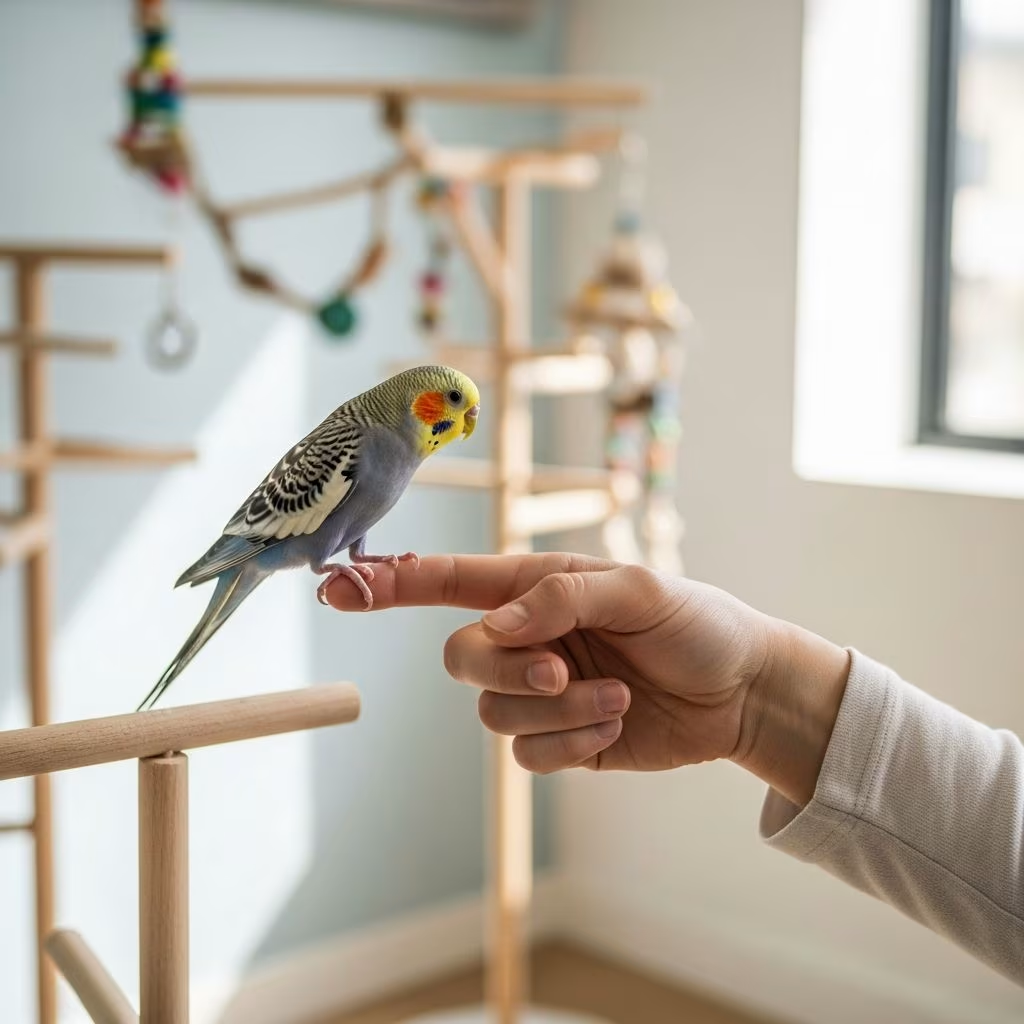
Teaching your pet bird to step up onto your hand is one of the most fundamental skills for any avian companion. This simple yet crucial command fosters trust, ensures safety during handling, and opens the door to more advanced behaviors. Whether you share your home with a lively parrot, a curious cockatiel, or another feathered friend, mastering this technique transforms your relationship from distant observers to active partners.
Why the Step-Up Command Matters for Every Bird Owner
The step-up command is more than a parlor trick; it’s a lifeline. In emergencies, such as vet visits or escaping hazards, a reliable step-up can prevent injury to both you and your bird. It builds confidence, reduces fear responses, and promotes mental stimulation, which is vital for birds’ emotional health. Regular practice strengthens the human-bird bond, making daily interactions smoother and more enjoyable.
Birds are intelligent creatures with complex social needs. In the wild, they navigate flocks with precise communication; in captivity, training mimics this dynamic. Starting with step-up ensures your bird views you as a safe perch rather than a threat, setting a positive tone for all future lessons.
Preparing Your Bird for Successful Training Sessions
Before diving into commands, create the ideal environment. Choose a quiet room free from distractions like loud noises, other pets, or sudden movements. Sessions should last 5-15 minutes, 2-3 times daily, to match your bird’s attention span and prevent frustration.
- Observe body language: Relaxed feathers, soft eyes, and a steady stance indicate readiness. Pinned eyes, raised crest, or hissing signal stress—pause and try later.
- Gather tools: High-value treats like millet sprays, small fruit pieces, or nuts that your bird loves but rarely gets outside training. A sturdy perch or T-stand provides stability.
- Build familiarity: Spend days letting your bird watch and explore training props, such as perches or sticks, to reduce novelty fear.
Patience is key. Young birds or rescues may need weeks to acclimate. Consistency reinforces learning, turning hesitant steps into eager compliance.
Step-by-Step Guide to Teaching the Step-Up Command
Begin with your bird on a stable perch inside or outside the cage. Stay calm—birds mirror your energy. If fearful, use a wooden dowel initially for safety.
- Position your hand: Hold your index finger parallel to the perch at belly height. For larger birds, use your forearm to avoid bites.
- Apply gentle pressure: Lightly press against the lower abdomen. This natural imbalance prompts the bird to lift a foot seeking support.
- Issue the cue: Say “Step up” in a clear, upbeat voice as you slide your finger under the raised foot, lifting slightly to encourage full transfer.
- Deliver reward immediately: Offer a treat and verbal praise the instant all feet are on you. Hold steady for 3-5 seconds before practicing step-down (“Step down”) onto the perch.
- Repeat and generalize: Practice 10-20 times per session. Teach with both hands, in different locations, and with trusted family members to build versatility.
Troubleshooting common issues: If your bird flaps or nips, withdraw slowly without reaction, then retry. Never force; progress at their pace. Within days, most birds associate the cue with positive outcomes.
Advanced Variations: From Hand to Perch and Beyond
Once step-up is solid, expand. Teach stepping onto sticks or ladders for transport without direct contact, ideal for shy or hormonal birds.
| Variation | Purpose | Training Tip |
|---|---|---|
| Stick Step-Up | Safe handling for biters | Introduce stick in cage days prior; lure with treats |
| Ladder Climb | Exercise and coordination | Place treats on each rung; cue “up” sequentially |
| Step to Cage | Independent return | Fade treats gradually for recall |
These build on step-up, chaining behaviors for complex routines.
Positive Reinforcement: The Heart of Effective Bird Training
Modern avian training relies on rewards, not punishment. Positive reinforcement—offering something desirable after desired behavior—increases repetition willingly. Force-based methods erode trust and can lead to aggression.
- Identify motivators: Food tops the list, but scratches, toys, or play suit some birds.
- Timing matters: Reward within 1-2 seconds for clear association.
- Shape behaviors: Break tricks into micro-steps, rewarding approximations.
Clicker training amplifies this: A click marks the exact moment, followed by treat. Birds learn faster with this precise feedback.
Fun Tricks to Teach After Step-Up Mastery
With basics down, delight in creativity. Birds rival dogs in aptitude.
Wave Hello
Cue step-up, then extend finger. As bird lifts foot, say “Wave,” pull away gently, and reward raised foot.
Turn Around
On hand, lure with treat over head in circles, cueing “Turn.” Reward full spin.
Potty Training
Watch for pre-poop signals (tail lift, posture shift). Cue “Go potty” on command, reward timing. Train yourself first.
Dance Party
Play music, model moves. Video bird dances inspire mimicry.
Revisit old skills weekly to maintain fluency.
Understanding Your Bird’s Signals and Building Trust
Training succeeds through dialogue. Learn postures: Fluffed for comfort, sleeked for cold; beak grinding for contentment, chattering for excitement.
For fearful birds, start distant. Toss treats, gradually approach. Bonding precedes commands—play, talk softly daily.
Common Mistakes and How to Avoid Them
- Oversessions: Short bursts prevent burnout.
- Inconsistency: Same cues, rewards daily.
- Hand shyness: Desensitize slowly; no grabbing.
- Ignoring health: Rule out illness mimicking resistance.
FAQs: Bird Training Essentials
How long until my bird learns step-up?
Days for bold birds, weeks for rescues. Consistency accelerates.
What if my bird bites during training?
Use perch or dowel; build trust first. Never punish.
Can all birds be trained?
Yes, with patience. Species like parrots excel.
Do I need treats forever?
Fade to intermittent; praise sustains.
Training multiple birds?
Separate sessions; individual cues.
Long-Term Benefits of a Trained Bird
Beyond tricks, training enriches life. Stimulated birds pluck less, vocalize happily, live longer. It’s empowerment: Your bird chooses cooperation.
Track progress in a journal. Celebrate milestones—a high-five wave or voluntary step-up warms the heart.
References
- How to Train Birds 101 — Instructables. Accessed 2026. https://www.instructables.com/How-to-Train-Birds-101/
- How To Train a Bird — PetMD. Accessed 2026. https://www.petmd.com/bird/how-train-bird
- Bird Training – How to Train Your Bird Without Clipping — Parrotvolancy. Accessed 2026. https://parrotvolancy.com/bird-training/
- Bird Training: Understanding the Basics — Best Friends Animal Society. Accessed 2026. https://bestfriends.org/pet-care-resources/bird-training-understanding-basics
- Twelve Vital Skills To Teach Our Birds — BirdTricks. Accessed 2026. https://birdtricksstore.com/blogs/birdtricks-blog/twelve-vital-skills-to-teach-our-birds



