

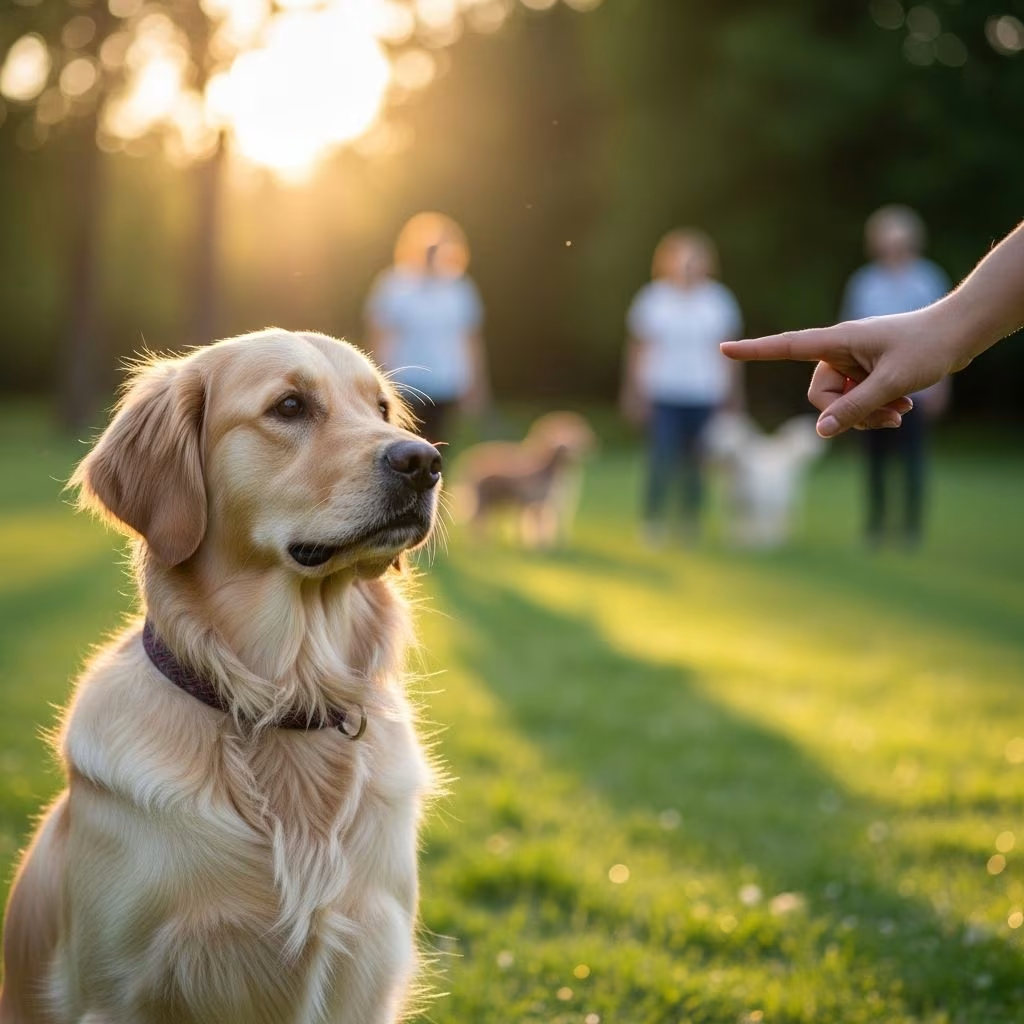
The stay command stands as a cornerstone of canine obedience, enabling dogs to maintain their position regardless of temptations or commands to move. This skill fosters impulse control, enhances safety during walks or in busy environments, and lays the groundwork for more complex behaviors. Whether training a energetic puppy or refining an adult dog’s responses, consistency and positive methods yield the best results. Expect gradual progress as you introduce variables like time held, separation, and environmental stimuli.
Why the Stay Command Matters in Everyday Life
Implementing a solid stay response prevents mishaps such as bolting into traffic or disrupting guests. It proves invaluable at doors, during meal prep, or vet visits, where a momentary pause can avert chaos. Research from animal behavior experts underscores that dogs with strong stay proficiency exhibit lower stress levels in novel settings, promoting overall well-being. Beyond utility, mastering this command deepens the human-canine partnership through clear communication and mutual trust.
- Safety first: Keeps dogs secure from hazards like oncoming vehicles or household dangers.
- Social harmony: Allows calm interactions with visitors or other pets.
- Foundation building: Supports advanced skills like heel work or recall under pressure.
Essential Preparations Before Training Begins
Success hinges on optimal conditions. Select a distraction-free indoor area initially, armed with high-value treats like small bits of cheese or chicken—items your dog finds irresistible yet low-calorie for frequent use. Sessions should last 5-10 minutes, repeated 3-4 times daily to capitalize on short attention spans without inducing fatigue. Gauge readiness by ensuring your dog already responds reliably to ‘sit’ or ‘down,’ as stay builds directly upon these.
| Item | Purpose | Tips |
|---|---|---|
| High-value treats | Motivation | Vary types to prevent boredom; use pea-sized pieces. |
| 6-foot leash | Control | Clip loosely; avoid tension. |
| Clicker (optional) | Precision marking | Charge it beforehand by pairing clicks with treats. |
| Quiet space | Focus | Start indoors, progress outdoors gradually. |
Building the Foundation: Initial Stay Exercises
Commence with your dog in a sit or down position. Extend your palm toward them in a clear stop signal while uttering ‘stay’ in a calm, firm tone. Pause for 1-2 seconds, then deliver praise and a treat without movement. If they hold, introduce a release cue like ‘break’ or ‘free’—distinct from everyday words—to signal permission to move. Repeat 5-10 times per session, rewarding only successes.
Should your dog shift prematurely, calmly reposition without scolding, as negative reactions erode confidence. Patience reigns; young pups may manage mere seconds at first, while mature dogs progress faster. Aim for 80% success rate before advancing.
Mastering Duration: Holding Position Longer
Once one-step holds succeed, extend time incrementally. Command ‘stay,’ step back slightly, and count silently to three before releasing. Succeed? Escalate to five seconds, then ten. Employ a timer mentally to track progress objectively. Intersperse easier reps to maintain momentum and prevent frustration.
- Begin at 1 second, add 1-2 seconds per success.
- Praise verbally during holds: ‘Good stay!’ to reinforce.
- Release before failure point to build positive associations.
This phase hones self-control, crucial for scenarios like waiting at curbs. Per training protocols from veterinary behaviorists, gradual increments prevent overwhelm, ensuring retention rates exceed 90% with daily practice.
Expanding Distance: Separating Without Breaking
With duration solid at 10-15 seconds, introduce separation. Say ‘stay,’ retreat one step backward, pause, then return to reward in position—do not call them forward initially. This teaches holding regardless of your proximity. Advance to two steps, then circle slowly, always resetting on breaks.
Leash management proves key: hold slack to avoid pulling cues. If tension arises, pause and rebuild confidence at prior levels. Pro trainers advocate returning to the dog intermittently for rewards, fostering position value over release anticipation.
Conquering Distractions: Real-World Proofing
Transition to variable environments once basics solidify. Begin mildly: drop a toy nearby during stay, rewarding focus. Escalate to clapping, mild noises, or family movements. Outdoors, deploy at park edges with passing squirrels as tests. Tackle one ‘D’ dominantly before combining—duration first, then distance, finally distractions.
Proofing Progression Table:
| Level | Distraction Type | Duration Goal | Distance Goal |
|---|---|---|---|
| Beginner | Quiet room | 5 sec | 1 step |
| Intermediate | Family present | 20 sec | 3 steps |
| Advanced | Park walkers | 60 sec | 10 feet |
| Expert | Traffic/bikes | 2 min | Leash end |
Incorporating Hand Signals and Verbal Cues
Visual cues amplify reliability, especially hearing-impaired or distant dogs. Pair ‘stay’ with an open palm facing outward, fingers up—akin to a traffic stop. Practice off-leash indoors post-leash mastery. Fade verbal over time if desired, though combining both ensures versatility. Consistency in gesture form prevents confusion.
Common Hurdles and Troubleshooting Strategies
Anticipate pitfalls: creeping forward signals weak impulse control—shorten criteria and rebuild. Anticipatory breaks indicate release prediction; vary timing unpredictably. High-energy breeds like Border Collies demand mental fatigue via toys pre-session. For timid dogs, boost treat value and shorten sessions.
- Creeping: Use a barrier like a pillow temporarily.
- Anticipation: Reward mid-stay unexpectedly.
- Distraction failure: Reduce intensity, rebuild indoors.
- Regression: Revert two levels; persistence pays.
Advanced Applications and Maintenance
Integrate stay into routines: door drills, car loading, or agility pauses. Randomize practice to embed habit. Wean treats gradually, substituting life rewards like walks post-success. Annual refreshers counter skill fade, particularly amid life changes like moves.
For competition or service roles, layer emergency stays with whistle cues. Track via journal: note session dates, successes, and tweaks for data-driven refinement.
Frequently Asked Questions (FAQs)
How long until my dog learns stay?
Typically 1-4 weeks with daily 10-minute sessions, varying by age, breed, and prior training. Puppies advance slower but retain better.
Should I use a leash for stay training?
Yes initially for boundary enforcement; transition off-leash once 90% reliable at distance.
What if my dog never holds longer than 5 seconds?
Inspect motivation—upgrade treats—and ensure foundational sits/downs are solid. Consult a certified trainer if stalled.
Can stay be taught to reactive dogs?
Absolutely, starting hyper-distraction-free. Pair with counter-conditioning for triggers, seeking professional guidance for aggression.
Is clicker training necessary?
No, but beneficial for precise timing. Marker words like ‘yes’ substitute effectively.
Long-Term Benefits and Success Stories
Dog owners report fewer escapes, calmer homes, and heightened responsiveness post-stay mastery. A study by the American Kennel Club notes trained dogs face 40% fewer injury risks. Your investment yields a safer, happier companion.
References
- Train Your Dog To Stay — RSPCA. 2023. https://www.rspca.org.uk/adviceandwelfare/pets/dogs/training/stay
- Basic Dog Training Commands: Stay — Chewy Education. 2024-01-15. https://www.chewy.com/education/dog/training-and-behavior/basic-dog-training-commands-stay
- Principles of Animal Learning and Behavior — American Veterinary Society of Animal Behavior. 2022. https://www.avsabonline.org/uploads/2022/06/Position-Statement-on-Punitive-Training.pdf
- Dog Training Guidelines — Association of Professional Dog Trainers. 2025-02-01. https://apdt.com/resource-center/dog-training-guidelines/
- Canine Behavior and Training — ASPCA. 2024. https://www.aspca.org/pet-care/dog/training



