

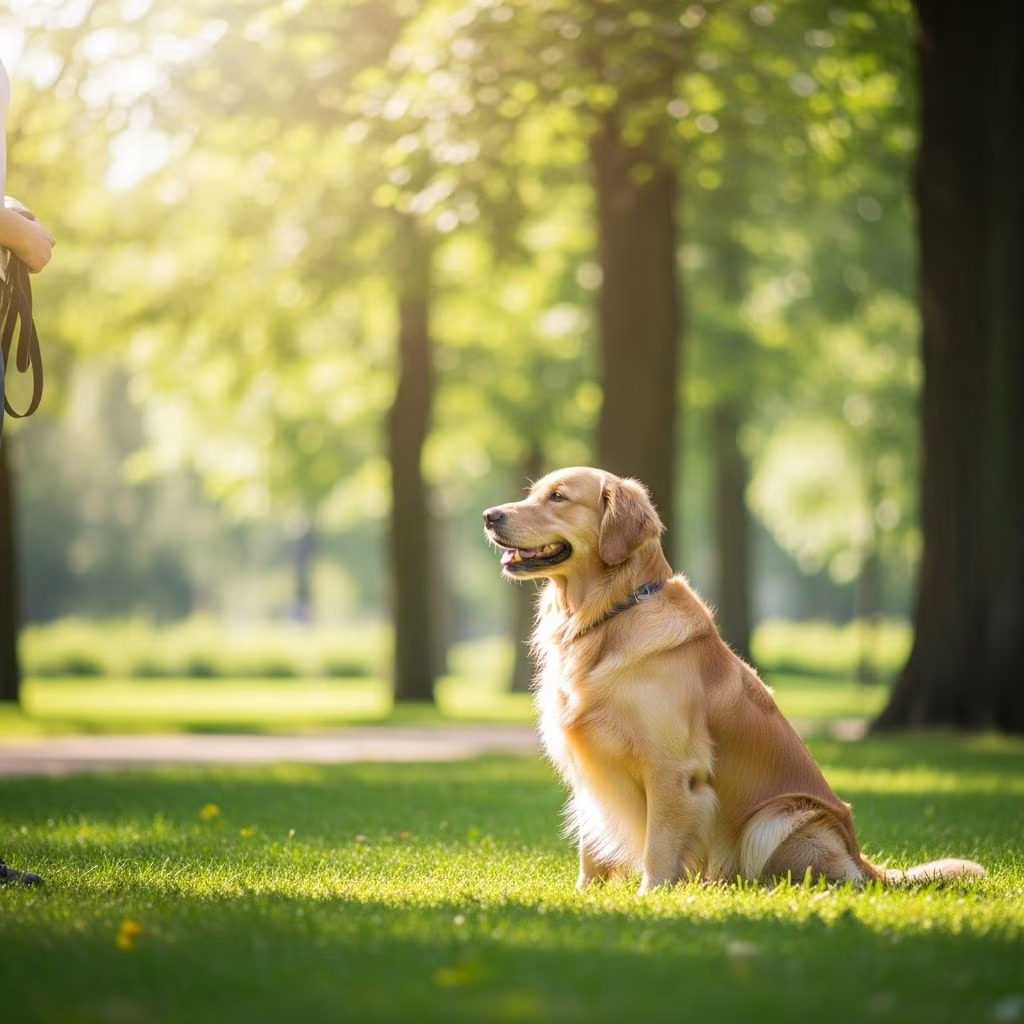
The stay command is a cornerstone of dog training, enabling owners to keep their pets safe and responsive in various situations. This skill teaches dogs to hold a position until released, fostering impulse control and strengthening the owner-pet bond. By using positive reinforcement, you can achieve reliable results without force, making training enjoyable for both.
Why the Stay Command Matters in Everyday Life
Teaching stay goes beyond basic obedience; it prevents dangerous behaviors like bolting into traffic or jumping on guests. In real-world scenarios, such as vet visits or walks, a solid stay ensures your dog remains calm and under control. Experts emphasize that consistency in training leads to dogs who anticipate rewards for holding positions, reducing the need for constant verbal cues.
For puppies, early introduction builds a foundation for advanced commands. Adult dogs benefit too, as stay reinforces self-discipline amid distractions. Studies from canine behavior organizations highlight that dogs trained with implied stay—holding positions after commands like sit—show faster learning and better retention.
Essential Prerequisites Before Starting Stay Training
Before diving into stay, ensure your dog masters the sit or down command. Without this, stay becomes ineffective since dogs can’t hold a position they don’t reliably enter. Use high-value treats, a clicker for precise timing, and a quiet environment to minimize early frustrations.
- Sit proficiency: Dog responds to verbal cue and hand signal within 2-3 seconds.
- Attention focus: Dog looks at you on cue, ignoring mild distractions.
- Positive association: Treats and praise make commands fun, not stressful.
Prepare tools: small, soft treats for quick delivery; a leash for safety; and a release word like “free” or “okay” to signal the end of stay.
Step-by-Step Guide to Teaching the Basic Stay
Begin in a distraction-free room. Follow this progressive method to build duration, distance, and reliability.
- Initiate position: Command “sit” or “down.” As your dog complies, extend your palm like a stop sign and say “stay” calmly.
- Short hold and reward: Count to one silently, then treat while dog remains in place. Praise softly to avoid exciting movement.
- Extend duration: Increase hold to 3-5 seconds over repetitions. Use a clicker at the exact moment of compliance.
- Introduce release: After 10-15 seconds, say your release word enthusiastically and step back or toss a toy. Reward movement only post-release.
Practice 5-10 reps per session, 2-3 times daily. Sessions under 5 minutes prevent burnout, aligning with micro-training principles for optimal retention.
Building Duration: From Seconds to Minutes
Duration is the first “D” in the 3Ds of stay training (Duration, Distance, Distraction). Start with 1-second holds, adding 2-3 seconds per success. By day three, aim for 30 seconds.
| Session Goal | Hold Time | Treat Frequency | Tips |
|---|---|---|---|
| Beginner | 1-5 seconds | Every hold | Stay close, palm visible. |
| Intermediate | 10-30 seconds | Every 10s | Randomize rewards. |
| Advanced | 1-2 minutes | Intermittent | Multiple treats during stay. |
Once at 15 seconds, feed treats periodically without breaking position. This teaches dogs that stay continues until release, not just for one reward.
Increasing Distance Without Breaking Stay
With solid duration, introduce distance gradually. Take one step back, reward, return. Build to 5-10 steps.
- Step back while facing dog, maintaining eye contact.
- Return to dog before treating to reinforce proximity.
- Use leash to prevent forward movement initially.
Pro tip: Pivot 180 degrees away briefly before returning—this tests independence. Videos demonstrate casual walks away with marker words like “yes” for ongoing reinforcement.
Handling Distractions: Real-World Proofing
The ultimate test is distractions. Start low: mild noises or toys nearby. Progress to family members entering or outdoor settings.
Progression levels:
- Level 1: Quiet room, no movement.
- Level 2: Clap hands, drop treat on floor.
- Level 3: Another person approaches slowly.
- Level 4: Park bench with passersby.
Return to basics if fails occur. Positive reinforcement ensures dogs associate distractions with continued rewards for staying.
Hand Signals and Verbal Cues: Multi-Modal Training
Combine verbal “stay” with visual palm signal for clarity, especially for hearing-impaired or noisy environments. Fade verbal over time for implied stay, where dogs hold post-sit/down until released.
Practice alternating: 70% with signal, 30% verbal-only to generalize.
Common Mistakes and How to Avoid Them
Owners often repeat “stay” excessively, confusing dogs. Say once, then silently enforce with body blocking if needed. Another pitfall: releasing too soon, teaching anticipation of quick ends.
- No premature praise: Movement ends session without reward.
- Inconsistent release: Use same word every time.
- Overfacing: Match challenge to dog’s level to build confidence.
Advanced Techniques for Competition-Level Stay
For obedience trials, layer in heeling stays or group exercises. Use platforms to define space. Incorporate proofing with high distractions like food tosses or joggers.
Implied stay shines here: dogs hold sits during heeling transitions automatically.
Tailoring Training to Different Breeds and Ages
High-energy breeds like Border Collies need more distraction work; laid-back ones like Bulldogs focus on duration. Puppies under 6 months tire quickly—keep sessions playful. Seniors may prefer down-stays for joint comfort.
Integrating Stay into Daily Routines
Practice before meals (sit-stay for bowl), doorways (wait-stay), or car entries. Micro-sessions embed the skill naturally.
Frequently Asked Questions (FAQs)
How long until my dog learns stay?
Most dogs grasp basics in 1-2 weeks with daily practice. Mastery takes 4-6 weeks.
What if my dog breaks stay repeatedly?
Reduce criteria (shorter time/distance), reward heavily, and restart calmly. Patience prevents frustration.
Can I train without treats?
Yes, use toys or praise, but treats accelerate learning via clear motivation.
Is stay suitable for reactive dogs?
Yes, with professional guidance to address underlying issues alongside basics.
Down-stay vs. sit-stay?
Down is more stable for long holds; alternate for versatility.
Conclusion
Consistent, positive stay training transforms chaotic walks into controlled adventures. Celebrate progress, and your dog will thrive as a well-mannered companion.
References
- How to Teach your Dog to Stay in 3 Steps Force Free! — YouTube (Dog Training Revolution). Accessed 2026. https://www.youtube.com/watch?v=GAziMECDxD0
- Teach your Dog the Stay Command — Sit Means Sit South Denver. Accessed 2026. https://sitmeanssit.com/dog-training-mu/south-denver-dog-training/dog-training-denver-understanding-the-implied-stay-command/
- How To Teach a Dog to Stay: A Step-by-Step Guide — Chewy. Accessed 2026. https://www.chewy.com/education/dog/training-and-behavior/basic-dog-training-commands-stay
- Train Your Dog To Stay — RSPCA. Accessed 2026. https://www.rspca.org.uk/adviceandwelfare/pets/dogs/training/stay
- How to Teach Your Dog to Stay — American Kennel Club (AKC). Accessed 2026. https://www.akc.org/expert-advice/training/teach-your-dog-to-stay/
- EASILY Teach Your Dog The STAY Command — YouTube (Nate Schoemer). Accessed 2026. https://www.youtube.com/watch?v=s5iD8eN89bo



