

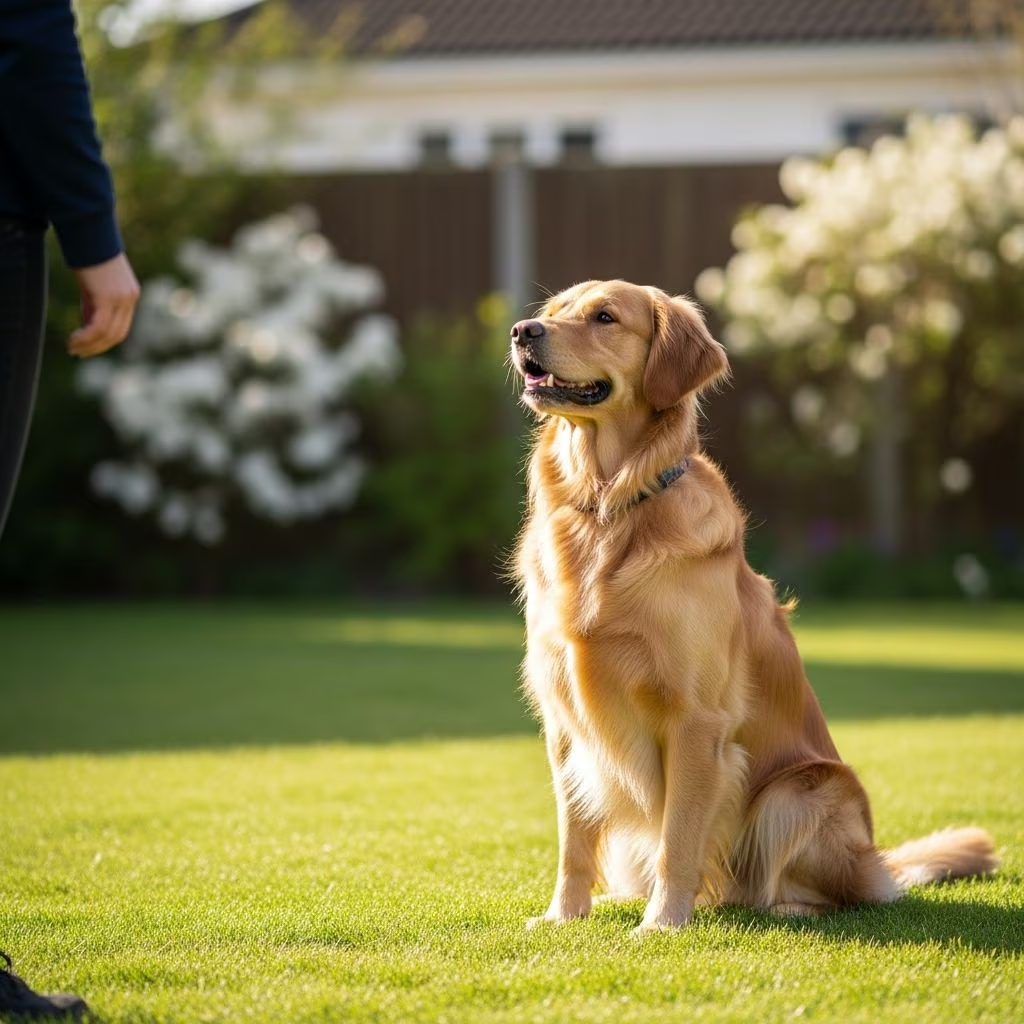
The stay command stands as a cornerstone of basic dog obedience, enabling owners to maintain control in diverse environments while fostering a stronger bond with their canine companions. This skill prevents impulsive behaviors, enhances safety during walks or at home, and sets the foundation for more advanced training. By employing positive reinforcement techniques, pet owners can teach their dogs to remain in position reliably, regardless of temptations or changes in surroundings.
Why the Stay Command Matters in Everyday Life
Teaching a dog to stay goes beyond mere tricks; it directly impacts safety and harmony in shared living spaces. For instance, a solid stay can keep a dog from dashing into traffic, bolting toward strangers, or interrupting guests. Trainers emphasize that every obedience cue like sit, down, or come inherently includes an implied stay, meaning the dog holds the position until released. This concept streamlines training by building patience and impulse control from the outset.
In high-distraction scenarios, such as parks or busy households, a well-trained stay ensures predictability. Veterinary and behavior experts note that dogs with strong stay skills experience less anxiety in novel situations, as they learn to trust their handler’s cues. Moreover, consistent practice reinforces the human-dog partnership, reducing frustration for both parties and promoting long-term compliance.
Essential Prerequisites Before Starting Stay Training
Success with stay hinges on foundational commands. Ensure your dog masters sit and down first, as these positions provide stability for holding still. If your pup struggles with these, pause stay training to solidify basics—rushing ahead leads to confusion and setbacks.
- Attention Focus: Practice name recognition and eye contact to build initial engagement.
- Reward Readiness: Stock high-value treats, toys, or praise to motivate compliance.
- Calm Environment: Begin in low-distraction areas like quiet rooms to set dogs up for success.
Age plays a role too; puppies under six months benefit from short sessions, while adults may progress faster but require patience for ingrained habits.
Step-by-Step Guide to Teaching Stay
Break training into manageable phases focusing on the three D’s: **duration**, **distance**, and **distractions**. This progressive approach, recommended by certified trainers, ensures steady improvement without overwhelming your dog.
Phase 1: Building Duration
Start close to your dog in a distraction-free zone. Command “sit” or “down,” then immediately introduce “stay” with a clear hand signal—like an open palm facing them, resembling a stop sign.
- Say “stay” firmly but calmly.
- Wait 1-2 seconds, then reward while they’re still in position.
- Gradually extend time: 3 seconds, 5, up to 15-30 seconds over multiple sessions.
Practice 5-10 repetitions per session, 2-3 times daily. Use a timer to track progress objectively.
Phase 2: Adding Distance
Once duration hits 15 seconds reliably, step back one foot while repeating the hand signal. Reward promptly upon return, praising enthusiastically.
| Distance Level | Steps Back | Hold Time | Trials per Session |
|---|---|---|---|
| Beginner | 1 foot | 5 seconds | 5 |
| Intermediate | 3-5 feet | 10-15 seconds | 7 |
| Advanced | 10+ feet | 30 seconds | 10 |
Return to your dog before releasing to reinforce that staying earns rewards. Introduce a release cue like “okay” or “free” after holding, tossing a treat away to encourage movement.
Phase 3: Introducing Distractions
Proof the stay against real-world temptations. Begin mildly: clap hands, drop a toy, or have a family member walk by.
- Low Distraction: Quiet noises, slow movements.
- Medium: Toys on the floor, mild play.
- High: Food nearby, other dogs present.
Mark successes with a clicker or “yes” marker, followed by treats. If failure occurs, calmly reset without scolding—positive methods thrive on repetition, not punishment.
Advanced Techniques for Rock-Solid Stays
For competition-level reliability, layer in complexity. Practice in varied locations: kitchen, yard, then public spaces. Vary positions—stand, down-stay, even emergency recalls from stay.
Implied Stay Mastery: Train so dogs hold positions post-command without verbal reminders. Reward only upon release to teach anticipation of bigger payoffs. Micro-sessions (1-2 minutes) scattered throughout the day accelerate retention, especially for fidgety pups.
Incorporate movement: circle your dog, step sideways, or turn your back. Gradually fade hand signals, relying on verbal cues alone.
Common Mistakes and How to Avoid Them
Many owners unwittingly sabotage progress. Repeating “stay” incessantly confuses dogs, implying the command isn’t final—say it once, then enforce silently.
- Too Fast Progression: Skipping duration for distance causes breakdowns.
- Inconsistent Rewards: Always pay up promptly to maintain motivation.
- No Release Cue: Dogs stay indefinitely without it, leading to frustration.
- Physical Corrections: Force erodes trust; opt for positive reinforcement.
If regressions happen, drop back a phase. Patience yields pros.
Troubleshooting Challenges by Breed and Age
High-energy breeds like Border Collies may break for action, so amp rewards. Seniors or rescues with anxiety need slower pacing and extra praise.
For puppies: 5-minute sessions max. Adults: Build to 1-minute holds. Use life rewards—meals as stay practice—to integrate seamlessly.
Tools and Gear to Enhance Training
Clickers: Precise timing for marking stays. High-Value Treats: Chicken bits over kibble for motivation. Leashes: Short tethers prevent early breaks.
Apps tracking sessions help monitor progress objectively.
Integrating Stay into Daily Routines
Embed practice: Before meals, leashing up, doorbell rings. Real-life application solidifies skills faster than isolated drills.
FAQs
How long does it take to teach stay?
1-4 weeks with daily 10-15 minute sessions, varying by dog.
What if my dog keeps breaking stay?
Reduce criteria (time/distance), increase rewards, eliminate distractions.
Can I train stay without treats?
Yes, use toys/praise, but treats speed initial learning.
Is stay suitable for all dogs?
Absolutely, adapted for age, breed, with professional help if needed.
Down-stay vs. sit-stay?
Down is more stable for longer holds; teach both.
Long-Term Maintenance for Lifelong Obedience
Weekly refreshers prevent fading. Randomize challenges to keep skills sharp. Enroll in group classes for pro guidance and socialization.
Ultimately, stay training cultivates a disciplined, joyful companion. Consistency and positivity transform potential chaos into reliable partnership.
References
- How to Teach your Dog to Stay in 3 Steps Force Free! — YouTube (Dog Training Revolution). Accessed 2026. https://www.youtube.com/watch?v=GAziMECDxD0
- Teach your Dog the Stay Command — Sit Means Sit South Denver. Accessed 2026. https://sitmeanssit.com/dog-training-mu/south-denver-dog-training/dog-training-denver-understanding-the-implied-stay-command/
- How To Teach a Dog to Stay: A Step-by-Step Guide — Chewy. Accessed 2026. https://www.chewy.com/education/dog/training-and-behavior/basic-dog-training-commands-stay
- Train Your Dog To Stay — RSPCA. Accessed 2026. https://www.rspca.org.uk/adviceandwelfare/pets/dogs/training/stay
- How to Teach Your Dog to Stay — American Kennel Club (AKC). Accessed 2026. https://www.akc.org/expert-advice/training/teach-your-dog-to-stay/



