

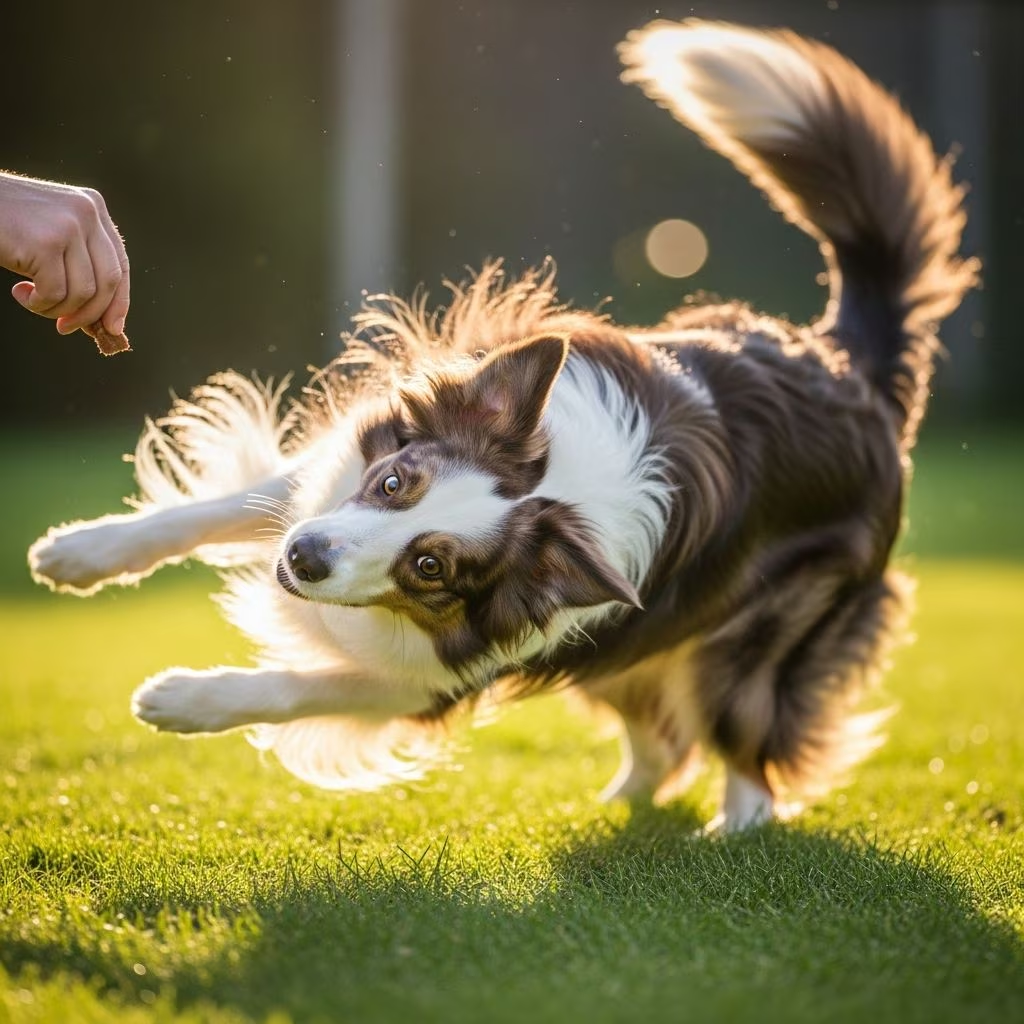
Teaching your dog to spin is an accessible and rewarding way to introduce fun elements into your training routine. This trick, where your dog performs a full 360-degree turn on command, strengthens the bond between you and your pet while providing mental stimulation. Using positive reinforcement methods, most dogs can learn this skill quickly, regardless of breed or age, making it ideal for beginners and seasoned trainers alike.
Why the Spin Trick Benefits You and Your Dog
The spin trick goes beyond mere entertainment. It enhances your dog’s focus, improves body awareness, and builds confidence through successful repetitions. Regular practice sessions keep your dog physically active and mentally sharp, reducing boredom-related behaviors like chewing or excessive barking. For owners, it offers a sense of accomplishment and a go-to activity for impressing friends or participating in dog sports.
- Boosts mental engagement: Requires concentration and quick responses.
- Improves coordination: Encourages smooth movement and balance.
- Strengthens relationship: Relies on clear communication and rewards.
- Versatile application: Foundation for advanced agility or heel work.
Essential Tools and Preparation
Before starting, gather a few basics to ensure smooth sessions. High-value treats like small pieces of chicken, cheese, or commercial training treats work best to maintain motivation. A clicker or verbal marker such as “good” helps precisely time rewards. Choose a quiet, spacious area free from distractions, like a living room or fenced yard, to help your dog focus.
| Item | Purpose | Tips |
|---|---|---|
| Treats | Motivation | Use pea-sized pieces; vary types to prevent pickiness. |
| Clicker | Marking behavior | Charge it first by clicking and treating repeatedly. |
| Leash (optional) | Control | For energetic dogs; keep loose. |
| Training space | Focus | 10×10 feet minimum; no rugs if slippery. |
Assess your dog’s readiness. Puppies over 8 weeks and healthy adults learn fastest. Consult a vet if your dog has joint issues, as repetitive turning could strain hips or knees.
Step-by-Step Guide to Teaching the Spin
Break the training into manageable phases, progressing only when your dog succeeds consistently. Sessions should last 5-10 minutes, 2-3 times daily, ending on a high note.
Phase 1: Introducing the Lure Motion
Position your dog standing directly in front of you. Hold a treat at nose level in your right hand for a counterclockwise spin (your dog’s left). Slowly arc the treat toward your dog’s shoulder, then around to their tail in a gentle circle. If they pivot even slightly, mark with your clicker or “yes!” and deliver the treat immediately. Repeat 5-10 times, rewarding partial efforts to build momentum.
- Start small: Aim for 30-45 degrees initially.
- Stay close: Keep the treat 1-2 inches from the nose.
- Be patient: Some dogs need 20+ reps to pivot.
Phase 2: Building to a Full Circle
Once pivoting is reliable, extend the arc to 90 degrees, then 180, marking and treating each success. Gradually complete the full 360 degrees, rewarding only at the end position facing you. Practice until your dog spins fully 8 out of 10 times without hesitation.
Pro Tip: If your dog sits or backs up, stand farther away and encourage forward movement first.
Phase 3: Adding the Verbal Cue
With the full spin solid on the lure, introduce “spin” just as you begin the arc. Say it clearly and enthusiastically. Over several sessions, reduce the treat lure: pretend to hold one, then use an empty hand signal. Reward from your other pocket to avoid dependency.
- Say “spin,” lure fully.
- Say “spin,” partial lure.
- Say “spin,” hand signal only.
- “Spin” verbal cue alone.
Phase 4: The Opposite Direction (Twirl)
Mirror the process for clockwise spins using your left hand and cue like “twirl.” This balances muscle use and adds variety. Alternate directions in sessions once both are learned.
Advanced Variations to Challenge Your Dog
Once basic spins are mastered, elevate the trick for shows or competitions.
- Multiple spins: Cue “spin spin” for 2-3 turns before rewarding.
- Speed spins: Reward faster completions; use a stopwatch for fun tracking.
- Spin on hind legs: Lure upward slightly for a prancing effect.
- Combine tricks: “Sit, spin, down” sequences.
For multiple spins, build gradually: two full circles before the mark, then three. This teaches duration and precision.
Overcoming Common Training Hurdles
Challenges arise, but targeted fixes keep progress steady.
| Problem | Solution |
|---|---|
| Dog chases tail instead of following lure | Slow the arc; use higher-value treats. |
| Sits or lies down | Practice in stand position; back up to invite standing. |
| Confused by direction | Stick to one direction for 50 reps before switching. |
| Loses interest | Shorten sessions; end with playtime. |
| Spins too fast/slow | Adjust hand speed; reward desired pace. |
If progress stalls, regress one phase and rebuild. Consistency across family members prevents mixed signals.
Integrating Spin into Daily Routines
Make spin a habit: Before meals, during walks, or as a calm-down cue. Pair with heeling for agility foundations or freestyle dancing. Track sessions in a journal to monitor improvement and spot patterns.
Safety Considerations for Healthy Spinning
Prioritize welfare. Avoid on slick floors to prevent slips. Limit sessions for seniors or overweight dogs. Watch for fatigue signs like heavy panting. Hydrate frequently and incorporate rest days.
FAQs
How long until my dog learns spin?
Most dogs grasp basics in 1-2 weeks with daily practice. Full cue response may take a month.
Can any dog learn this trick?
Yes, from Chihuahuas to Great Danes, barring medical restrictions.
What if my dog has short legs?
Pivoting works fine; focus on head turns to guide the body.
Should I use a clicker?
Optional but effective for precise timing; verbal markers suffice.
How to teach without treats?
Fade treats after cue introduction, using praise or toys.
Conclusion
Mastering the spin trick transforms routine training into joyful interaction. With patience and positivity, you’ll have a spinning superstar, ready for applause and endless fun. Keep sessions light-hearted, celebrate milestones, and watch your bond deepen.
References
- How to Teach Your Dog to Spin — Whole Dog Journal. 2023-05-15. https://www.whole-dog-journal.com/training/how-to-teach-your-dog-to-spin/
- How to Teach Your Dog to Spin Around — American Kennel Club. 2024-02-10. https://www.akc.org/expert-advice/training/teach-your-dog-to-spin-around/
- Teach your dog to do a spin | The Battersea Way — Battersea Dogs and Cats Home (YouTube). 2022-11-20. https://www.youtube.com/watch?v=THj8nVFnJ2U



