Mastering the Sit Command: A Progressive Training Guide
Learn effective techniques to teach your dog to sit reliably using proven positive reinforcement methods.
The sit command stands as one of the most fundamental behaviors any dog owner can teach their pet. This foundational skill serves as a building block for more advanced obedience training and provides an essential tool for managing your dog’s behavior in various situations. Whether you’re working with a young puppy or an adult dog, understanding the correct methodology for teaching sit can dramatically improve your training outcomes and strengthen the bond between you and your canine companion.
Understanding the Foundation of Sit Training
Before diving into the specific steps of teaching sit, it’s important to understand what makes this command so valuable. The sit command helps establish control in potentially chaotic situations, such as greeting visitors at the door or waiting at a crosswalk. Beyond practical applications, teaching sit demonstrates to your dog that you’re a reliable leader who communicates clearly and rewards good behavior. This strengthens your relationship while building your dog’s confidence in understanding what you expect from them.
The sit command also naturally leads to teaching additional commands and tricks, including stay, down, shake, and more complex behaviors. By mastering sit, you’re essentially opening a doorway to expanded training possibilities and a more well-behaved companion.
Preparation: Setting Yourself Up for Training Success
Successful sit training begins long before you give your first command. The environment you choose for training plays a crucial role in your dog’s ability to learn. Select a quiet, familiar space with minimal distractions—your living room or a quiet corner of your yard works well. As your dog progresses, you can gradually introduce training in busier environments.
Gather appropriate rewards before starting your training session. High-value treats that your dog genuinely loves work best for initial training phases. These should be small, easy-to-consume pieces so training can flow smoothly without excessive chewing time. Pay attention to your dog’s individual preferences; what motivates one dog might not excite another.
Timing matters significantly in dog training. Train when your dog is calm and relaxed, not when they’re overly excited or tired. Early morning or after a walk often provides an ideal training window. Keep sessions short—five to ten minutes—to maintain your dog’s focus and enthusiasm.
Training Essentials Checklist:
- High-value treats (small, easy to consume)
- Quiet training environment
- Clicker (optional but helpful)
- Relaxed, patient mindset
- Scheduled training time when your dog is calm
Phase One: Introduction Through Lure-Based Training
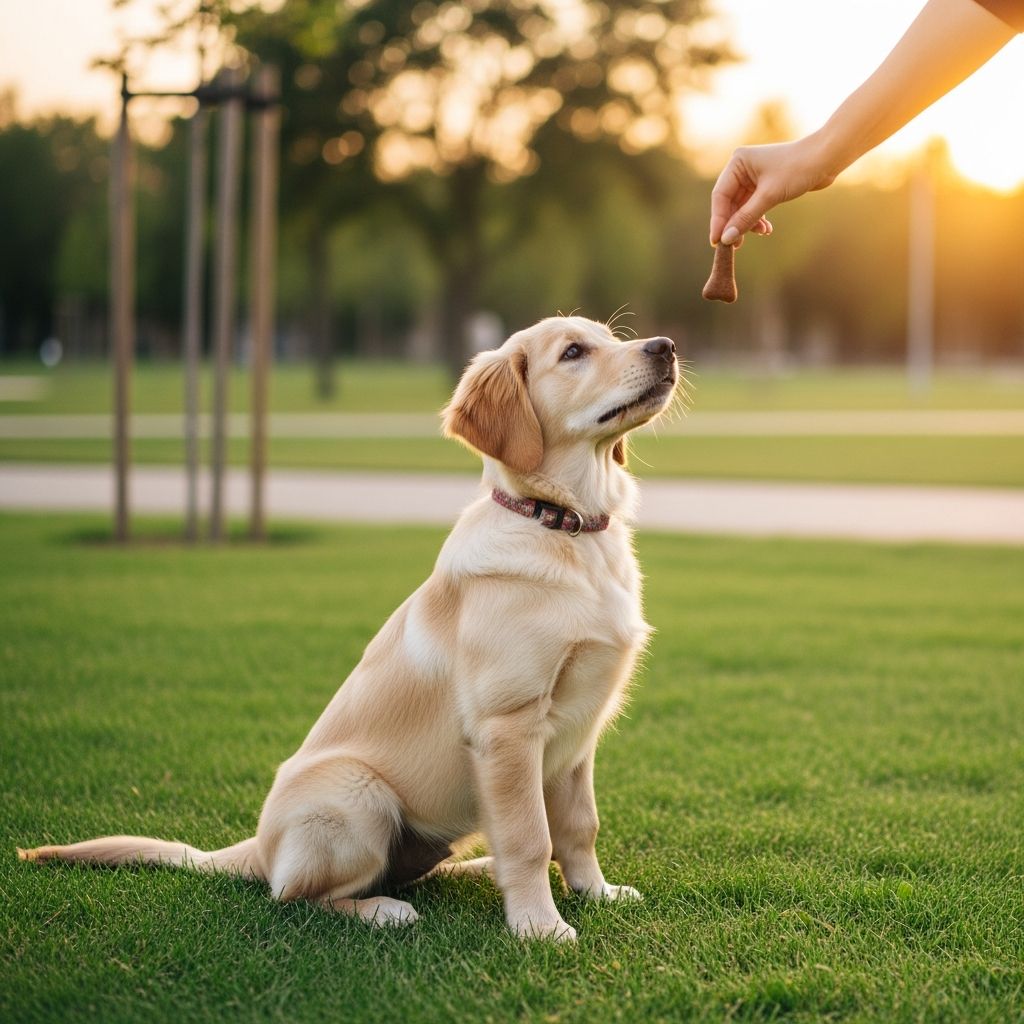
The most effective initial approach involves using food luring to guide your dog naturally into the sitting position. This method capitalizes on your dog’s natural body mechanics—as their nose follows food upward, their rear end naturally lowers to the ground.
Begin by standing directly in front of your dog while they’re standing. Position yourself at their eye level when possible, creating a clear communication dynamic. Hold a treat between your thumb and fingers, keeping your hand positioned approximately one inch from your dog’s nose. Your palm should face upward with fingers pointing vertically.
Slowly move your hand forward and slightly upward in a smooth motion. This movement should feel natural and gradual, not jerky. As your dog follows the treat with their nose, their weight naturally shifts backward and their hindquarters lower toward the ground. The moment their rear end touches the ground, immediately mark this success with a clicker sound (or verbal marker like “yes!”) and present the treat as a reward.
Timing is critical in this phase. The click or verbal marker must occur at the exact moment your dog’s rear touches the ground, creating a clear connection between the behavior and the reward. This precision helps your dog understand exactly which action earned the treat.
Repeat this process multiple times, stepping back between repetitions so your dog must stand up to reset for the next trial. Practice until your dog consistently and smoothly follows the lure into a seated position without hesitation or jumping.
Phase Two: Transitioning from Lure to Hand Signal
Once your dog reliably follows the treat into a sit, you’re ready to fade the treat as a visible lure. This transition builds the foundation for a hand signal that will eventually work independently of any food in your hand.
In this phase, hold your hand in the same position as before but without the treat visible between your fingers. Move your hand through the same luring motion—forward and upward. When your dog responds by sitting, immediately reward with a treat delivered from your other hand. This separation between the luring hand signal and the reward source prevents your dog from becoming dependent on seeing food in your signaling hand.
Practice this transition extensively in different locations around your home and yard. Repetition in varied environments helps your dog generalize the behavior rather than linking it to a specific location or context. Continue rewarding consistently each time your dog sits in response to the hand signal.
Phase Three: Introducing the Verbal Cue
With a reliable hand signal established, you can now layer in the verbal component of the command. The word “sit” becomes the primary cue, with the hand signal serving as secondary reinforcement during the learning phase.
Stand facing your dog and say “sit” in a clear, calm tone—only once. Immediately follow with your established hand signal. When your dog sits, mark the behavior with your clicker or positive verbal marker, then reward generously. The verbal cue should precede the hand signal, teaching your dog to associate the word with the action.
Important guideline: Use the verbal cue only once per trial. Repeating the command (“sit, sit, sit”) actually dilutes its effectiveness, as your dog learns that they don’t need to respond to the first utterance. Patience in waiting for the response after a single command strengthens the association.
Practice this combination repeatedly until your dog sits consistently nine out of ten times when hearing the verbal cue paired with the hand signal. This ninety-percent success rate indicates solid learning before moving to the next phase.
Phase Four: Fading the Hand Signal
Once your dog reliably responds to the combination of verbal cue and hand signal, you can begin reducing reliance on the visual component. This phase teaches your dog to respond to the verbal command alone.
Say “sit” without providing the hand signal. If your dog sits, immediately reward. If your dog hesitates or doesn’t respond, you can provide a subtle reminder with your hand signal, but try to use it as minimally as possible. Gradually reduce the prominence of the hand signal over multiple training sessions until it’s barely perceptible or no longer needed.
Some dogs will need more reminders during this phase than others. If your dog struggles, return briefly to the previous phase where you combine both cues, then gradually reduce the hand signal again. Training should always progress at your individual dog’s pace.
Common Training Mistakes to Avoid
Several pitfalls can derail your sit training progress. Understanding and avoiding these mistakes significantly improves your success rate.
Physical Manipulation: Never push your dog’s rear end toward the ground or pull up on the leash as a method to achieve the sitting position. While this might produce a sit, your dog learns that physical force is the cue rather than your verbal or hand signal. You’ll find yourself permanently needing to apply physical pressure to get results. Allow your dog to discover sitting through the luring method instead.
Repeating Commands: Saying “sit” multiple times teaches your dog they can ignore the first (or second, or third) utterance. Resist the urge to repeat commands. Give it once, wait patiently, and only repeat after sufficient time has passed if your dog hasn’t responded.
Inconsistent Hand Signals: Your hand signal should remain consistent throughout training. If you sometimes lure upward and sometimes sideways, you create confusion. Standardize your signal and maintain it consistently.
Training in Distracting Environments Too Early: Beginning advanced training stages in high-distraction settings sets up failure. Master the skill in controlled environments first, then gradually introduce distractions.
Troubleshooting Specific Challenges
If your dog jumps instead of sitting, your hand movement is likely too far away from their nose or moving upward too dramatically. Bring your hand closer and move more gradually. If your dog doesn’t sit during the luring phase, you may need higher-value rewards or a quieter training environment. Some dogs require substantial practice to make the physical connection between nose-following and sitting.
For dogs struggling with the transition to hand signals, spend more time in phase two. The hand signal needs to become strongly associated with the behavior before proceeding. Additional practice here prevents frustration later.
If your dog responds inconsistently or only sits sometimes, return to an earlier training phase and rebuild from a stronger foundation. Consistency in training is more important than speed through the phases.
Building Duration: From Momentary Sits to Extended Stays
Once your dog reliably sits on command, you can begin asking for slightly longer duration. Initially, your dog only needs to sit briefly before receiving their reward. As confidence builds, gradually increase the time your dog must hold the sit position before reward delivery.
Use positive verbal reinforcement while your dog maintains the sit position. Praise calmly and consistently—you’re reinforcing the behavior of staying seated. When ready to release, use a consistent release word like “okay,” “free,” or “all done.” Always reward after the release command to reinforce that your dog waited for permission before standing.
Real-World Application and Maintenance
Once trained, regularly practice sit in real-life situations to maintain the behavior. Ask for a sit before meals, before going outside, before greeting visitors, and during various daily routines. This ongoing practice ensures the command remains strong and demonstrates the practical value of the training.
Intermittent rewards become appropriate once the behavior is firmly established. You don’t need to treat every sit forever; occasional rewards combined with praise maintain motivation and prevent reward saturation.
Frequently Asked Questions About Sit Training
How long does it typically take to train sit?
Most dogs can learn a reliable sit command within a few weeks of regular practice. Some dogs may progress faster, while others need additional time. Consistency matters more than speed—daily five-to-ten-minute sessions produce faster results than sporadic longer sessions.
Can older dogs learn to sit?
Absolutely. Age doesn’t prevent learning sit. Older dogs can learn just as effectively as puppies; training may simply progress at a slightly different pace depending on the individual dog’s background and temperament.
Should I use a clicker for sit training?
Clickers aren’t essential but provide a useful tool. The distinct clicker sound creates a precise marker for the exact moment of correct behavior, which many dogs find easier to understand than verbal markers. Clickers are helpful but optional—consistent verbal markers work equally well.
What if my dog already sits sometimes but won’t do it on command?
Your dog may be sitting coincidentally rather than in response to your cue. Treat these moments as training opportunities by marking and rewarding the behavior, gradually building an association between your command and their sitting.
Is it ever too late to train sit?
No. Dogs of any age can learn sit. The training methodology remains the same regardless of age, though senior dogs might benefit from shorter sessions and joint-friendly positioning.
Conclusion: Building Confidence Through Training
Teaching sit represents more than simply getting your dog to lower their rear end on command. It’s about establishing clear communication, building your dog’s confidence in understanding your expectations, and creating a foundation for ongoing training. The progressive, reward-based approach respects your dog’s learning style and strengthens your relationship through positive interaction.
By following these phases deliberately, avoiding common pitfalls, and practicing consistently, you’ll develop a dog who sits reliably on command in various situations. This fundamental skill opens doors to training more advanced behaviors while providing immediate practical benefits in daily life. Your patience and consistency during this training process create lasting results and demonstrate to your dog that you’re a worthy leader and trustworthy guide.
References
- Sit Command — San Francisco SPCA. Accessed March 2026. https://www.sfspca.org/resource/sit-command/
- Teach Your Dog to Sit – Training — American Kennel Club. Accessed March 2026. https://www.akc.org/expert-advice/training/how-to-teach-your-dog-to-sit/
- The Importance of Teaching Your Dog to Sit and How to Do It — Halo Collar Blog. Accessed March 2026. https://www.halocollar.com/blog/dog-training/the-importance-of-teaching-your-dog-to-sit-and-how-to-do-it/
- How to Teach a Dog to Sit and Stay in Record Time — Family Dog Fusion. Accessed March 2026. https://familydogfusion.com/how-to-teach-a-dog-to-sit/
Similar Articles








Read full bio of medha deb