

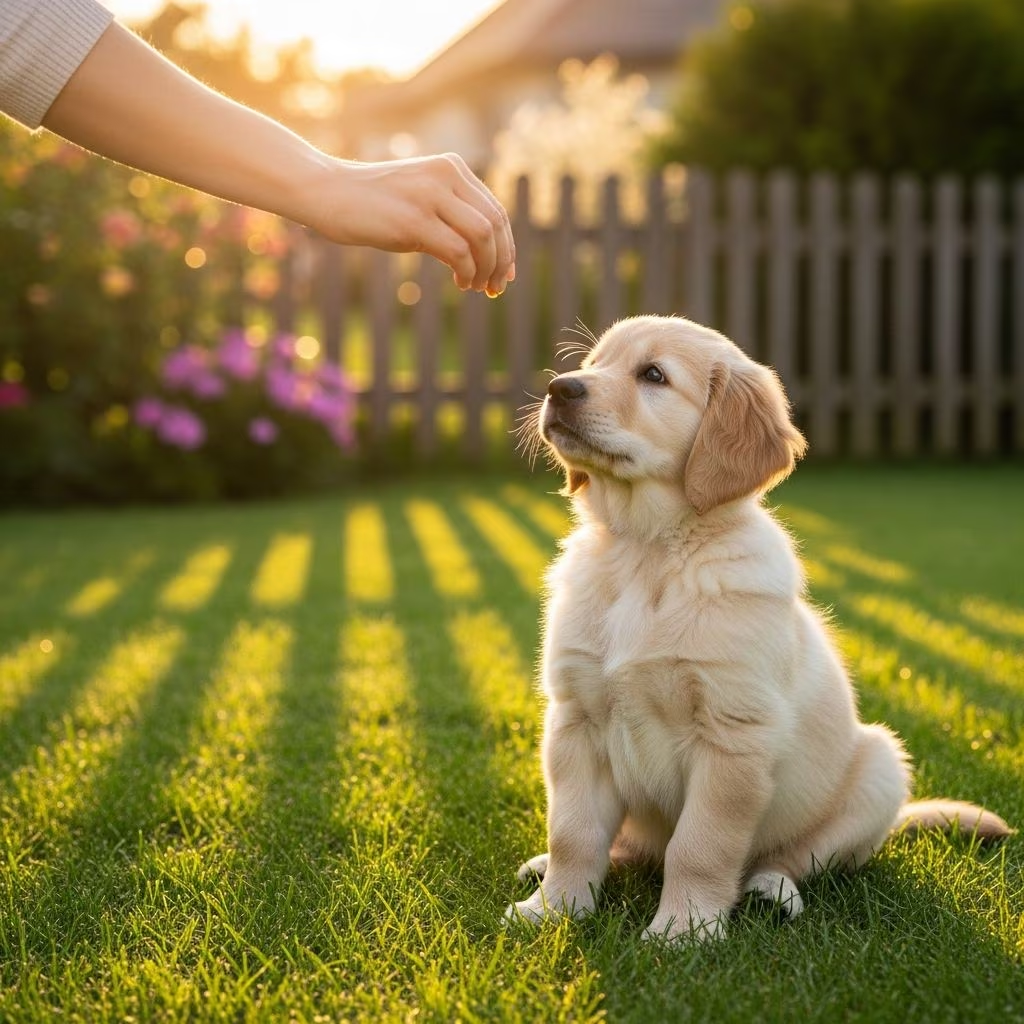
Teaching a puppy the **sit command** forms the cornerstone of basic obedience training. This simple yet powerful skill helps control impulsive behaviors, improves focus, and sets the stage for more advanced commands. Using positive reinforcement methods, most puppies grasp the concept within a few short sessions, leading to better-mannered pets in everyday situations like mealtimes or greetings.
Why the Sit Command Matters in Puppy Development
The sit command offers immediate benefits beyond mere compliance. It teaches puppies impulse control, reducing jumping on guests or bolting out doors. Veterinarians and trainers emphasize its role in preventing behavioral issues, as consistent practice builds a communication bridge between owner and dog. For young pups, sessions reinforce patience and attentiveness, key traits for lifelong learning.
Research from canine behavior studies shows that dogs trained with reward-based techniques exhibit lower stress levels and higher retention rates compared to punishment methods. Starting early—ideally between 8-12 weeks—maximizes neural plasticity in a puppy’s brain, making commands stick faster.
Essential Tools and Preparation for Training Success
Before diving into sessions, gather high-value treats like small pieces of chicken or cheese—these motivate without overfilling. A clicker provides precise timing for marking correct behavior, while a quiet, distraction-free space ensures focus. Sessions should last 5-15 minutes to match a puppy’s attention span, ideally 2-3 times daily.
- Treats: Soft, pea-sized portions to deliver quickly.
- Clicker: Optional but effective for sharp reinforcement.
- Leash: For added control in later stages.
- Environment: Indoors, away from toys or family bustle.
Step-by-Step Lure Training Method
The lure-and-reward approach leverages a puppy’s natural food drive. This technique, endorsed by organizations like the American Kennel Club, guides the dog into position without force.
- Grab Attention: Hold a treat at nose level in a closed fist. Let the puppy sniff to build interest.
- Lift and Arc: Slowly raise the treat 3-6 inches above the head, moving it back slightly toward the tail. The puppy’s nose follows upward, naturally tucking the hindquarters.
- Mark and Reward: The instant the rear hits the ground, say “yes!” or click, then deliver the treat. Pair with enthusiastic praise like “Good sit!”
- Release and Repeat: Use a release cue like “free” or “okay” to end the sit. Stand and lure again for 10-15 reps.
Practice in short bursts. Within days, puppies associate the motion with sitting reliably.
Transitioning to Verbal and Hand Signals
Once luring succeeds consistently, fade the treat in your hand to prevent dependency. Use an empty hand mimicking the motion—reward from your other pocket. Introduce the verbal cue “sit” just before the hand signal.
| Stage | Technique | Treat Use | Reps per Session |
|---|---|---|---|
| 1: Lure | Treat in hand, arc motion | Every rep | 10-15 |
| 2: Fade Lure | Empty hand signal | From other hand | 8-12 |
| 3: Verbal Cue | “Sit” + hand | Intermittent | 10 |
| 4: Verbal Only | “Sit” alone | Random rewards | 15+ |
This progression ensures the puppy responds to cues independently, vital for real-world distractions.
Adapting Training for Different Puppy Ages and Breeds
Puppies Under 6 Months
Youngsters tire quickly, so keep energy high with play breaks. High-energy breeds like Border Collies may need faster-paced sessions, while laid-back ones like Bulldogs respond to calmer vibes.
Adult or Senior Dogs
For older dogs, shorten treats’ travel distance or use hand signals if hearing fades. From a down position, lure upward gradually: reward head lifts first, then chest raises, building to full sit.
Common Challenges and Proven Fixes
Puppies often pop up too soon or jump. Counter by holding treats higher or stepping over them to encourage looking up.
- Jumping: Lower treat height; step back if needed.
- Standing Only: Use gentle leash pressure upward on collar while luring.
- Distraction: Return to basics in quieter spots; proof in new areas later.
- No Interest: Switch to hungrier times or tastier rewards.
Avoid pushing the rear down—forces create resistance and erode trust. Patience yields better results.
Building Duration and Proofing the Sit
Extend sits by delaying rewards: count silently to 3, then 5, praising throughout. Introduce distractions gradually—have a family member walk by or add mild noises.
Practice “sit-stay” combos: command sit, step back one foot, return to reward. Increase distance/time over weeks. Outdoors, use long lines for safety.
Advanced Variations: Sit Pretty and Sit from Down
Sit Pretty (Begging Position)
From sit, lure a treat high above nose until front paws lift. Mark lifts incrementally, fading to hand signal and cue like “sit pretty.” Ideal for polite trick performances.
- Sit, then raise treat slowly.
- Reward paw lifts first.
- Build height; add verbal cue.
From Down to Sit
With dog down, lure forward/upward to sitting. Reward transitions; repeat to link cues. Useful for chained commands.
Integrating Sit into Daily Routines
Reinforce before meals (sit to eat), doors (sit to exit), or greetings (sit for pets). Randomize rewards to maintain response—80% praise, 20% treats long-term.
Track progress in a journal: note session reps, success rate, and issues. Consistency across family members prevents confusion.
Frequently Asked Questions (FAQs)
How long until my puppy learns sit?
Most master basics in 3-7 days with daily practice. Mastery takes 2-4 weeks.
What if my puppy ignores the command?
Boost motivation with better treats or train pre-meal when hungry.
Can I train without treats?
Possible with toys/praise, but treats accelerate learning for food-motivated pups.
Is clicker training necessary?
No, but it sharpens timing for precise communication.
How to stop popping up during sits?
Only reward solid sits; ignore stand-ups and recue calmly.
Long-Term Maintenance for Reliable Obedience
Once fluent, test in varied settings: parks, vet visits. Vary cues (verbal/hand) to generalize. Annual refreshers prevent regression, especially for working breeds.
Positive training fosters bond and confidence. Celebrate milestones—your puppy’s progress reflects your dedication.
References
- How to Teach a Dog to Sit: A Step-by-Step Guide — Chewy. 2023. https://www.chewy.com/education/dog/training-and-behavior/basic-dog-training-commands-sit
- Teach Your Dog to Sit — American Kennel Club (AKC). 2024-01-15. https://www.akc.org/expert-advice/training/how-to-teach-your-dog-to-sit/
- How to Teach Your Dog to Sit, Drop, Come and Stay — Northcote Vet. 2023-05-10. https://www.northcotevet.com.au/how-to-teach-your-dog-to-sit-drop-come-and-stay/



