

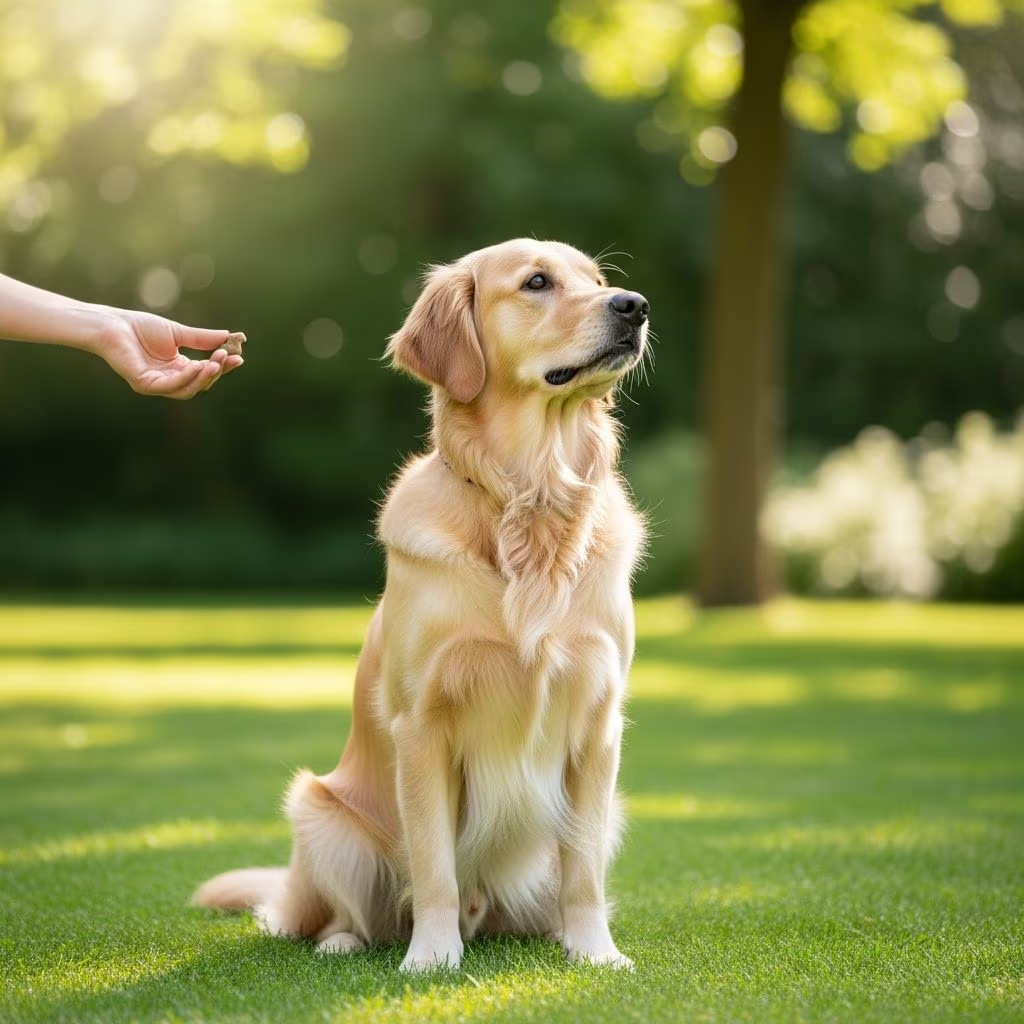
The sit command stands as one of the most fundamental skills in dog training, serving as a cornerstone for more advanced behaviors and daily management. By mastering this simple yet powerful cue, dog owners can improve impulse control, enhance communication, and foster a deeper connection with their pets. This guide draws from established positive reinforcement principles to provide a complete roadmap for teaching sit to dogs of all ages and breeds.
Why the Sit Command Matters in Canine Training
Teaching a dog to sit offers immediate practical benefits. It helps prevent jumping on guests, aids in polite greetings, and sets the stage for commands like stay or down. Consistency with sit builds a dog’s confidence and your leadership role without force or intimidation.
Research from canine behavior experts emphasizes that foundational commands like sit reduce behavioral issues by channeling natural energy into structured responses. Sessions should remain short and fun, typically 10-15 minutes, to match a dog’s attention span.
Essential Tools and Preparation for Success
Before starting, gather high-value treats that motivate your dog—soft, smelly options like cheese or commercial training treats work best. Select a distraction-free environment, such as a quiet room, and ensure both you and your dog are relaxed. Patience and enthusiasm from the handler are crucial, as dogs mirror human energy.
- High-value treats: Small pieces to avoid overfeeding.
- Clicker (optional): Marks precise moments of success for faster learning.
- Leash (for some methods): Gentle guidance if needed.
- Quiet space: Minimize interruptions for focus.
Train during calm times, like after a walk, when hunger heightens treat appeal but fatigue doesn’t hinder focus.
Step-by-Step Luring Method: The Easiest Starting Point
The luring technique uses a treat to guide your dog into position naturally, ideal for puppies and beginners. This method leverages a dog’s food drive without physical manipulation.
- Grab attention: Hold a treat at nose level so your dog sniffs it eagerly.
- Lift and arc: Slowly raise the treat 3-6 inches above the head, moving slightly back toward the tail. The nose follows upward, causing the rear to drop naturally.
- Mark and reward: The instant the bottom touches the ground, say “Yes!” or click, then deliver the treat. Pair with enthusiastic praise like “Good sit!”.
- Reset and repeat: Toss the treat away to stand the dog up, then repeat 10-15 times per session.
Practice daily in short bursts. Within days, most dogs associate the motion with sitting.
Fading the Lure: Transition to Hand Signals
Once reliable with the treat lure, phase it out to prevent dependency. Use an empty hand mimicking the same motion—reward from your other pocket. This hand signal becomes a permanent visual cue.
Progress gradually:
- Week 1: Lure with treat in hand 80% of reps.
- Week 2: Empty hand lure 50% of reps.
- Week 3: Hand signal only, verbal cue added.
Sessions build reliability; dogs learn cues through repetition and positive association.
Adding the Verbal Cue for Independent Response
Introduce “sit” just before the hand signal when the dog anticipates reliably. Say it calmly, signal, then reward. Over time, test the verbal alone in low-distraction settings.
Avoid common pitfalls like repeating the cue endlessly—say it once, then prompt if needed. This teaches prompt response without nagging.
Adapting for Puppies, Seniors, and Special Cases
| Dog Type | Adjustments | Tips |
|---|---|---|
| Puppies (under 6 months) | Shorter sessions (5-10 min), high-energy treats | Play-based; incorporate toys if food-motivated less |
| Seniors or arthritic dogs | Hand signals over verbal; avoid long holds | Gentle luring from standing; praise heavily |
| High-energy breeds | Distracted-proof in varied locations early | Combine with exercise; use tug rewards |
| Food-avoidant dogs | Use toys or petting as rewards | Capture natural sits first |
For deaf dogs, rely solely on signals. Always prioritize comfort to prevent injury.
Capturing Natural Sits: A Hands-Off Approach
Observe your dog and reward spontaneous sits. Mark with “Yes!” and treat immediately. Add the cue just before they sit on their own. This passive method suits independent dogs and reinforces without luring.
Build duration: After sit, wait 2 seconds before rewarding, gradually increasing to 5-10 seconds for a mini-stay.
Teaching Sit from Down Position
To transition from lie-down to sit:
- Start in down; lure upward with treat at nose.
- Say “sit” as hips lift; reward fully upright position.
- Fade lure to hand signal.
Practice 5-10 reps daily for fluency.
Advanced Variations: Sit Pretty and Proofing
Sit Pretty (Beg): From sit, lure treat higher above head until front paws lift. Reward incrementally, fading to cue “pretty”.
Proofing: Test in distracting environments—park, kitchen—starting close (1 foot away), then increasing distance. Reward high-value for challenges.
Common Mistakes and How to Fix Them
- Dog backs up instead of sits: Step into their space or use a wall as a barrier.
- No interest in treats: Use hungrier times or better rewards.
- Forcing position: Avoid pushing hips down—erodes trust.
- Over-repetition: End on success; never punish slowness.
Building Duration and Distance for Reliability
Once basic sit is solid:
- Duration: Count seconds before reward (start at 1, build to 10).
- Distance: Step back 1 foot, return to reward; extend gradually.
Incorporate into daily life: Sit before meals, doors, or play.
FAQ: Answering Top Dog Sit Training Questions
How long does it take to teach sit?
Most dogs learn basics in 3-7 days with 10-15 min daily practice. Fluency takes 2-4 weeks.
What if my dog only sits for treats?
Fade lures progressively; intersperse free praises. Use variable rewards like slot machines.
Can I teach sit without treats?
Yes, via capturing or life rewards (e.g., door access). Treats accelerate learning.
Why does my dog pop up too soon?
Increase session engagement or practice stays separately before combining.
Is clicker training necessary?
No, but it precisely marks behavior for quicker results, especially for precise timing.
Integrating Sit into Everyday Routines
Embed sit everywhere: Before leashing, feeding, or petting. This real-world application solidifies the cue. Track progress in a journal to celebrate milestones and adjust methods.
Positive reinforcement shines here—dogs thrive on clear expectations and rewards, leading to happier homes.
References
- How to Teach a Dog to Sit: A Step-by-Step Guide — Chewy. 2023. https://www.chewy.com/education/dog/training-and-behavior/basic-dog-training-commands-sit
- Teach Your Dog to Sit — American Kennel Club. 2024-01-15. https://www.akc.org/expert-advice/training/how-to-teach-your-dog-to-sit/
- Sit | Canine Life Skills — Positively.com. 2022-05-10. https://positively.com/dog-training/article/canine-life-skills-sit



