

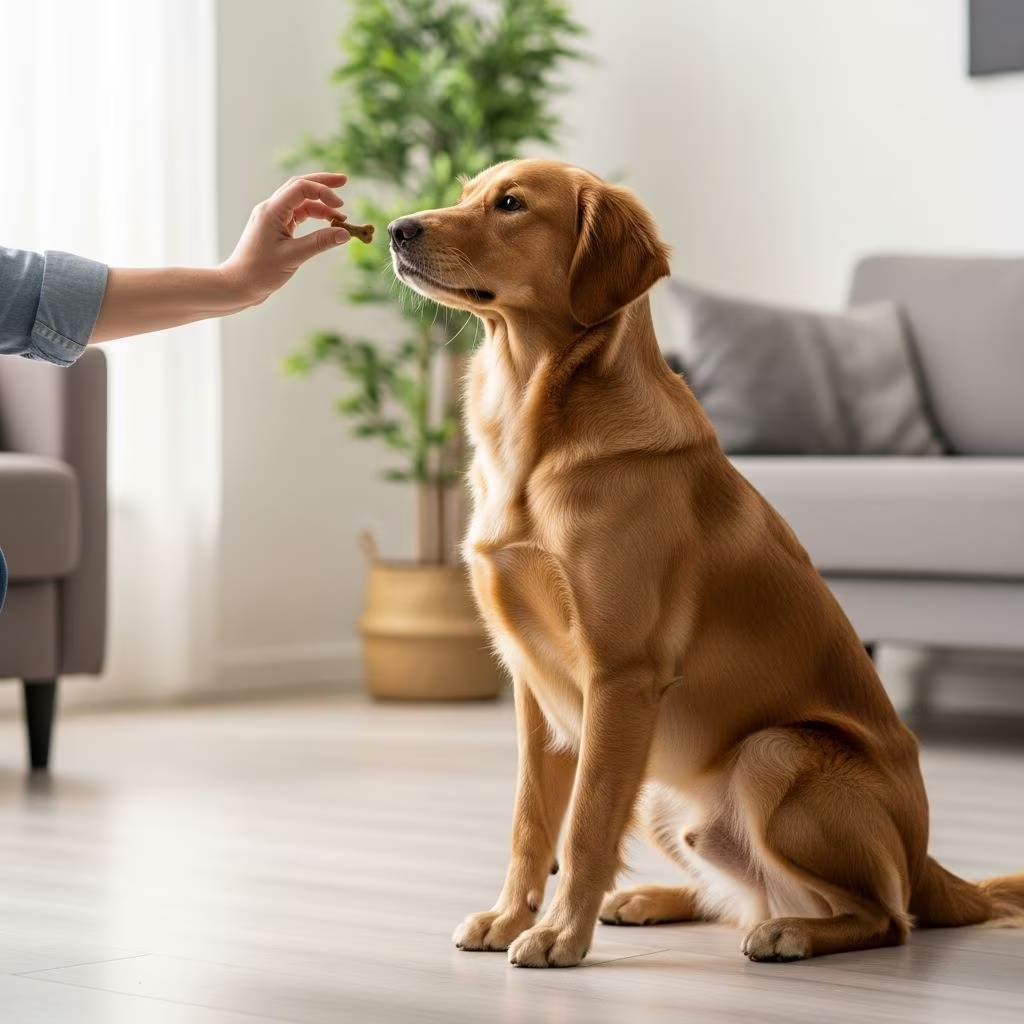
The sit command stands as one of the foundational skills in dog training, offering a reliable way to gain your pet’s attention and promote calm behavior in various situations. Whether you’re bringing home a bouncy puppy or working with an energetic adult dog, mastering this command builds a strong foundation for more complex obedience tasks. Positive reinforcement techniques, such as using treats and praise, make the process enjoyable for both you and your dog, fostering a deeper bond while encouraging quick learning.
Why the Sit Command Matters in Everyday Life
Implementing the sit command transcends simple tricks; it serves practical purposes like preventing jumping on guests, waiting patiently before meals, or pausing at crosswalks. Dogs naturally respond well to structured cues, and sit helps redirect impulsive actions into controlled responses. Research from canine behavior experts highlights how early obedience training reduces behavioral issues by up to 70% in household settings.
For puppies, introducing sit early capitalizes on their short attention spans, while for older dogs, it reinforces manners and counters habits like begging. Consistency across family members ensures the command generalizes to real-world scenarios, making outings smoother and safer.
Essential Tools and Preparation for Success
Before diving into sessions, gather high-value treats—small, soft pieces your dog finds irresistible, such as bits of cheese or commercial training rewards. Select a distraction-free environment, like a quiet living room, and limit sessions to 15-20 minutes to match your dog’s focus capacity.
- Quiet training area: Minimizes external stimuli for better concentration.
- High-motivation treats: Choose low-calorie options to avoid weight gain during frequent rewards.
- Clicker (optional): Marks precise moments of success, speeding up association.
- Leash (for advanced stages): Aids control in open spaces.
Approach training with patience and enthusiasm; dogs mirror your energy, so a positive demeanor accelerates progress.
Step-by-Step Guide: Lure Method for Basic Sit
The lure-and-reward approach leverages your dog’s food drive to guide them into position naturally. This method suits most dogs, regardless of breed or age.
- Attract attention: Hold a treat at nose level while your dog stands. Allow sniffing to build interest.
- Guide upward: Slowly raise the treat 3-6 inches above their head, moving slightly back toward their tail. Their nose follows, causing the rear to lower instinctively.
- Mark and reward: The instant their bottom hits the ground, say “Yes!” or click, then deliver the treat. Pair with verbal praise like “Good sit!”
- Release and repeat: Use a release word like “Free” to end the sit, then toss a treat away to reset. Aim for 10-15 reps per session.
Practice daily; most dogs grasp the lure within 3-5 sessions. Video yourself to check hand positioning—too high, and they may jump; too low, and they lunge forward.
Transitioning to Verbal and Hand Signals
Once reliable with the lure, phase it out to build independence. Start with an empty hand mimicking the motion, rewarding from your other palm. Introduce the verbal cue “Sit” just before the hand signal.
| Stage | Technique | Reps per Session | Success Goal |
|---|---|---|---|
| 1: Lure | Treat in hand | 10-15 | 80% compliance |
| 2: Fade lure | Empty hand signal | 8-12 | 90% compliance |
| 3: Verbal cue | “Sit” + signal | 10 | 95% compliance |
| 4: Verbal only | “Sit” alone | 5-10 | 100% in low distraction |
This progression prevents dependency on treats, turning sit into a default response.
Adapting for Puppies, Adults, and Seniors
Young Puppies (8-16 Weeks)
Puppies tire quickly, so use play breaks. Short, frequent sessions (5 minutes) work best. Their flexibility makes luring effortless.
Adult Dogs
Energetic adults may jump initially; step closer to position yourself above them, encouraging a downward glance. Incorporate into walks for real-life practice.
Senior Dogs
Arthritis or hearing loss requires modifications. Use exaggerated hand signals over voice; opt for soft surfaces to ease joints. Lure from a down position: raise treat to prompt upward movement into sit.
Advanced Variations: Sit Pretty and Sit from Down
Elevate skills with “Sit Pretty” (begging position). From a sit, raise treat higher to lift front paws off the ground. Reward incrementally for height.
To teach sit from down: Lure upward from lying position, marking the transition. Alternatively, wait for spontaneous shifts and reward, then add the cue.
- Sit Pretty steps: Sit → Raise treat → Reward paw lift → Build height → Fade lure.
- From Down: Down → Lure up → “Sit” → Reward.
Overcoming Common Hurdles
Dogs may pop up too soon or ignore cues. Avoid these pitfalls:
- Don’t push down: Forces resistance; always lure positively.
- Short sessions only: Fatigue leads to frustration.
- No punishment: Builds fear; stick to rewards.
- Distractions later: Master indoors before outdoors.
If progress stalls, return to luring or switch treats. High-energy breeds like Border Collies may need mental games post-session to burn energy.
Integrating Sit into Daily Routines
Reinforce by cueing sit before meals, doors, or greetings. Variable rewards (treat sometimes, praise others) solidify habits long-term. Track progress in a journal: note reps, success rate, and environments.
Group training boosts socialization; dogs learn faster observing peers.
Frequently Asked Questions (FAQs)
How long until my dog learns sit?
Most learn basics in 1-2 weeks with daily practice. Consistency is key.
What if my dog jumps instead of sitting?
Hold treat closer to nose and move slower; stand taller to encourage looking up.
Can I train without treats?
Yes, use toys or petting, but treats accelerate initial learning.
Is a clicker necessary?
No, but it precisely marks behavior for faster association.
How do I teach deaf dogs?
Rely on hand signals and vibrations; visual cues work excellently.
Long-Term Maintenance and Proofing
Proofing exposes sit to distractions: start mild (near toys), progress to parks. Randomize cues to prevent anticipation. Annual refreshers keep skills sharp, especially for working dogs.
Combine with stay or down for sequences like sit-stay-wait-release, enhancing impulse control. Professional classes via AKC-affiliated groups offer structured environments.
Ultimately, sit training embodies positive reinforcement’s power: clear communication yields polite, happy companions. Dedicate time weekly, celebrate milestones, and watch your dog thrive.
References
- How to Teach a Dog to Sit: A Step-by-Step Guide — Chewy. Accessed 2026. https://www.chewy.com/education/dog/training-and-behavior/basic-dog-training-commands-sit
- Teach Your Dog to Sit — American Kennel Club (AKC). Accessed 2026. https://www.akc.org/expert-advice/training/how-to-teach-your-dog-to-sit/



