

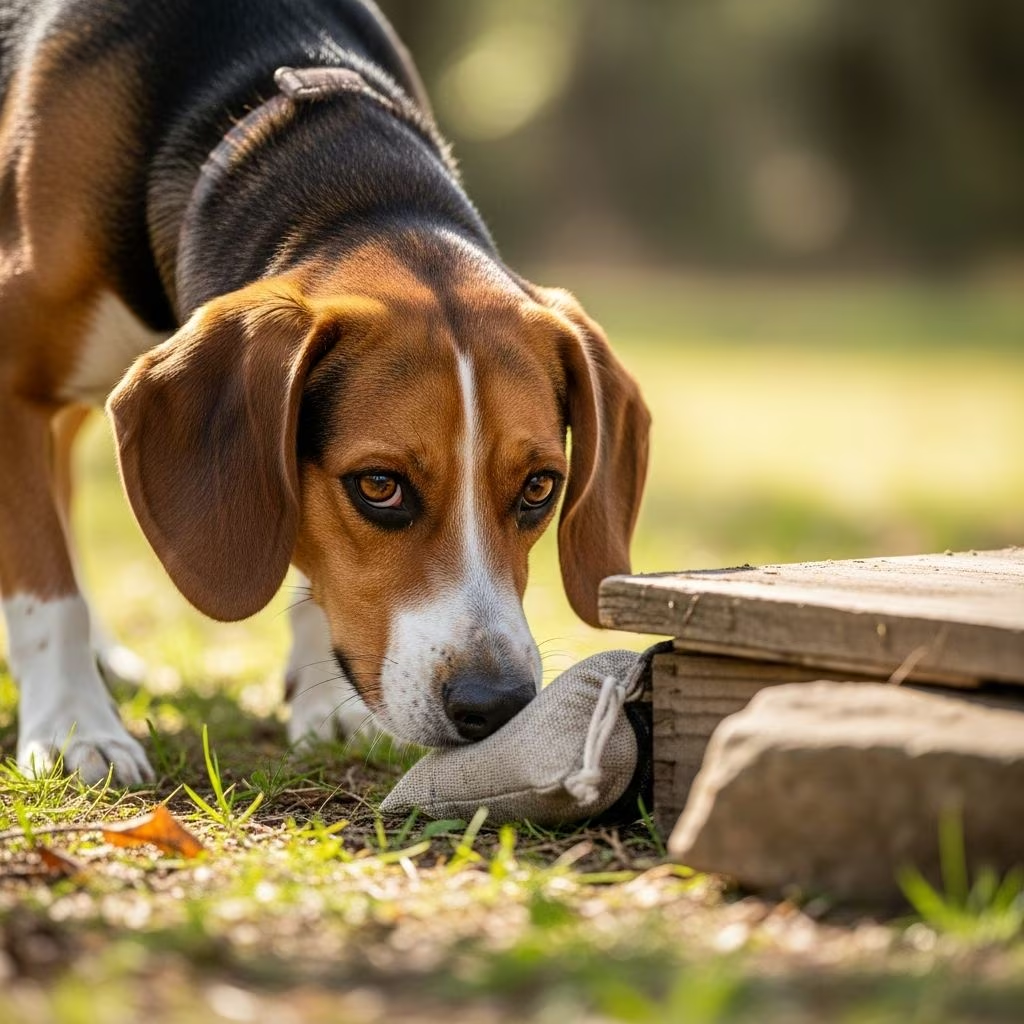
Dogs possess an extraordinary sense of smell, far surpassing human capabilities, making scent training a natural and rewarding activity. This guide delves into practical methods to harness this talent, fostering mental sharpness, confidence, and a deeper bond between you and your canine companion.
The Science Behind a Dog’s Nose
A dog’s olfactory system contains up to 300 million receptors, compared to humans’ mere 6 million, allowing them to detect scents at concentrations as low as parts per trillion. This superpower evolved for survival, from hunting to navigation, and scent training taps into it for enrichment and skill-building.
Training exploits this by associating specific odors with rewards, gradually increasing complexity. Benefits include reduced anxiety, improved focus, and physical exercise through sniffing, which burns more calories than walking alone.
Essential Equipment for Scent Sessions
Starting scent work requires minimal investment. Core items include:
- A sturdy leash for control during trails.
- High-value rewards like treats, toys, or food toys your dog loves.
- Scent sources: food (chicken, cheese), essential oils (birch, anise), or game scents for hunting dogs.
- Containers: tins, jars, or boxes with holes for hiding scents safely.
- Tools like cotton swabs, tweezers, gloves for odor prep to avoid contamination.
For advanced setups, add flags for trail marking or dummies soaked in scents.
Building Foundational Scent Skills
Begin with simple exercises to teach your dog that their nose leads to rewards.
Introducing the Scent Pairing
Pair a target odor with positivity. Apply drops of birch oil to a cotton swab inside a perforated tin. Hold the tin in one hand, treats in the other. When your dog investigates the scented hand, mark with ‘yes!’ and reward at the source. Switch hands to prevent cues from position. Repeat until reliable.
Transition to Ground Work
Place the scented container on the floor between your feet. Encourage sniffing; reward only at the odor. Progress to hiding under a box or in a room corner, praising search efforts verbally but staying silent on finds to let the dog lead.
Sessions should last 1-2 minutes per round, 3-5 rounds, 15 minutes total, repeated over six sessions before advancing.
Creating Effective Scent Trails
Trail work mimics hunting, teaching dogs to follow ground scents against wind.
| Trail Type | Description | Tips for Success |
|---|---|---|
| Straight Line | Drag treat/toy 10-20 feet, hide at end. | Use on leash; reward find with play. |
| L- or U-Shape | Mark turns with flags; wind-parallel. | Soak dummy in water for intensity. |
| Backyard Starter | Short drag to bush with dummy. | Set dog downwind; cue ‘hunt’. |
Enhance trails with humid conditions, damp earth, or feather teasers. Start pungent (large bird or soaked rag) for confidence.
Developing Alert Behaviors
Teach clear indications like sit, paw, or nose-touch for finds.
- Place scented dowel on ground near blank one; reward nose on target.
- Shape duration: Delay treats as nose stays on odor.
- Introduce ‘stickiness’ by freezing motion off-odor, rewarding precision.
For passive alerts, build ‘intelligent disobedience’ where dogs persist on source despite handler cues.
Progressing to Advanced Detection
Once basics solidify, elevate challenges.
- Multiple Hides: Use several boxes; reward first find, then search others.
- Environmental Variety: Move outdoors, vehicles, elevations.
- Odor Discrimination: Introduce birch, anise, clove; teach one at a time.
- Blind Searches: Handler unaware of hide location for realism.
Incorporate games: Hide toys in progressive levels (bronze to gold). Keep sessions short to maintain drive.
Troubleshooting Common Challenges
Issues arise; address systematically:
- Dog Distracted: Use higher-value rewards; shorten trails.
- Missing Scents: Strengthen odor, reduce length, check wind.
- Over-Excitement: Add calm cues post-find.
- No Interest: Pair with play; ensure motivation matches (food vs. toy).
Observe nose condition: Cool, damp is ideal for pickup.
Health and Safety Considerations
Monitor for overheating during outdoor work; hydrate frequently. Avoid allergenic scents; use pure oils. Consult vets for respiratory issues. Training suits all ages/breeds, adaptable for mobility-limited dogs indoors.
Real-World Applications
Beyond fun, scent skills aid therapy, search-rescue, detection careers. Home practice builds obedience, reduces boredom-induced behaviors like chewing.
FAQs
What age can I start scent training?
Puppies as young as 8 weeks; keep sessions brief.
How often should we train?
3-5 sessions weekly, 15 minutes each.
Can any dog do this?
Yes, all breeds; scent hounds excel but mixes thrive too.
What if my dog isn’t food-motivated?
Use tug toys or balls; drag to create trails.
How do I store scents?
Glass jars, sealed; discard contaminated swabs.
References
- The beginner’s guide to scent training for dogs — Tug-E-Nuff. 2023. https://us.tug-e-nuff.com/blogs/news/scent-training-for-dogs
- How to Train Stickiness (Advanced K9 Scent Work) — Dingle Days Photography. 2023. https://www.dingledaysphotography.com/blog/passive-alert
- A Beginner’s Guide to Scent Training for Dogs — Mossy Oak. 2023. https://www.mossyoak.com/our-obsession/blogs/how-to/a-beginners-guide-to-scent-training-for-dogs
- Scent Training Overview — Robert Cabral. 2023. https://robertcabral.com/courses/scent-training-overview/
- Scent Training — Ducks Unlimited. 2023. https://www.ducks.org/hunting/retriever-training/scent-training
- How to Teach Your Dog Scent Work at Home — American Kennel Club. 2023-10-01. https://www.akc.org/expert-advice/training/how-to-teach-your-dog-scent-work/
- Dog Nose Work: Scent Training Sport for Dogs — Best Friends Animal Society. 2023. https://bestfriends.org/pet-care-resources/dog-nose-work-scent-training-sport-dogs



