

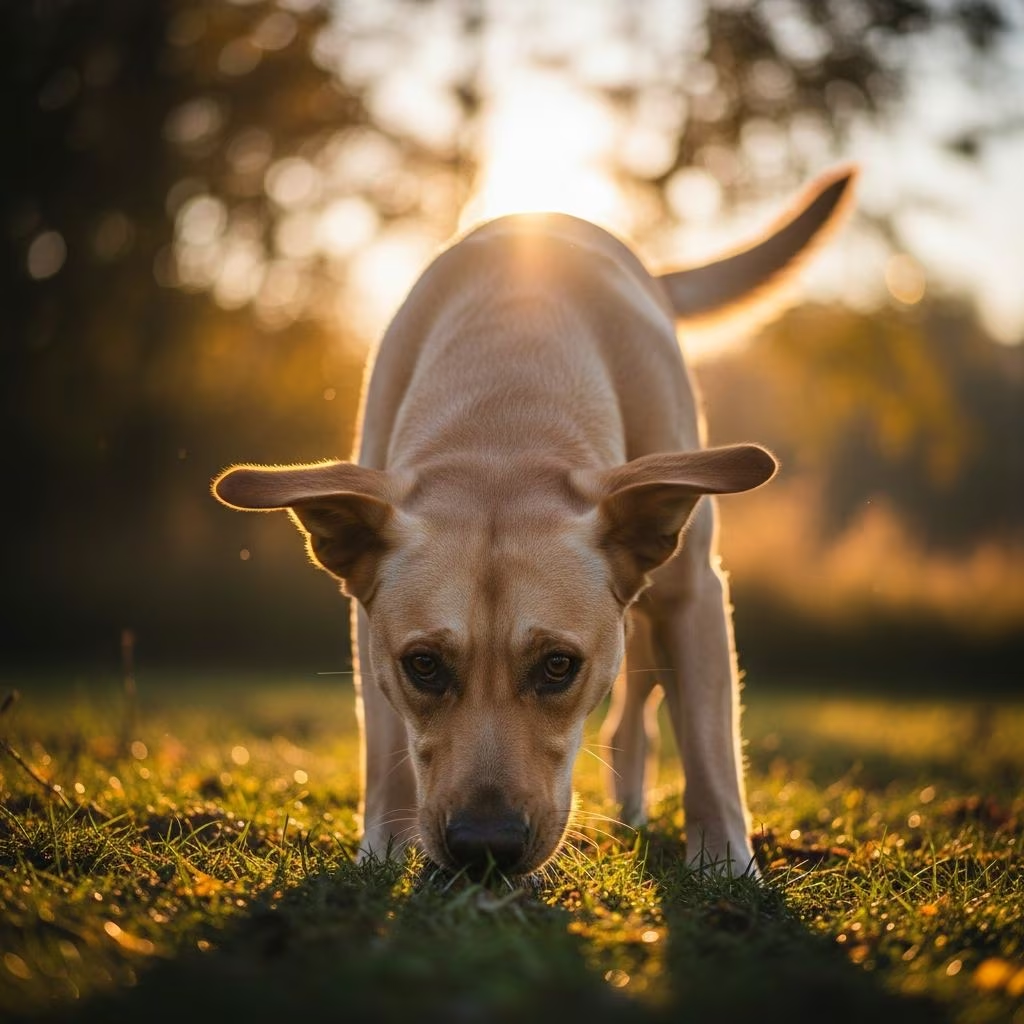
Every dog possesses an extraordinary sense of smell, far superior to humans, making scent training a natural and engaging activity. This guide delves into practical methods to harness this ability, fostering mental sharpness, confidence, and a stronger human-canine bond through structured exercises.
The Science Behind a Dog’s Nose
Dogs have up to 300 million olfactory receptors compared to humans’ 6 million, allowing them to detect scents at concentrations 100,000 times lower. Scent training taps into this instinctual drive, mimicking natural foraging behaviors and providing enrichment that reduces boredom and anxiety.
Training activates the dog’s brain reward centers, releasing dopamine upon successful finds, which reinforces learning and builds enthusiasm. Regular sessions improve focus, problem-solving, and even physical stamina as dogs learn to navigate complex environments nose-first.
Essential Equipment for Scent Work Success
Starting scent training requires minimal investment, focusing on items that motivate your dog. Key tools include:
- High-value rewards: Treats like chicken, cheese, or freeze-dried liver; tug toys or balls for play-motivated dogs.
- Scent sources: Food items, essential oils (e.g., birch), or game scents like duck for hunting simulations.
- Containers: Cotton swabs in jars, perforated tins, or plastic boxes to hold odors safely.
- Accessories: Leads, gloves, tweezers for handling scents hygienically, and flags for marking trails.
Begin with familiar, potent smells to ensure quick successes, gradually introducing variety to challenge discrimination skills.
Building Foundational Scent Trails
Introduce tracking by creating simple ground trails, leveraging wind and humidity for optimal scent retention. Drag a smelly item like soaked meat or a fur toy 10-20 feet, hiding it at the end under a bush or toy.
- Secure your dog on a lead downwind.
- Release with a cue like “find it” or “hunt.”
- Encourage verbally during search, quieting upon trail acquisition to avoid distraction.
- Reward lavishly at the find, playing tug or offering treats to associate scent-following with joy.
Progress to L- or U-shaped paths, flagging corners to verify ground tracking over air scenting. Humid, warm conditions amplify odors carried in moisture-laden air.
Teaching Precise Odor Detection
Advance to stationary hides, teaching dogs to alert on specific scents rather than general smells. Use birch oil on swabs as a starter odor, standard in nose work sports.
| Step | Action | Purpose |
|---|---|---|
| 1. Prep | Apply oil to swab in vessel; wear gloves | Prevent human contamination |
| 2. Pairing | Present vessel and treat separately; reward at scent source | Associate odor with reward |
| 3. Hide | Place in container on ground; cue search | Build independence |
| 4. Alert Training | Shape sit/down/stay on odor via targeting | Clear communication |
For alerts, shape behaviors like pawing or sitting by rewarding proximity to odor, freezing motion on false alerts to encourage precision. Drop treats directly at the source to reinforce location accuracy.
Progressing to Advanced Challenges
Once basics are solid, elevate difficulty:
- Multi-scent discrimination: Hide multiple odors, cueing specific ones (e.g., “birch”).
- Elevated/embedded hides: Place scents in boxes, on shelves, or buried shallowly.
- Distraction trails: Add dummy scents or wind-crossing paths.
- Duration building: Delay rewards to extend nose contact.
Sessions should last 15 minutes, 3-5 short rounds, repeating 6 times before advancing. This prevents fatigue while solidifying skills.
Environmental Factors for Optimal Training
Scent behavior varies by conditions. Wind carries air scents high, while ground trails demand low-nose work; align trails with prevailing breezes. Humidity binds odors to surfaces, ideal for novices; dry air disperses them quickly.
Train in varied settings—backyard to parks—to generalize skills. For hunting prep, use game birds, plucking feathers as visual teasers along paths.
Common Mistakes and Fixes
Avoid these pitfalls:
- Over-prompting: Let the dog lead; excessive cues create handler dependency.
- Weak rewards: Use top motivators tailored to your dog.
- Rushing progress: Ensure 3 consistent successes before increasing complexity.
- Poor hygiene: Always glove up to avoid cross-contamination.
Observe your dog’s style—air vs. ground sniffers—and adapt trails accordingly for confidence-building.
Benefits Beyond the Game
Scent work sharpens focus for reactive dogs, aids weight management via mental exercise, and supports therapy or detection careers. It’s low-impact, suitable for all ages and breeds, enhancing overall obedience.
DIY Scent Games for Daily Fun
Muffin Tin Madness: Hide treats in a muffin tin under tennis balls; cue search.
Shell Game: Scent one cup among three, shuffling for discrimination.
Room Search: Hide toys progressively farther, rewarding finds.
These games fit 5-minute slots, maintaining engagement without formal setup.
Frequently Asked Questions
Can any dog do scent training?
Yes, all breeds excel due to innate olfactory prowess; adapt for seniors or mobility-limited pups with stationary hides.
How often should I train?
3-5 sessions weekly, 15 minutes each, for steady progress without burnout.
What if my dog loses interest?
Up rewards, shorten sessions, or vary scents/toys to reignite drive.
Is professional guidance needed?
Home training suffices for fun; join clubs for competition prep.
Best scents for beginners?
Food or birch oil; avoid synthetics initially.
References
- The beginner’s guide to scent training for dogs — Tug-E-Nuff. 2023. https://us.tug-e-nuff.com/blogs/news/scent-training-for-dogs
- How to Train Stickiness (Advanced K9 Scent Work) — Dingle Days Photography. 2022. https://www.dingledaysphotography.com/blog/passive-alert
- A Beginner’s Guide to Scent Training for Dogs — Mossy Oak. 2023. https://www.mossyoak.com/our-obsession/blogs/how-to/a-beginners-guide-to-scent-training-for-dogs
- Scent Training Overview — Robert Cabral. 2023. https://robertcabral.com/courses/scent-training-overview/
- Scent Training — Ducks Unlimited. 2024. https://www.ducks.org/hunting/retriever-training/scent-training
- How to Teach Your Dog Scent Work at Home — American Kennel Club. 2024-01-15. https://www.akc.org/expert-advice/training/how-to-teach-your-dog-scent-work/
- Dog Nose Work: Scent Training Sport for Dogs — Best Friends Animal Society. 2023. https://bestfriends.org/pet-care-resources/dog-nose-work-scent-training-sport-dogs



