

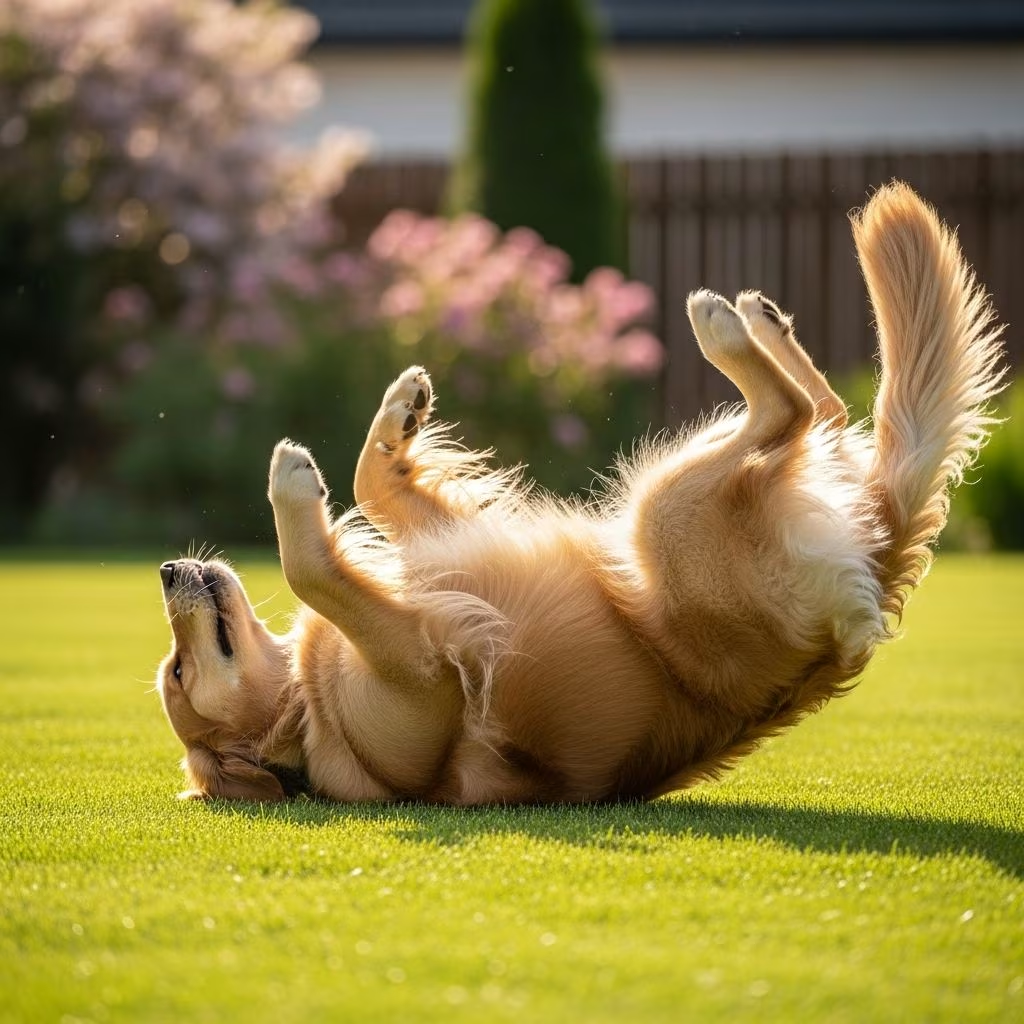
Teaching your dog to roll over is a delightful way to enhance your bond, stimulate their mind, and showcase their agility. This classic trick requires patience, consistency, and positive reinforcement, making it accessible for dogs of various ages and breeds. By breaking it down into manageable steps, most pups can master it within a week of daily practice.
Why Teach Your Dog to Roll Over?
The roll over trick offers more than just entertainment. It promotes physical flexibility, improves coordination, and boosts mental engagement, which is crucial for preventing boredom-related behaviors like chewing or excessive barking. According to canine training experts, tricks like this strengthen the handler-dog relationship through mutual fun and rewards. Additionally, it serves as a foundation for more complex commands, helping shy dogs build confidence by succeeding in small tasks.
- Enhances physical health by encouraging gentle rolling motions.
- Provides mental workouts that tire dogs out without intense exercise.
- Fosters trust, as dogs learn to follow hand signals and cues reliably.
Essential Prerequisites Before Starting
Success with roll over hinges on foundational skills. Your dog should already respond to basic commands like ‘sit’ and ‘down,’ as these position them correctly for the trick. If not, spend a few days reinforcing these first using treats and praise.
| Prerequisite Command | Purpose | Training Tip |
|---|---|---|
| Sit | Starts the sequence | Use a treat above nose to lure into position |
| Down | Primes body for rolling | Gently guide chest to ground with lure |
Choose a quiet, distraction-free space like your living room for initial sessions. Sessions should last 5-10 minutes, 2-3 times daily, to keep your dog eager without overwhelming them.
Step-by-Step Guide to Teaching Roll Over
Employ lure training with high-value treats like small pieces of turkey sausage or cheese—these motivate without overfeeding. Hold the treat near your dog’s nose to guide their movement naturally.
Step 1: Achieve the Down Position
Command ‘down’ and kneel beside your dog on their right side (easier for most). Praise lavishly when they lie flat. Repeat 5-10 times until reliable.
Step 2: Lure to Shoulder Roll
With dog in down, hold treat at nose level and slowly arc it toward their shoulder. Their head will follow, causing the body to tip onto the side. Reward immediately when shoulder touches ground. Practice until they consistently roll to side.
Step 3: Guide the Full Roll
Once on side, continue the treat arc over their back toward the opposite shoulder. This prompts tucking front legs and rolling onto back, then completing to the other side. Mark success with enthusiastic ‘yes!’ or clicker, followed by treat.
Step 4: Introduce the Verbal Cue
When full roll happens 8-10 times consistently, say ‘roll over’ just before luring. Pair with a hand signal like circling finger. Reward only full rolls to shape behavior.
Pro Tip: Some dogs prefer rolling one direction; start with their comfortable side and gently introduce the other later.
Common Challenges and Solutions
Not every dog rolls effortlessly. Frustration arises if steps are rushed or treats unappealing.
- Dog won’t follow lure: Use softer, smellier treats or a favorite toy. Ensure hand moves slowly.
- Partial rolls only: Reward tiny progress (head turn first), gradually raising criteria—one small step at a time.
- Fear of back exposure: Build comfort with gentle petting on belly before luring. Never force.
- Distractions derail focus: Train in varied low-distraction spots, progressing to busier areas.
If your dog is elderly or has joint issues, consult a vet; modify by rewarding side rolls instead of full ones.
Phasing Out Treats for Reliability
After a week of solid performance, reduce treats: reward every other roll, then randomly. Use praise, petting, or toys as alternatives. Practice in new environments like parks to generalize the cue. Aim for 10-20 reps daily initially, tapering as mastery grows.
Advanced Variations and Fun Extensions
Once basic roll over is fluent, elevate it:
- Double Roll: Cue twice for two rotations.
- Hand Signal Only: Fade verbal cue, rely on gesture.
- Roll Over with Play: Combine with fetch for dynamic tricks.
These build on American Kennel Club methods, promoting lifelong learning.
Benefits for Different Dog Types
Puppies grasp quickly due to flexibility; adults may need more reps but offer focus. High-energy breeds like Labs love it for outlet; brachycephalic (short-nosed) dogs like Pugs adapt well with side modifications.
Training Tools and Safety Tips
Essential gear: high-value treats, clicker for precise timing, non-slip mat for hard floors. Always end on success to maintain enthusiasm. Hydrate your dog and watch for fatigue.
Frequently Asked Questions (FAQs)
How long until my dog learns roll over?
Typically 3-7 days with 5-10 minute sessions. Consistency is key.
Can any breed learn this?
Yes, with adaptations for physical limitations. All dogs benefit.
What if my dog hates treats?
Substitute tug toys or praise. Find their motivator.
Is clicker training necessary?
No, but it sharpens timing for faster results.
Help—my dog rolls but ignores cue!
Return to luring without cue, reintroduce slowly.
Long-Term Maintenance
Practice weekly to retain skill. Integrate into play for natural reinforcement. Track progress in a journal to celebrate milestones.
References
- How to teach a dog to roll over in 3 easy steps — Dog Trick Academy. 2023. https://www.dogtrickacademy.com/blog/how-to-teach-a-dog-to-roll-over/
- How to Teach a Dog to Roll Over — American Kennel Club. 2024-05-15. https://www.akc.org/expert-advice/training/how-to-teach-a-dog-to-roll-over/
- How to Teach Your Dog to Roll Over — Chewy (YouTube). 2022. https://www.youtube.com/watch?v=IdIQiuWK78M
- DIY: How to Teach Your Puppy to Roll Over — DIYeasycrafts (YouTube). 2023. https://www.youtube.com/watch?v=TEBk9gK8rC8



