

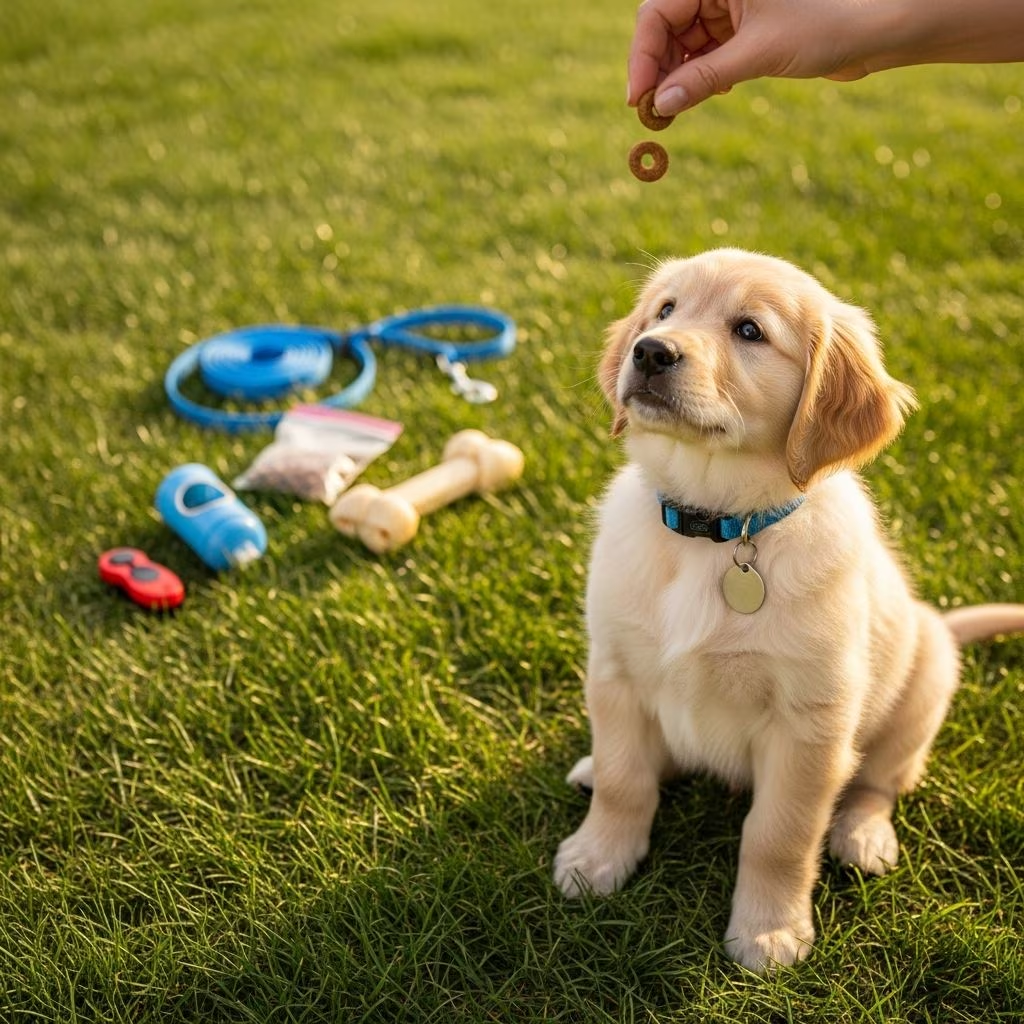
Bringing a new puppy into your home marks the start of an exciting journey filled with learning opportunities for both you and your furry companion. Effective training lays the foundation for a harmonious relationship, preventing behavioral issues and promoting safety. This guide draws on established practices to help you navigate the key phases of puppy development, from initial house manners to advanced obedience skills.
Why Early Training Matters for Lifelong Success
Puppies enter the world with boundless curiosity, absorbing experiences that shape their adult behavior. The critical period between 3 and 14 weeks is ideal for introducing positive associations with people, environments, and routines. Delaying training can lead to ingrained bad habits, making correction harder later. Research from veterinary behaviorists emphasizes starting with short, rewarding sessions to capitalize on a puppy’s short attention span, typically 5-10 minutes for those under 12 weeks.
Consistent routines foster security, reducing anxiety and boosting confidence. Owners who establish daily schedules report fewer accidents and quicker command mastery. Positive reinforcement—rewarding desired actions with treats, praise, or play—strengthens neural pathways, making good behavior habitual without fear or punishment.
Building a Solid Daily Routine
A predictable schedule synchronizes your puppy’s biological clock, aligning feeding, elimination, play, and rest. Puppies sleep 18-20 hours daily, so incorporate frequent naps to prevent overtired crankiness that mimics misbehavior.
- Feed 3-4 times daily: Use meals as training incentives, portioning kibble into sessions to maintain motivation.
- Potty breaks every 1-2 hours: Plus after meals, naps, and play, supervising closely indoors.
- Short play bursts: Followed by confinement for naps, mimicking den instincts.
- Evening wind-down: Dim lights and quiet time to signal bedtime.
Adjust based on age: 8-week-olds need hourly checks, while 4-month-olds manage 4-6 hours overnight. Track progress in a journal to refine the plan.
Potty Training: The Cornerstone of House Manners
Housetraining success hinges on prevention and praise. Confine puppies when unsupervised, using crates sized to allow standing but not soiling. Take them outside on a leash to a designated spot, using a cue like “go potty.” Immediate rewards upon completion build the association.
Clean accidents with enzymatic cleaners to erase scents. Common pitfalls include inconsistent access or punishing past errors, which confuses puppies. By 12-16 weeks, most achieve overnight control with diligent supervision.
| Age | Expected Hold Time | Break Frequency |
|---|---|---|
| 8-12 weeks | 2 hours | Every 30-60 min |
| 3-6 months | 4-6 hours | Every 2-4 hours |
| 6+ months | 6-8 hours | Every 4-6 hours |
Essential Obedience Commands to Teach First
Begin with foundational cues indoors, progressing to distractions. Use high-value treats, fading them as proficiency grows.
Step 1: Name Recognition and Recall
Say your puppy’s name once; when they look, reward. Pair with “come” during mealtimes: lure with food, praise arrival. Practice 5 times daily in varied spots. Reliable recall prevents escapes and ensures safety.
Step 2: Sit and Down
For sit, hold a treat over the nose, moving it back so hips drop—reward instantly. Transition to down by luring from sit position forward. These build impulse control, used before meals or doors.
Step 3: Stay and Leave It
Start stay in sit: say the cue, step back one step, return to reward. Build duration and distance. Leave it prevents grabbing hazards—offer a better treat for ignoring temptations.
Combine commands: Sit-Stay-Come-Place for fluency. Sessions: 3-5 daily, 5-15 minutes each.
Socialization: Exposing Puppies to the World Safely
Socialization prevents fear aggression by creating positive novel experiences before 16 weeks. Aim for 100 varied encounters: people, sounds, surfaces, animals.
- Invite calm guests; let puppy approach.
- Car rides to neutral spots.
- Controlled puppy classes post-vaccinations.
- Scent games: hide treats for nose work.
Expose gradually; end before stress. Puppy classes provide vetted playmates.
Leash Manners and Impulse Control
Introduce harness/leash at 8-10 weeks, pairing with treats. Teach loose-leash walking: stop when pulling, reward slack. Threshold training: sit at doors before passing.
Impulse exercises: wait for bowls, four paws on floor. Games like fetch build engagement.
Crate and Alone Training for Independence
Crate as safe haven: meals inside, toys, gradual door closure. Alone time starts at 1 minute, building to hours. Pair with chews to associate positively, curbing separation anxiety.
Age-Specific Training Milestones
| Weeks | Focus Areas | Key Goals |
|---|---|---|
| 8-12 | Name, Sit, Potty, Crate | Basic response, no accidents |
| 13-16 | Recall, Down, Leash | Indoor reliability |
| 17-20 | Stay, Leave It, Socialize | Distraction tolerance |
| 21-52 | Combinations, Loose Leash | Off-leash potential |
By one year, aim for sit/down/stay with distractions, reliable recall, polite walking.
Overcoming Common Puppy Challenges
Biting: Redirect to toys; yelp and withdraw attention.
Jumping: Turn away, reward four-on-floor.
Chewing: Puppy-proof, provide outlets.
Consistency across household members is vital.
Tools and Resources for Effective Training
- High-value treats (soft, smelly).
- Enzymatic cleaners.
- Proper crate, leash, harness.
- Interactive toys for alone time.
Enroll in positive-reinforcement classes for guidance.
Frequently Asked Questions
When should I start training my puppy?
Immediately upon arrival, even at 8 weeks, with gentle methods.
What if my puppy regresses in potty training?
Revisit supervision; rule out medical issues.
How do I choose the right treats?
Soft, pea-sized, low-calorie; vary to prevent pickiness.
Is punishment ever okay?
No—positive methods yield better, lasting results without fear.
How long until my puppy is fully trained?
Basics by 6 months; polish through year one and beyond.
References
- Complete Puppy Training Schedule by Age — The Puppy Academy. 2020-08-24. https://www.thepuppyacademy.com/blog/2020/8/24/complete-puppy-training-schedule-by-age
- Puppy Training Guide: How and When To Start — PetMD. n.d. https://www.petmd.com/dog/general-health/when-start-training-puppy
- The Ultimate 8-Week Puppy Schedule & Training Guide — Zigzag. n.d. https://zigzag.dog/en-us/blog/puppy-training/training-basics/ultimate-puppy-training-guide/
- Puppy Training Timeline: Teaching Good Behavior Before It’s Too Late — American Kennel Club. n.d. https://www.akc.org/expert-advice/training/puppy-training-timeline-teaching-good-behavior-before-its-too-late/
- Your Guide to Mastering Basic Puppy Training — Chewy. n.d. https://www.chewy.com/education/dog/new-dog/basic-puppy-training



