

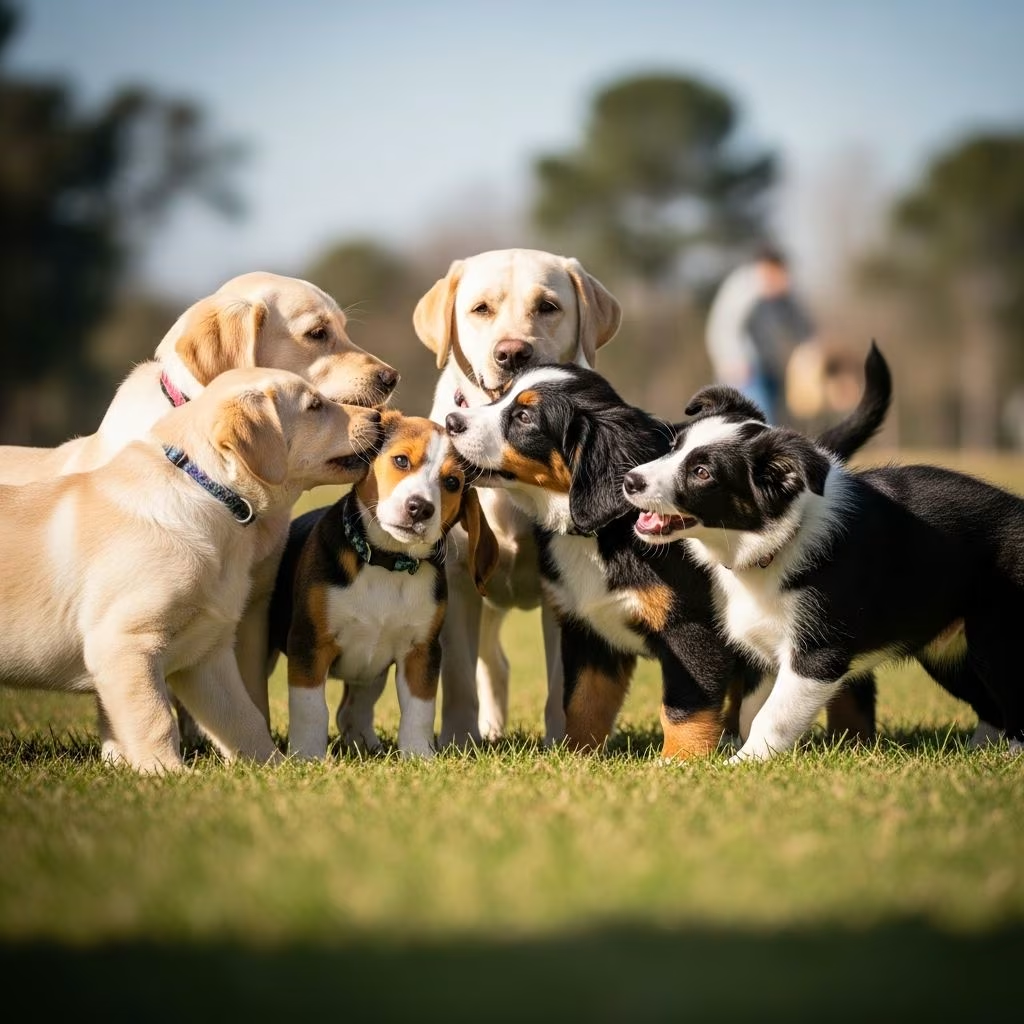
Puppy socialization forms the foundation for a confident, adaptable dog. During the critical period from 3 to 12 weeks, puppies learn to view the world positively, reducing future behavioral issues like fear or aggression. Proper methods involve gradual, positive exposures to diverse stimuli, always prioritizing the puppy’s comfort.
The Critical Window for Socialization
The prime socialization phase spans 3 to 14 weeks, with peak sensitivity before 12 weeks. Puppies’ brains are highly plastic, forming lasting impressions from early encounters. Missing this window increases risks of anxiety or reactivity later.
- 3-8 weeks: Focus on household sounds, family members, and gentle handling.
- 8-12 weeks: Introduce varied people, surfaces, and mild novelties.
- 12-16 weeks: Expand to public spaces and controlled dog interactions.
Beyond 16 weeks, continued exposure reinforces early lessons but is less impactful. Consistency matters most.
Building a Solid Foundation at Home
Start socialization in familiar surroundings to build security. Daily routines offer ample opportunities without overwhelming the pup.
Habituate to Household Stimuli
Expose puppies to everyday noises like vacuums, doorbells, and appliances at low volumes, gradually increasing intensity. Pair with treats to create positive links.
| Household Item | Introduction Method | Reward Strategy |
|---|---|---|
| Vacuum cleaner | Run from afar, then closer | High-value treats |
| Doorbell | Play recording softly | Praise and play |
| Blender/microwave | Low volume demos | Toy toss |
Gentle Handling Exercises
Touch paws, ears, mouth, and tail daily, using treats for each contact. This prepares for grooming and vet visits.
- Stroke shoulders first, progress to sensitive areas.
- Simulate nail trims by pinching toes lightly.
- Practice restraint by cradling or hugging softly.
Owners report calmer vet experiences with handled puppies.
Introducing Varied People and Interactions
Diversity in human encounters prevents selective fears. Invite calm friends over, varying appearances and ages.
- Men with beards, women with hats, children (supervised).
- People using canes, wheelchairs, or umbrellas.
- Individuals with sunglasses or hoods.
Let the puppy approach voluntarily. Hand strangers treats to offer, fostering approachability. Family involvement ensures broad exposure.
Safe Encounters with Other Animals
Delay off-leash dog parks until vaccinations complete. Opt for puppy classes with health checks.
Choose playmates: calm, vaccinated dogs of similar size and energy. Supervise closely, intervening at signs of overwhelm like stiffening or hiding.
- Start with one-on-one meetups in neutral yards.
- Observe body language: relaxed ears and wagging tails indicate comfort.
- End sessions positively before fatigue sets in.
Cat introductions require leashes for safety, allowing mutual sniffing at a distance.
Exploring Outdoor Environments
Daily walks expose puppies to urban or rural stimuli. Aim for two outings weekly to novel spots.
- Pet-friendly stores, cafes (carry small pups).
- Grassy fields, urban sidewalks, gravel paths.
- Observe livestock or birds from afar.
Vary surfaces: grass, tile, carpet. Carry young puppies to avoid parvo risks pre-vaccination.
Recognizing and Managing Stress Signals
Monitor for fear: yawning, lip licking, avoidance, growling. Reduce intensity immediately, retreating to comfort zones with treats.
Positive signs: playful bows, relaxed posture, eager exploration.
Stress Indicators vs. Confidence Cues
| Stress Signals | Confidence Signs |
|---|---|
| Freezing, tucked tail | Loose wagging, play bows |
| Avoidance, hiding | Curious sniffing, relaxed ears |
| Barking, nipping | Engaged focus on rewards |
If stressed, pause and rebuild at lower thresholds. Never force proximity.
Role of Puppy Classes and Professional Guidance
Enroll in vetted classes post-initial vaccines. These provide structured play, novel objects, and trainer oversight.
- Verify vaccination protocols and cleaning standards.
- Classes precede obedience for pure socialization focus.
- Benefit: safe peer interactions and owner education.
Positive Reinforcement: The Core Principle
Treats, praise, and toys cement good associations. Use high-value rewards for challenges.
- Break treats small for frequent use.
- Remain calm; puppies mirror emotions.
- Pair novelties with fun immediately.
Consistency across handlers amplifies effects.
Common Mistakes to Avoid
Overloading with stimuli leads to shutdowns. Punishment exacerbates fears. Skipping health checks risks illness.
- Avoid: Flooding (forcing exposure), rough play, unvaccinated groups.
- Do: Gradual progression, health priority, fun focus.
Long-Term Socialization Maintenance
Post-critical period, weekly novelties sustain adaptability. Lifelong calm exposures prevent regression.
Track progress with checklists:
- People variety: 20+ types met.
- Environments: 10+ locations.
- Sounds/surfaces: daily variety.
Frequently Asked Questions (FAQs)
What age is best for socialization?
3-12 weeks is critical; continue through 16 weeks and beyond.
Can I socialize before full vaccinations?
Yes, selectively: carry to clean areas, avoid dog contact.
What if my puppy shows fear?
Retreat, offer treats from distance, retry milder.
Are puppy classes necessary?
Highly recommended for safe, guided experiences.
How often should I expose my puppy?
Daily brief sessions, 2+ novel outings weekly.
Socialization transforms timid pups into resilient adults. Patience and positivity yield lifelong rewards.
References
- Puppy Socialization: When & How to Socialize a Puppy — Purina. 2023-2025. https://www.purina.com/articles/dog/puppy/training/how-to-socialize-puppy
- A Guide to Successful Puppy Socialization — IndeVets. 2023-2025. https://indevets.com/blog/puppy-socialization-how-to-ensure-your-new-canine-companion-is-well-adjusted-and-confident/
- The Complete Puppy Socialization Guide — Whole Dog Journal. 2023-2025. https://www.whole-dog-journal.com/puppies/pre_puppy_prep/the-complete-puppy-socialization-guide/
- How to Socialize a Puppy — American Kennel Club (AKC). 2024-01-15. https://www.akc.org/expert-advice/training/puppy-socialization/
- Puppy Behavior and Training – Socialization and Fear Prevention — VCA Animal Hospitals. 2023-2025. https://vcahospitals.com/know-your-pet/puppy-behavior-and-training—socialization-and-fear-prevention
- Puppy Socialization Checklist — Louisiana SPCA. 2020-09-01. https://www.louisianaspca.org/wp-content/uploads/2020/09/Puppy-Socialization-Checklist.pdf
- Puppy Socialization 101: A Guide for Pet Parents and Pet Pros — Revelation Pets. 2023-2025. https://www.revelationpets.com/blog/puppy-socialization-101-a-guide-for-pet-parents-and-pet-pros
- Tips for Socializing a Puppy — ASPCA Pro. 2023-2025. https://www.aspcapro.org/resource/tips-socializing-puppy



