

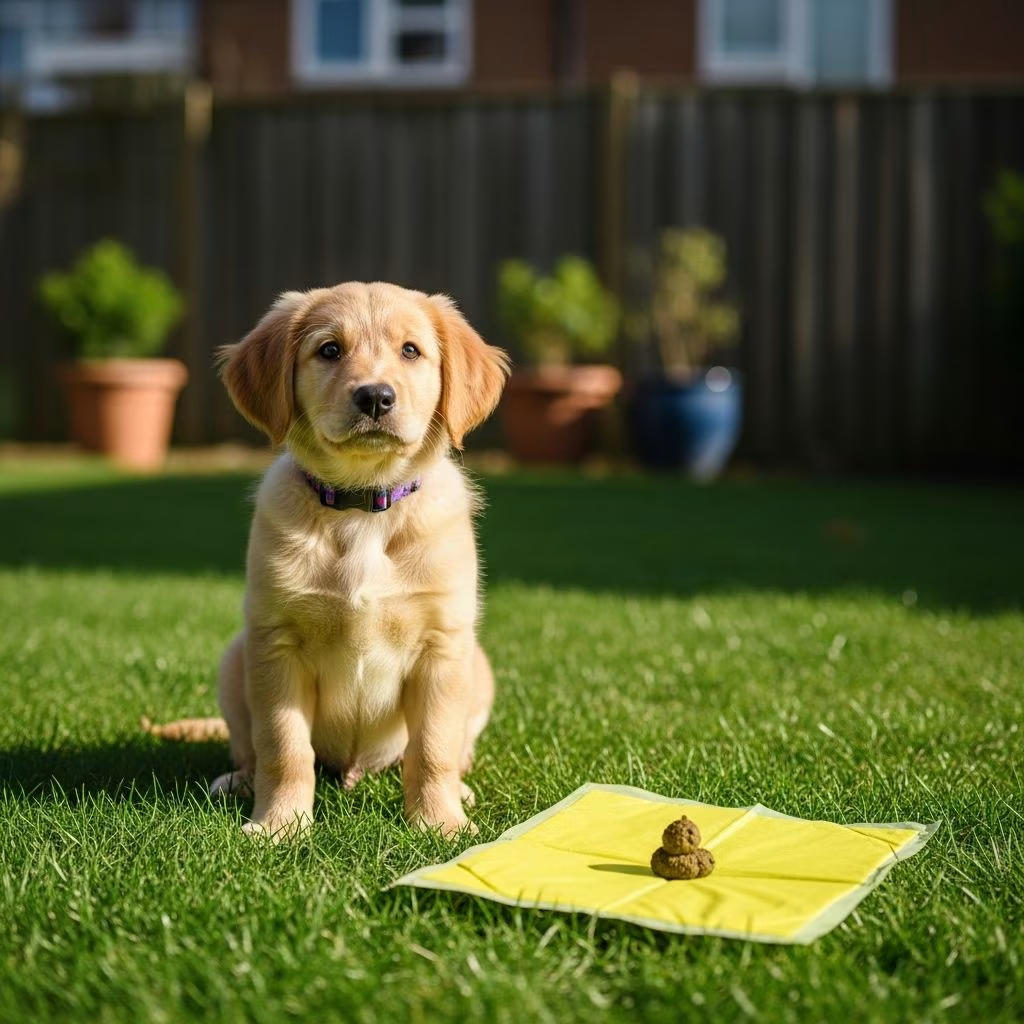
Potty training stands as one of the most essential skills for new dog owners, setting the foundation for a harmonious home life. Whether welcoming a playful puppy or adopting an adult dog, understanding canine elimination needs leads to fewer accidents and stronger bonds. This guide draws from established veterinary and training principles to outline practical steps, tools, and mindsets for success.
Understanding Canine Bladder Basics
Dogs, especially young puppies, have limited bladder control influenced by age, breed, and size. A common guideline holds that puppies can typically retain urine for approximately one hour per month of age plus one—meaning a two-month-old pup might manage three hours at most. Small breeds and seniors often require more frequent outings due to smaller bladders.
- Age factor: Newborns eliminate on instinct; by 8-12 weeks, basic control emerges.
- Triggers: Meals, drinks, naps, play, and excitement prompt the need to go.
- Signals: Sniffing, circling, whining, or restlessness indicate urgency.
Recognizing these patterns prevents mishaps and aligns training with natural biology.
Building a Consistent Daily Schedule
Routine forms the backbone of effective potty training. Dogs flourish under predictability, learning to anticipate potty opportunities. Establish fixed times for feeding, outings, and sleep to synchronize internal clocks.
| Time of Day | Activity | Potty Opportunity |
|---|---|---|
| Morning | Wake-up | Immediate outdoor trip |
| Post-meal | 10-15 minutes after eating | Leashed walk to spot |
| Every 1-2 hours | During active periods | Supervised break |
| After naps/play | Upon crate exit or rest end | Direct to yard |
| Evening | Before bed | Final calm outing |
Feed at set intervals—typically three times daily for puppies—and remove uneaten food after 15 minutes to regulate digestion. Water access remains constant, but monitor intake before bedtime.
The Power of Crate Training in Housebreaking
Crate training leverages dogs’ innate aversion to soiling their sleeping area. A properly sized crate—allowing standing, turning, and lying but no extra room—encourages holding until release. Introduce gradually with positive associations like treats and toys.
- Start with short sessions during calm times.
- Place crate in a family area for security.
- Use for naps and overnight; limit to 4-6 hours max for young pups.
- Always take directly outside upon exit.
For working owners, combine with dog walkers to maintain frequency. Proper crate use speeds training by 50% in many cases, minimizing indoor errors.
Supervision and Confinement Strategies
Constant vigilance catches pre-accident cues, allowing redirection. When attention lapses, confine to crate, playpen, or puppy-proofed zone with pads if needed. Leash indoors for ‘umbilical’ training—tethering to yourself ensures proximity.
- 10-10-10 rule adaptation: 10 minutes supervised outside, 10-foot designated potty zone, 10 minutes post-potty freedom.
- Confinement zones: Laundry rooms or gated areas with absorbent surfaces serve as interim solutions.
- Tech aids: Bells on doors teach self-signaling over time.
This management prevents habits while building reliability.
Positive Reinforcement: Rewarding Success
Praise and treats immediately after elimination cement the behavior. Use high-value rewards like small chicken bits, delivered the instant the dog finishes—before returning inside or playing. Verbal cheers like ‘Good potty!’ pair with physical affection.
Phasing: Begin with food, transition to play/walks as rewards. Consistency across family members avoids confusion. Punishment backfires, fostering fear and hiding, so focus solely on successes.
Selecting the Right Potty Area
Choose a consistent outdoor spot—grassy patch or gravel 10 feet square—to leverage scent cues. Leash even in fenced yards to guide precisely and prevent wandering. Stand still as a ‘tree’ for 5 minutes; if no go, return inside for crating and retry soon.
For apartments, puppy pads or indoor turf provide options, gradually moving outdoors. Weather challenges? Covered porches or balconies work temporarily.
Handling Setbacks and Accidents
Accidents happen—interrupt calmly with a neutral ‘Oops!’ and rush outside. Clean thoroughly with enzymatic cleaners to erase scents. Never rub noses in messes; it erodes trust.
Common pitfalls:
- Submissive wetting: Anxiety-based; build confidence sans confrontation.
- Marking: In intact males; neuter/spay aids control.
- Regression: Medical issues like UTIs demand vet checks.
Track progress in a journal: outings, successes, errors reveal patterns.
Special Considerations for Adult Dogs
Rescue adults may arrive unschooled. Revert to puppy protocols: frequent breaks, supervision. Past trauma requires patience; positive methods rebuild habits. Frequency starts high (every 2-4 hours), extending as reliability grows.
Tools and Products for Efficiency
Enhance training with quality gear:
- Enzymatic cleaners (e.g., Nature’s Miracle).
- Timer leashes for routines.
- Interactive bells for door signaling.
- Appropriate crates (wire for airflow).
Budget options suffice; prioritize durability.
Timeline Expectations and Milestones
Most puppies master basics by 4-6 months with diligence. Milestones: 7 consecutive clean days, self-signaling, rare indoor slips. Adjust for breed—toy breeds lag larger ones.
Frequently Asked Questions (FAQs)
How often should I take my 8-week-old puppy out?
Every 2 hours daytime, plus meals/naps; overnight stretches lengthen gradually.
What if my dog won’t go on leash?
Practice short, boring sessions; reward heavily. Use familiar spots.
Can I use puppy pads long-term?
Yes for apartments, but transition outdoors for full housebreaking.
My adult dog regressed—now what?
Rule out health issues via vet; restart schedule strictly.
Is crate training cruel?
No, when used properly—it’s a safe den mimicking wild dens.
Long-Term Maintenance
Once trained, maintain with morning/evening routines. Watch for changes signaling issues. Lifelong consistency ensures no backsliding.
Potty training demands commitment but yields a cleaner, happier home. Patience pays dividends in a well-mannered companion.
References
- Potty Training for Puppies and Adult Dogs — San Diego Humane Society. 2024. https://sdhumane.org/resources/potty-training-for-puppies-and-adult-dogs/
- Basic Potty-Training Guide — East Bay SPCA. 2024-05. https://eastbayspca.org/wp-content/uploads/2024/05/Canine-Potty-Training-Guide.pdf
- How to Potty Train Puppies: A Comprehensive Guide — American Kennel Club. 2023. https://www.akc.org/expert-advice/training/how-to-potty-train-a-puppy/
- Potty Training — Every Dog Austin. 2024. https://www.everydogaustin.org/handouts/potty-training
- Dog Training: How to Potty Train an Adult Dog — Purina. 2024. https://www.purina.com/articles/dog/behavior/training/how-to-potty-train-adult-dog



