

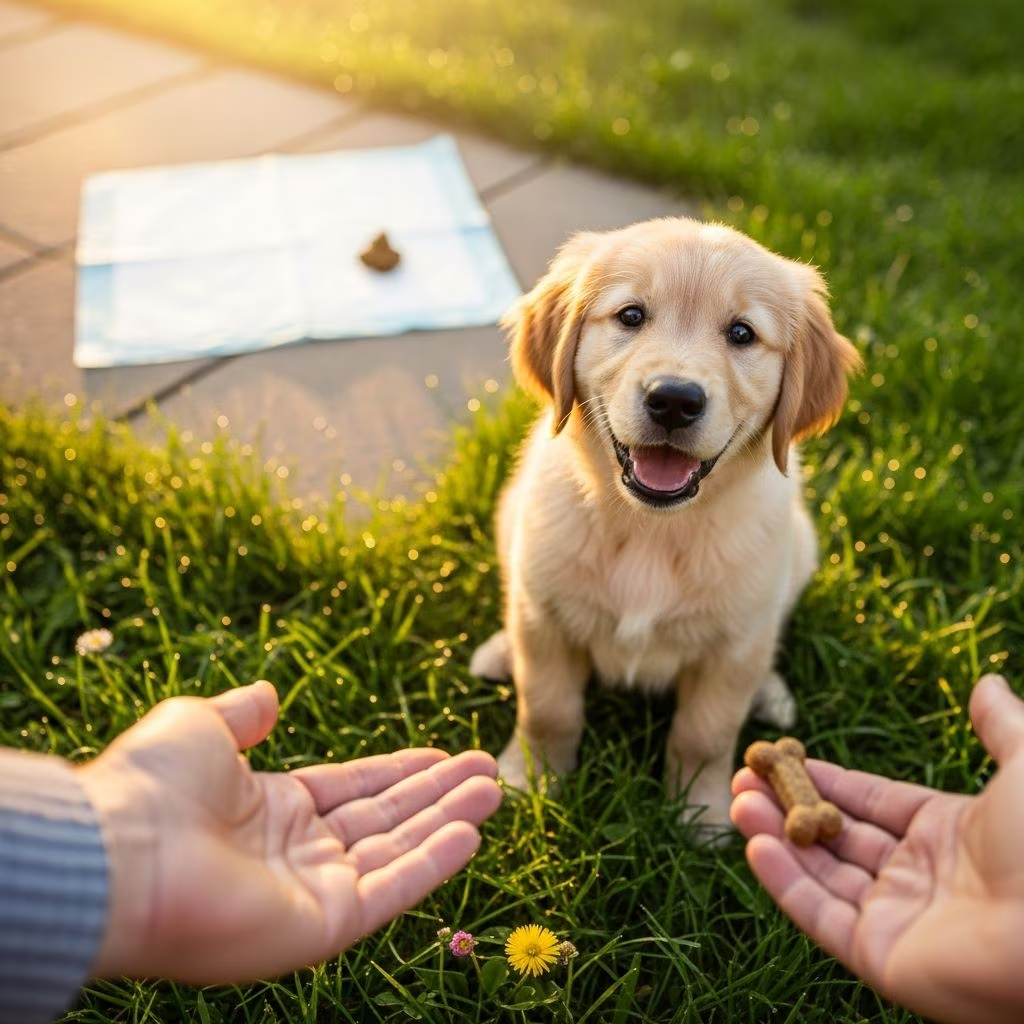
Potty training your puppy is one of the first major milestones in dog ownership, setting the foundation for a harmonious home life. With the right approach, most puppies can learn to eliminate outdoors reliably within a few weeks to months, depending on age and breed. Success hinges on understanding your puppy’s natural instincts, establishing predictable routines, and maintaining unwavering consistency.
Understanding Puppy Bladder Basics
Puppies have limited bladder control that improves with age. A general rule is they can hold their bladder for about one hour per month of age, plus one, up to a maximum of around 8-10 hours at night for adults. For instance, an 8-week-old pup might only manage 2-3 hours during the day. Factors like meals, naps, play, and water intake trigger the need to go, so timing outings around these events prevents accidents.
- Younger puppies (6-14 weeks) need 8-10 breaks daily.
- 14-20 weeks: 6-8 times per day.
- 20-30 weeks: 4-6 outings.
- Over 30 weeks: 3-4 sufficient.
Recognize signals early: sniffing intently, circling, whining, squatting, or wandering to isolated spots. Intervene immediately by scooping them up and heading outside to avoid reinforcing indoor elimination.
Essential Tools for Success
Gather supplies before starting: a sturdy crate sized just large enough for standing, turning, and lying down (use dividers for growing pups); enzymatic cleaners to erase scent markers; leashes for supervision; and high-value treats for rewards.
| Tool | Purpose | Tips |
|---|---|---|
| Crate with divider | Confines space to leverage den instinct | Adjust as puppy grows; never too big |
| Enzymatic cleaner | Removes urine odors completely | Avoid ammonia-based products |
| Umbilical leash | Tethers pup to you for constant watch | Clip to belt loop or furniture |
| Treat pouch | Quick rewards post-potty | Use pea-sized soft treats |
Building a Rock-Solid Daily Schedule
Consistency is key—feed at set times (2-3 meals daily for young pups), and follow with potty breaks. Sample schedule for an 8-12 week old:
- 6:30 AM: Wake, immediate outdoor potty (praise if successful).
- 7:00 AM: Breakfast, then potty 15 mins later.
- Every 1-2 hours: Potty after play/naps.
- After meals, drinks, naps, play: Direct outing.
- Evening: Last potty before bed, reduce water after 7 PM.
- Overnight: Crate until morning.
Track successes in a journal noting time, location, and output to refine timing. Adjust for naps or excitement spikes that shorten hold times.
Crate Training: The Cornerstone Method
Dogs instinctively avoid soiling their den, making crates powerful tools. Introduce gradually: meals inside, short stays with toys, building to naps and nights. Never use for punishment. Upon waking, rush outside—no play until potty completes.
Phased freedom levels prevent errors:
- Lockdown: Crate or pen when unsupervised.
- Restricted: Leashed to you, pen, or visible room (no carpet initially).
- Free: Earned post-potty, after 1-2 hour holds.
Roll up rugs for 4-6 weeks; hard floors deter repeat accidents by splashing back.
Supervision Strategies That Work
Constant eyes-on prevents sneaky spots. Tether via leash to your waist for 100% monitoring. In multi-room homes, gate off areas or use baby gates. For brief absences, straight to crate—no alone time unsupervised.
Interrupt accidents mid-act (clap, say “outside”), carry outside to finish, then praise lavishly. Clean thoroughly after—residual smells invite returns.
Reward and Reinforcement Techniques
Positive reinforcement builds habits fast. Use an upbeat cue like “go potty” outdoors, praise/treat the instant they finish (not before or during). Jackpot multi-treats for poops, as they’re harder. Ignore indoor errors; focus on successes.
Consistency across family members prevents confusion—same words, same routine.
Common Challenges and Fixes
Accidents despite efforts: Revert to more restrictions; check for UTIs via vet.
Crate soiling: Too large crate, dirty bedding, or illness—clean and resize.
Night wakings: Limit evening water; set alarm for 2-4 AM break initially, fade as control grows.
Multi-dog home: Train separately; watch for copying.
Patience reigns: full reliability takes 4-6 months. Incomplete training causes adult issues.
Travel and Visitor Potty Protocols
Before new places, potty first—empty bladder equals safe entry. Leash indoors initially, block rooms, revisit outdoors every 20-30 mins. Teach “potty then inside” association.
For visits: Pre-potty, supervise closely, no rugs/hallways unchecked.
Age-Appropriate Expectations
Tailor to developmental stage:
- 8-12 weeks: Frequent, forgiving.
- 3-6 months: Schedule solidifies.
- 6+ months: Near-perfect, test freedoms.
FAQs
What if my puppy cries in the crate at night?
Brief comfort without release; they settle as routine sets. Rule out needs first.
How long until no more accidents?
Typically 4-6 months with diligence; some breeds faster.
Can I use pee pads?
Better outdoors only to avoid confusion, but pads ok for apartments if phased out.
What NOT to do?
No punishment—creates fear/hiding. No rubbing noses in mess.
Vaccines and outdoor walks?
Consult vet; safe grassy spots ok pre-full series.
References
- Housetraining Your Puppy — UC Davis School of Veterinary Medicine. 2023. https://www.vetmed.ucdavis.edu/sites/g/files/dgvnsk491/files/inline-files/Housetraining_Your_Puppy.pdf
- A Very Thorough Guide to Housebreaking — The Naked Dog Training. 2019-05-02. https://www.thenakeddogtraining.com/traininghowtos/2019/5/2/a-very-thorough-guide-to-housebreaking
- How to Potty Train a Puppy: A Comprehensive Guide — American Kennel Club (AKC). 2024. https://www.akc.org/expert-advice/training/how-to-potty-train-a-puppy/
- House Training Your Dog or Puppy — ASPCA. 2023. https://www.aspca.org/news/house-training-your-dog-or-puppy
- How to Potty Train a Puppy: A Step-by-Step Guide — My Loyal Hound. 2024. https://myloyalhound.com/how-to-potty-train-a-puppy/



