

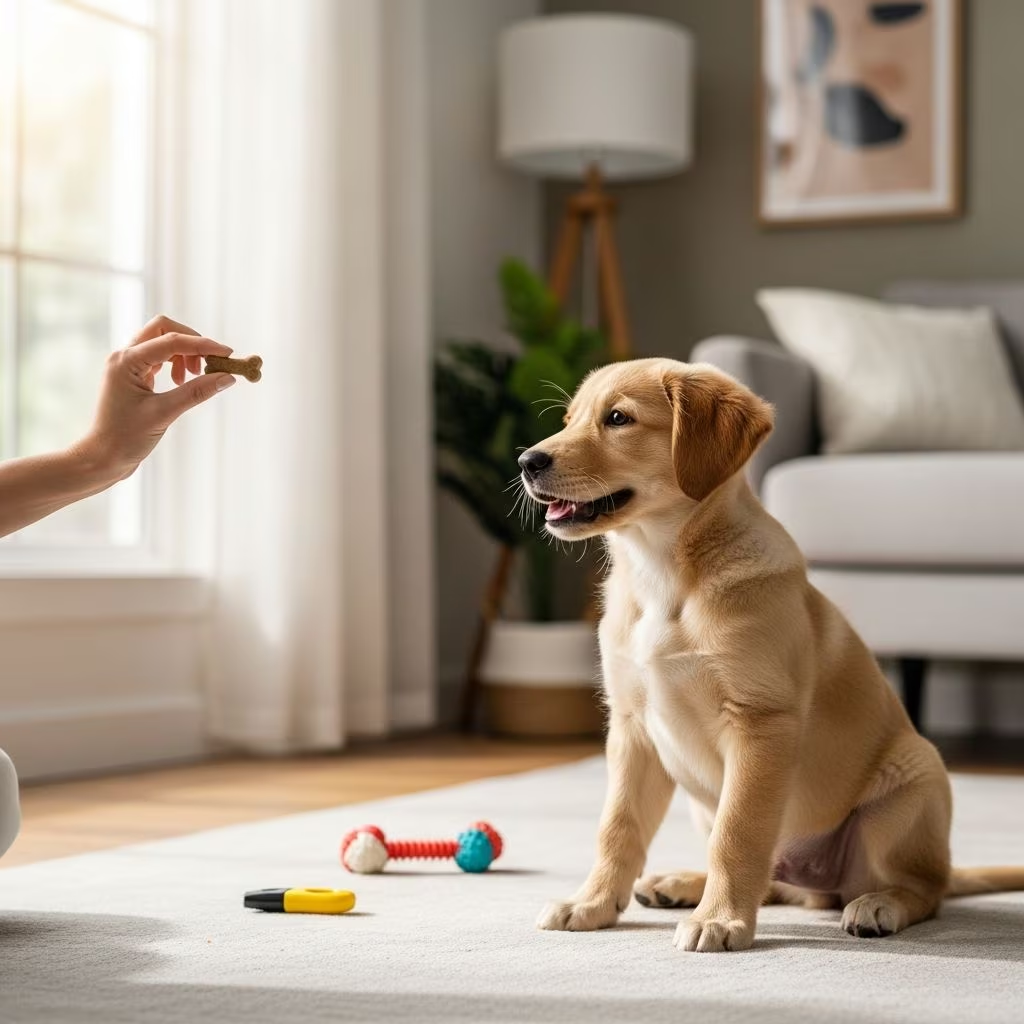
Bringing a puppy into your home sparks joy but often tests your limits with endless energy, accidents, and mischief. Staying patient unlocks successful training and deepens your bond. This guide equips you with tools to navigate these early stages smoothly, drawing on proven methods like positive reinforcement and structured routines.
Understanding the Roots of Puppy-Induced Stress
Puppies explore the world through biting, jumping, and zooming, behaviors rooted in their developmental needs. These actions mimic natural play with littermates, but in a home setting, they can overwhelm new owners. Recognizing this as normal prevents emotional buildup. High-energy breeds like Border Collies demand more outlets, while small pups like Chihuahuas test boundaries in subtler ways.
Frustration spikes when expectations clash with reality—imagining a calm companion but facing constant cleanup. Sleep deprivation from nighttime potty breaks compounds this. Data from veterinary behaviorists shows most owners report peak irritation in weeks 8-16, the prime teething and exploration phase.
Building a Foundation of Realistic Expectations
Set the stage for success by researching your breed’s traits before adoption. Labs thrive on fetch, while Bulldogs prefer lounging. Adjust your schedule to match their needs: frequent potty trips every 2 hours for 8-week-olds, gradually extending as control improves.
- Anticipate teething: Provide safe chew toys from day one.
- Plan for crate training: Use it for short absences to build independence.
- Schedule play breaks: 15-minute bursts prevent overtired meltdowns.
A table of daily needs helps visualize commitments:
| Age | Potty Breaks | Training Sessions | Sleep Hours |
|---|---|---|---|
| 8-12 weeks | Every 2 hours | 3×5 minutes | 18-20 |
| 3-6 months | Every 4 hours | 4×10 minutes | 16-18 |
| 6+ months | 3-4 times/day | Daily practice | 14-16 |
Harnessing Positive Reinforcement for Quick Wins
Positive reinforcement rewards desired actions, fostering eagerness without fear. Science-backed by animal behavior studies, it outperforms punishment by building trust. Use treats, praise, or toys immediately after good behavior to link action with reward.
Avoid yelling or physical corrections; they erode confidence, leading to anxiety or avoidance. Instead, redirect unwanted actions—like chewing shoes—to appropriate toys, then reward compliance.
Essential Commands to Tame Chaos Early
Mastering the Sit Command
Begin in a quiet space. Hold a treat above your puppy’s nose, say “sit,” and move it back over their head. Their rear naturally drops. Reward instantly with the treat and calm praise. Practice before meals to capitalize on hunger motivation.
- Get attention with treat.
- Lure upward and back.
- Mark success with “yes!” and treat.
- Repeat 5-10 times per session.
Perfecting the Stay Cue
From a sit, extend your palm like a stop sign and say “stay.” Step back one pace. If they hold, return, praise, and release with “okay.” Gradually increase distance and duration. Calm delivery prevents overexcitement.
Pro tip: Use mealtimes—ask for stay before placing the bowl, releasing only when settled.
Teaching Down for Calm Moments
With puppy sitting, lower a treat to the floor between paws, drawing it forward in an L-shape. As they follow and lie down, reward. Add the “down” cue after a few successes. Pair with stay for relaxation training.
Loose Leash Walking to End Pulls
Start indoors: Leash on, walk a few steps, stop if pulling. Reward slack leash with treats. Add turns and speed changes outdoors. Pre-walk play burns energy for focus.
Crafting Short, Effective Training Sessions
Puppies zone out after 5 minutes, so keep sessions brief and end on success. Aim for 15 total minutes daily, spread out. Consistency across family members prevents confusion—same words, same rules.
Integrate training into life: Sit before doors, down at mealtime. This reinforces without extra effort.
Potty Training Without Losing Your Cool
Accidents frustrate most, but crate training leverages puppies’ aversion to soiling dens. Confine when unsupervised, take outside every 1-2 hours, after naps/meals/play. Praise outdoor success lavishly. Clean mishaps with enzymatic cleaners to erase scents.
Track progress: Most puppies master by 4-6 months with patience.
Channeling Energy Through Play and Exercise
Bored puppies destroy homes. Daily walks (20-30 minutes), fetch, or puzzle toys prevent this. Rotate toys weekly for novelty. Mental games like treat-finding tire them faster than runs.
Socialization: Preventing Fearful Reactions
Expose gently to people, dogs, sounds from 8-16 weeks. Short, positive encounters build confidence. Enroll in puppy classes for supervised play.
Self-Care Strategies for Puppy Parents
Your calm sets the tone. Breathe deeply during outbursts, step away if needed. Track wins in a journal to counter negativity bias. Connect with owner groups for support.
- Practice mindfulness: 5-minute meditations daily.
- Delegate tasks: Share walks with family.
- Celebrate milestones: Treat yourself after a good week.
Common Pitfalls and How to Avoid Them
Inconsistency confuses; everyone must align. Overlooking exercise leads to zoomies. Skipping crates prolongs potty woes. Patience pays—progress isn’t linear.
Long-Term Bonding Beyond Basics
Once commands stick, advance to tricks like spin or roll over. Agility or scent work deepens connection. Regular vet checkups ensure health supports training.
Frequently Asked Questions (FAQs)
How long until my puppy stops biting?
Teething peaks at 6 months; provide chews and redirect. Consistent training fades it by 8-12 months.
What if training sessions go wrong?
End positively, shorten next time. No scolding—reset calmly.
Is crate training cruel?
No, when gradual; it’s their safe space, mimicking dens.
Can I train multiple puppies?
Yes, separately first to avoid competition, then together.
When to seek professional help?
If aggression or fear persists post-6 months, consult a certified trainer.
References
- Basic Puppy Training 101 — Purina. 2023. https://www.purina.com/articles/dog/puppy/training/puppy-training
- Puppy Training Guide: How and When To Start — PetMD. 2024. https://www.petmd.com/dog/general-health/when-start-training-puppy
- Basic training for puppies — PDSA. 2023. https://www.pdsa.org.uk/pet-help-and-advice/looking-after-your-pet/puppies-dogs/basic-training-for-puppies
- 5 Dog Training Tips for Beginners — Open Farm. 2023. https://openfarmpet.com/blogs/news/dog-training-tips-for-beginners
- How to Train a Puppy – Tips & Tricks — American Kennel Club. 2025. https://www.akc.org/expert-advice/training/puppy-training/



