

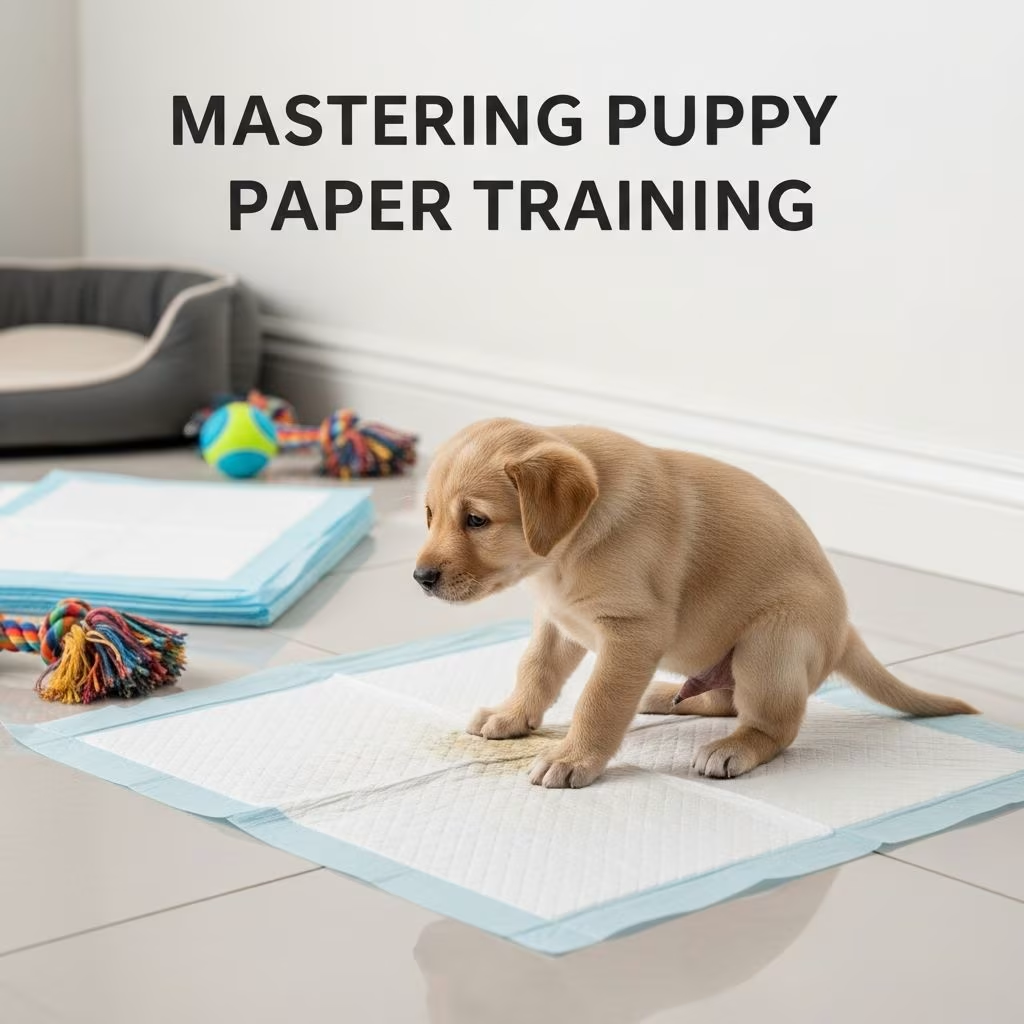
Paper training provides an essential solution for young puppies, particularly those in apartments or during bad weather, by designating a specific indoor spot for elimination. This method leverages a puppy’s natural instincts while building reliable habits through consistent guidance.
Understanding Puppy Physiology and Training Basics
Puppies possess limited bladder control, comparable to human infants, requiring elimination every 30 to 60 minutes, especially after waking, eating, or playing. Recognizing these patterns forms the foundation of successful training, emphasizing patience and routine over punishment.
- Puppies under 12 weeks may need opportunities every 45 minutes.
- Bladder capacity grows with age, extending intervals to 2-4 hours by 4 months.
- Frequent naps signal immediate post-sleep needs.
Establish a dedicated training zone in a high-traffic family area with easy-clean flooring like tile or vinyl to facilitate supervision and prevent isolation.
Setting Up the Ideal Training Environment
Create a confined space using puppy gates to limit access to one room, positioning the puppy’s bed, food, water, and toys away from the papered elimination zone. Dogs instinctively avoid soiling sleeping or eating areas, promoting targeted use.
| Essential Supplies | Purpose |
|---|---|
| Puppy gates | Confine to small, manageable area |
| Multiple newspapers or pads | Cover floor initially for accidents |
| Enzymatic cleaner | Remove odors completely |
| Treats and toys | Reinforce positive behavior |
| Bed and bowls | Define non-elimination zones |
Line the entire floor with overlapping newspapers, refreshing soiled sections promptly to maintain cleanliness and encourage repetition in the same spot.
Core Training Techniques: Supervision and Timing
Constant vigilance proves crucial; observe for precursory signals like sniffing, circling, whining, or squatting, immediately guiding the puppy to the paper.
- Wake and place on paper immediately.
- Follow meals or play with a paper trip within 15-30 minutes.
- Interrupt mid-act gently, relocating without scolding post-completion.
- Praise effusively upon success using high-pitched voice and treats.
Avoid physical corrections, as they foster fear rather than understanding. Instead, a firm “no” during the act, followed by relocation and praise, teaches effectively.
The Power of Positive Reinforcement
Genuine enthusiasm in praising correct elimination solidifies associations far better than negativity. Combine verbal cheers (“Good potty!”) with treats or play, ensuring the puppy links paper use to rewards.
Puppies discern authentic excitement from insincere tones, making heartfelt praise indispensable for motivation.
Track progress in a journal noting successful instances and timings to refine schedules and celebrate milestones.
Managing Accidents and Odor Control
Accidents occur; clean thoroughly with enzymatic cleaners to erase scents that attract repeat offenses. Nature’s olfactory cues compel puppies to the same spots unless neutralized.
- Blot excess moisture first.
- Apply pet-safe enzymatic spray and allow full drying.
- Avoid ammonia-based products mimicking urine.
If caught in the act, a swift verbal correction suffices; post-accident shaming confuses and erodes trust.
Gradual Reduction and Area Shrinkage
Once consistent for several days on full coverage, reduce papers nightly, preserving the farthest from sleeping areas. Progress to half coverage, then quarter, until one sheet remains.
For nighttime, cover the floor fully for 2-4 weeks based on age, gathering all but one soiled sheet each morning to reinforce the preferred location.
Paper Reduction Timeline
| Week | Coverage Level | Expected Behavior |
|---|---|---|
| 1-2 | Full floor | Any elimination on paper |
| 3 | Half floor | Targeted to papered zone |
| 4+ | Single sheet | Reliable single-spot use |
Transitioning from Paper to Outdoors
After mastering indoor paper use, relocate gradually outdoors. Carry the soiled paper to a yard spot, supervising closely and praising outdoor success identically.
Accompany the puppy outside, using familiar paper as a bridge, then phase it out. Maintain indoor paper as backup during transition to avoid regressions.
- Select consistent yard location.
- Go out post-meals and naps.
- Extend leash for security if needed.
Pros and Cons of Paper Training
This approach suits urban dwellers or those with scheduling constraints but requires commitment to avoid perpetuating indoor elimination.
| Advantages | Disadvantages |
|---|---|
| Convenient for apartments/weather | May delay full outdoor training |
| Allows supervision practice | Risk of shredding/tracking |
| Safety net when absent | Potential floor leakage |
| Builds routine foundation | Puppy play with pads |
Common Challenges and Solutions
Puppies may drag papers or eliminate partially off them; secure with tape or barriers and expand coverage initially.
- Shredding: Use durable pee pads; supervise removal.
- Ignoring paper: Increase frequency; check diet for loose stools.
- Regression: Revert to prior stage; rule out medical issues.
Consult veterinarians for persistent problems, as urinary infections mimic training failures.
Frequently Asked Questions (FAQs)
What age is best for paper training?
Start at 8 weeks; younger puppies adapt quickest due to instinctual learning.
How long does it take?
2-6 weeks for reliability, varying by breed, age, and consistency.
Can older dogs be paper trained?
Yes, with patience; adults learn faster but may resist initially.
Is punishment ever okay?
No; positive methods yield better, fear-free results.
What if my puppy tracks urine?
Use absorbent pads with liners; clean paws immediately.
Advanced Tips for Lasting Success
Incorporate crate training alongside for amplified control, using the crate for short absences and paper for active times. Rotate family members in supervision to generalize behavior.
Monitor diet; high-quality food reduces accidents. Hydration management prevents overload without dehydration risks.
For multi-puppy households, assign distinct papers to avoid confusion, praising individually.
Sustainable habits emerge from routine: feed at set times, eliminate post-meal, play, sleep cycle repeats daily.
References
- How to Paper Train Your Puppy — K9 Magazine. 2023. https://www.k9magazine.com/how-to-paper-train-your-puppy/
- How to Paper-Train Your Dog — YouTube (PetSafe or similar channel). 2022-10-15. https://www.youtube.com/watch?v=5cTuCnKcJO4
- Using a Rolled up Newspaper for Potty Training — Pawsitive Training Center. 2019-01-15. https://www.pawsitivetrainingcenter.com/blog/2019/1/15/using-a-rolled-up-newspaper-for-potty-training
- Pros and Cons of Paper Training for Puppies — PetSafe. 2024. https://www.petsafe.com/blog/pros-and-cons-of-paper-training-for-puppies/
- Potty-Pad Training Your Dog — Animal Humane Society. 2023. https://www.animalhumanesociety.org/resource/potty-pad-training-your-dog
- Housetraining Dogs: Puppy Potty Pad and Paper Training — American Kennel Club (AKC). 2025-01-10. https://www.akc.org/expert-advice/training/the-ins-and-outs-of-potty-pad-training/



