

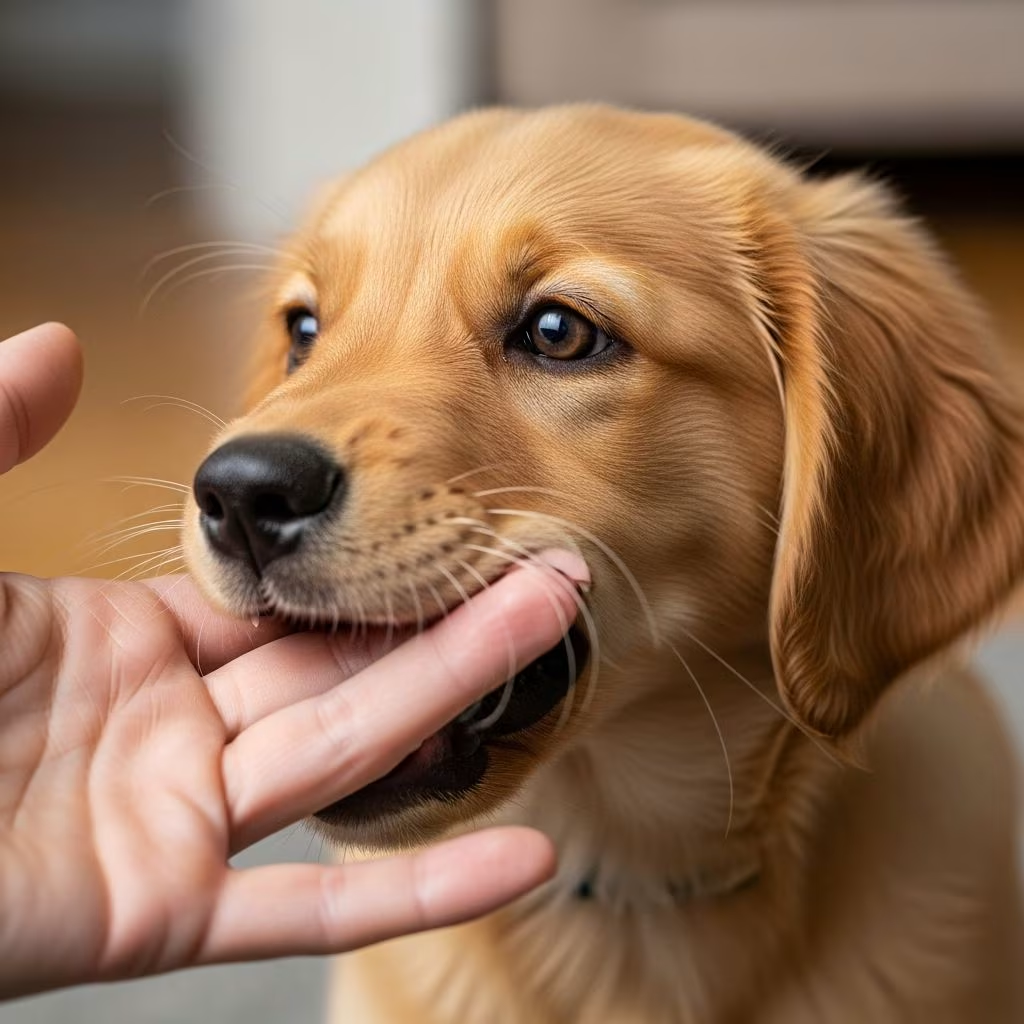
Puppies explore the world primarily through their mouths, leading to frequent nipping and biting during play. Teaching **bite inhibition**—the ability to control bite pressure—is crucial for preventing future behavioral issues and ensuring safe interactions with family members. This skill, naturally learned among littermates, must be reinforced by humans through consistent, positive methods.
Why Puppies Bite and the Science Behind It
Young dogs use their mouths to investigate, play, and teethe, mimicking behaviors observed in wild canines where pups learn bite control from siblings and mother. A sharp nip from a littermate elicits a yelp, signaling the biter to soften future attempts. Without this litter experience or proper human guidance, puppies may grow into adults lacking mouth control, increasing risks during excitement or stress.
Research from canine behavior experts emphasizes intervening between 3-5 months, the critical window for ingraining gentle mouthing. Delaying training reinforces poor habits, making correction harder later. Primary sources like the American Kennel Club highlight that well-inhibited dogs can still mouth gently even in fear or pain, reducing injury potential.
Core Principles of Effective Bite Training
Successful programs rely on three pillars: immediate feedback, redirection to alternatives, and rewarding calm behavior. Consistency across all household members prevents confusion, while gradual progression builds reliability.
- Immediate Feedback: Mimic littermate yelps to communicate discomfort without fear.
- Redirection: Swap hands for toys to fulfill chewing needs appropriately.
- Consequences: Timeouts teach that hard bites end fun, reinforcing self-control.
Step-by-Step Training Techniques
1. The Yelp and Pause Method
During play, when your puppy applies excess pressure, emit a high-pitched “Ouch!” or yelp, startling them without scaring. Freeze your movement immediately—do not pull away, as this can trigger chasing. If they pause and lick or soften, resume play with praise. Repeat for reinforcement.
This mirrors natural canine communication, helping puppies associate hard pressure with play cessation. For sensitive pups, use a softer tone; for bold ones, amplify slightly. Practice in short sessions to avoid overwhelm.
2. Gradual Pressure Reduction
Start by tolerating light mouthing, then incrementally lower the threshold. Week one: yelp at level 5 bites (drawing blood). Week two: levels 4+, progressing until only feather-light contact is allowed. Track progress in a journal, noting bite intensity on a 1-5 scale:
| Bite Level | Description | Response |
|---|---|---|
| 1 | Gentle gum contact | Praise and continue |
| 2-3 | Light teeth graze | Yelp, pause play briefly |
| 4 | Visible dent, no break | Yelp, timeout 30 seconds |
| 5 | Skin breaks or bruises | Immediate timeout, 1 minute |
This systematic approach, supported by humane societies, ensures puppies learn precise control.
3. Redirection to Chew Toys
Keep puppy-safe toys handy. When mouthing begins, offer a chew bone or toy, praising engagement. Alternate hands: one pets while the other presents the toy. This associates human contact with positive outlets, ideal for children interacting.
Variety matters—rotate rubber toys, frozen kongs, and fabric chewies to maintain interest. Avoid old socks or hands, as they blur boundaries.
4. Implementing Timeouts Effectively
For persistent hard biting, end interaction decisively. Say “Ouch!”, stand, and walk away or step over a gate, ignoring for 30-60 seconds. Use a crate or penned area stocked with toys for self-settling, not punishment.
Tethering aids this: attach a leash to furniture, step out of reach. Resume only when calm. Consistency is key—never resume if arousal persists.
5. Building Tolerance with Handling Games
Prevent fear-based biting by conditioning positive collar grabs and body handling. Gently hold the collar, reward stillness with treats. Progress to passive restraints: scoop under chest, hold calmly during struggles, releasing on relaxation. This fosters trust, essential for small breeds prone to resource guarding.
6. Exercise and Mental Stimulation
Excess energy fuels biting. Daily walks, fetch, and puzzle toys burn it off. Enroll in puppy classes for socialization and structured play, where moderated interactions reinforce inhibition.
Common Mistakes to Avoid
Owners often err by yanking hands away, encouraging pursuit, or inconsistently responding. Punitive measures like smacking exacerbate fear aggression. Instead, focus on prevention: supervise children, avoid roughhousing, and crate during teething peaks.
- Phasing out all mouthing too soon—allow gentle versions first.
- Ignoring early signs in tiny breeds, assuming “cuteness” excuses behavior.
- Forgetting family training—everyone must follow protocols.
Age-Specific Strategies
Puppies 8-12 weeks need frequent, fun sessions. By 4 months, enforce stricter no-pressure rules. Adolescents (6-12 months) may test limits; double down on timeouts. Adults without prior training require patient reteaching, emphasizing rewards for gentleness.
FAQs
What if yelping excites my puppy more?
Switch to silent withdrawal or timeouts. Some pups view noise as play cues.
How long until biting stops?
2-4 weeks with daily practice; full mastery by 6 months.
Is it okay for puppies to mouth toys near kids?
Supervise closely; redirect to solo chewing. Teach kids to freeze and yelp.
My adult dog bites hard—can I fix it?
Yes, but consult a professional trainer using similar gradual methods.
What toys are best for redirecting?
Firm rubber, stuffed Kongs, or Benebones—avoid anything mimicking hands.
Advanced Tips for Lasting Results
Incorporate food bowl exercises: hold treats in your palm base, withdrawing if teeth touch. This teaches precision around resources. Track via apps or journals, celebrating milestones like bite-free days. For multi-dog homes, separate play until all exhibit control.
Integrate with basic obedience: “sit” or “leave it” commands interrupt nips. Positive reinforcement—treats, play—solidifies habits over punishment.
References
- Mouthy Pups – It’s Normal. Let’s Teach Them Bite Inhibition — Seattle Humane. Accessed 2026. https://www.seattlehumane.org/resource-library/mouthy-pups-its-normal-lets-teach-them-bite-inhibition/
- Teaching Bite Inhibition and Dealing with Rough Puppy Play — Oregon Humane Society. Accessed 2026. https://www.oregonhumane.org/portland-training/teaching-bite-inhibition-and-dealing-with-rough-puppy-play/
- How to Stop Puppy Biting and Train Bite Inhibition — American Kennel Club (AKC). Accessed 2026. https://www.akc.org/expert-advice/training/stop-puppy-biting/
- The Calming Technique to STOP Puppy Biting FAST — McCann Dogs (YouTube). Accessed 2026. https://www.youtube.com/watch?v=eb9qNHCSbMI
- The Missing Piece In Your Puppy Biting Training — McCann Dogs (YouTube). Accessed 2026. https://www.youtube.com/watch?v=G4IG5kEHb8g
- Creating Good Bite Inhibition — McCann Professional Dog Trainers. Accessed 2026. https://www.mccanndogs.com/blogs/articles/creating-good-bite-inhibition



