

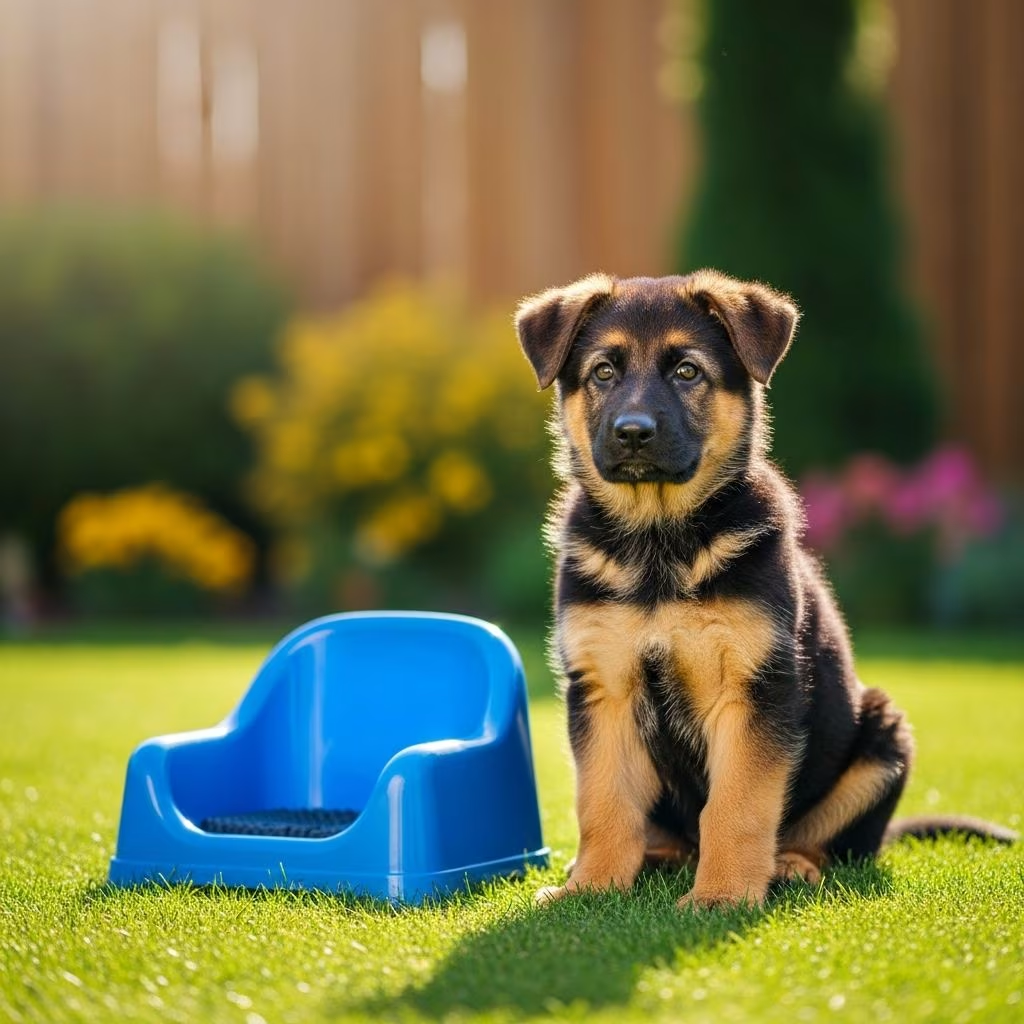
German Shepherd puppies are renowned for their sharp intelligence and boundless energy, making them quick learners but also challenging to housebreak without a structured approach. Successful potty training establishes good habits early, prevents accidents, and strengthens the bond between you and your pup. This guide provides a comprehensive roadmap using consistency, positive methods, and breed-specific insights to achieve reliable results in weeks.
Understanding the German Shepherd Puppy’s Unique Traits
German Shepherds possess exceptional observational skills and high energy levels that influence their training needs. Their alertness allows them to associate cues like specific spots or commands with elimination quickly, while their drive demands mental and physical outlets to stay focused.
- Intelligence Boost: These pups learn commands rapidly, so incorporating verbal cues early accelerates progress.
- Energy Management: High activity requires combining potty breaks with exercise to encourage elimination and reduce indoor mishaps.
- Sensitivity: They respond best to calm, positive guidance rather than punishment, which can lead to anxiety.
Recognizing these traits helps tailor your strategy, turning potential challenges into advantages for smoother training.
Building a Solid Foundation with a Daily Routine
A predictable schedule is the cornerstone of potty training, aligning with a puppy’s natural elimination patterns. For 8-12 week olds, plan outings every 1-2 hours, scaling up as they age—aiming for 4 hours by 3 months and up to 8 hours by maturity.
| Age Range | Recommended Outings | Key Triggers |
|---|---|---|
| 8-12 weeks | Every 1 hour | After meals, naps, play |
| 3 months | Every 4 hours | Include short walks |
| 6+ months | Every 6-8 hours | Morning, evening routines |
Feed on a fixed schedule—three times daily under 6 months, then twice—to predict potty needs accurately. Avoid free-feeding to maintain consistency.
Selecting and Preparing the Ideal Potty Spot
Choose an accessible outdoor area that’s easy to clean and shielded from distractions. Consistency in location reinforces habits, as German Shepherds thrive on repetition.
- Guide your puppy to the same spot each time using a leash for young pups.
- Praise immediately upon success to link the action with the place.
- For apartments, start near the door and transition outdoors gradually.
If indoor options are unavoidable initially, position pads near the exit and phase them out to avoid confusion about indoor vs. outdoor elimination.
Harnessing Crate Training for Faster Success
Crate training leverages a dog’s instinct to keep their sleeping area clean, making it a powerful tool for German Shepherds when introduced positively.
- Select a crate sized for adult growth, with just enough room to stand and turn.
- Make it inviting with bedding and toys; feed meals inside to build comfort.
- Schedule crate time between potty breaks, starting short (5-10 minutes) and extending gradually.
Take the puppy directly outside upon release. This method minimizes accidents and teaches bladder control.
Implementing Effective Potty Commands
A clear command like “go potty” or “do your business,” repeated consistently at the spot, helps your puppy understand expectations. Say it as they sniff and position, rewarding completion.
Practice in varied locations later to generalize the skill, preventing location-specific habits.
The Power of Positive Reinforcement Techniques
Positive methods shine with intelligent breeds like German Shepherds, using high-value rewards to motivate without fear.
- Rewards: Opt for soft treats, chicken bits, or cheese—deliver within seconds of elimination.
- Praise: Enthusiastic voice and petting amplify the association.
- Fade Treats: Shift to verbal praise as reliability grows, maintaining motivation.
Never punish accidents; clean with enzymatic cleaners to remove scents and interrupt calmly if caught in the act.
Integrating Exercise and Mental Stimulation
Channel your puppy’s energy through pre-potty play sessions or walks, as tired pups eliminate more readily. Add puzzle toys or quick obedience drills during waits to engage their mind.
This dual approach curbs boredom-induced indoor accidents and enhances focus on training goals.
Navigating Common Challenges and Solutions
Accidents are normal—up to 10 weeks, puppies have limited control. Stay patient and supervised.
| Challenge | Solution |
|---|---|
| Frequent indoor accidents | Increase outings; use crate more; check diet. |
| Distractions outdoors | Shorten leash; choose quiet times; practice commands. |
| Regression | Revert to stricter schedule; rule out medical issues with vet. |
For transitions from indoor pads, move them incrementally toward the door, then outdoors.
Age-Appropriate Milestones and Long-Term Maintenance
Track progress: By 4 months, most hold for 5+ hours; full reliability by 6-12 months with consistency.
- Supervise constantly indoors initially.
- Nightly crate use prevents sleep accidents.
- Adult dogs: Overnight holds up to 8 hours standard.
Once trained, maintain with morning/evening routines and post-meal checks.
Frequently Asked Questions (FAQs)
How long does potty training take for a German Shepherd puppy?
Typically 4-6 months for reliability, though intelligent pups may succeed faster with consistency.
Can I use potty pads for my German Shepherd?
Avoid if possible to prevent indoor habits, but use temporarily in high-rises, phasing out quickly.
What if my puppy has accidents after seeming trained?
Reintroduce crate and schedule; consult a vet for UTIs or stress.
Is crate training cruel for energetic breeds?
No, when positive—it provides security and aids training.
How often should I feed a training puppy?
Three times daily under 6 months; monitor water intake too.
Advanced Tips for Lasting Habits
Incorporate scent markers like grass patches indoors initially for outdoor mimicry. Vary spots gradually to build flexibility. For working-line Shepherds, align training with future tasks like herding cues.
Monitor health: Vaccinations enable safe outdoor access around 12-16 weeks.
References
- Ultimate Guide to Potty Training a German Shepherd Puppy — Porch Potty. 2023. https://porchpotty.com/blogs/news/ultimate-guide-to-potty-training-a-german-shepherd-puppy
- How to Potty Train a German Shepherd Puppy: 7 Vet-Approved Tips — Dogster. 2023. https://www.dogster.com/dog-training/how-to-potty-train-a-german-shepherd-puppy
- German Shepherd Puppy Potty Training Tips — YouTube (Transcript). 2023. https://www.youtube.com/watch?v=hQ_2oisoZjc
- Puppy Potty Training Timeline and Tips — American Kennel Club (AKC). 2025-01-15. https://www.akc.org/expert-advice/training/puppy-potty-training-timeline/



