

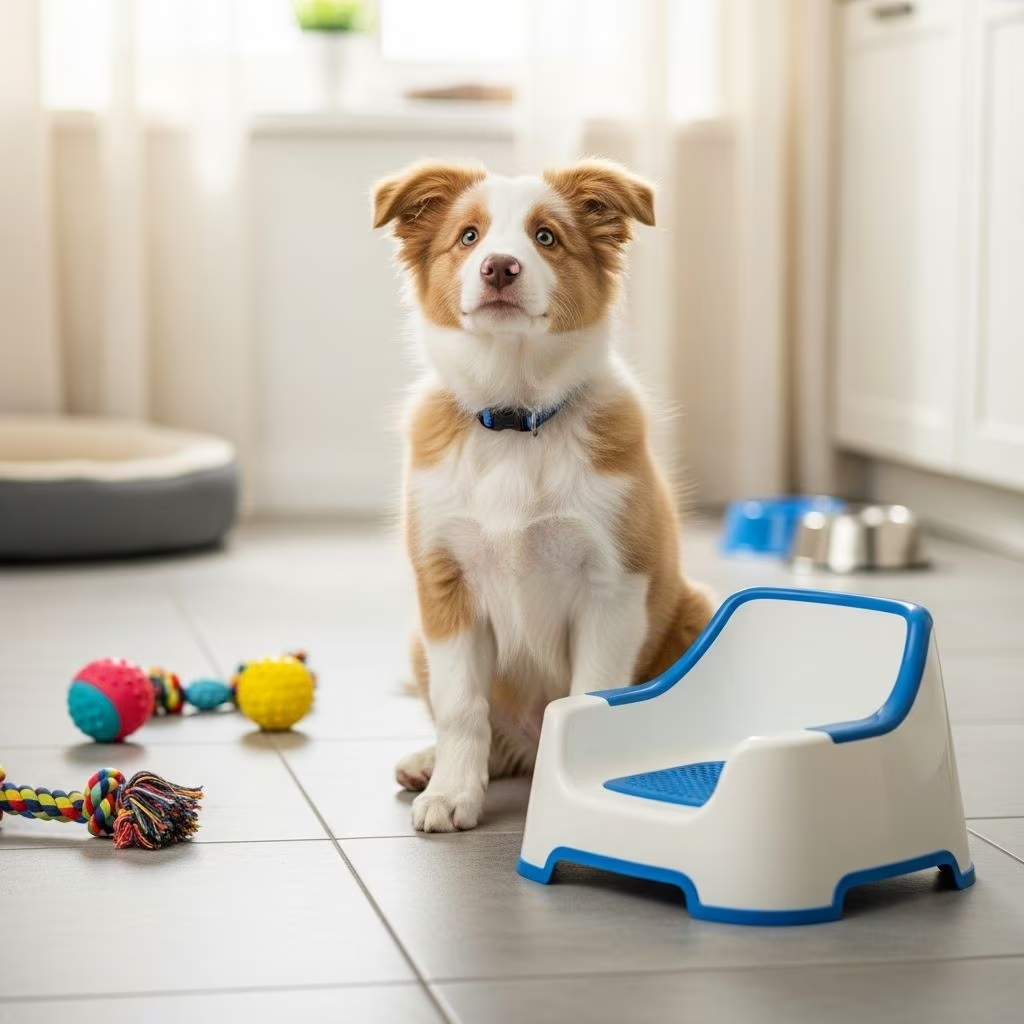
Border Collies stand out as one of the most intelligent dog breeds, renowned for their quick learning and work ethic. However, their high energy and occasional stubbornness can make potty training a challenge if not approached correctly. This guide provides a comprehensive roadmap to housebreaking your Border Collie, drawing on practical, humane techniques that capitalize on their cognitive strengths. Expect full training in 2-3 months with daily commitment.
Understanding Your Border Collie’s Unique Traits
These herding dogs thrive on routine and mental stimulation. Their bladders mature slowly—puppies under 12 weeks can hold it for only 2-3 hours. Accidents stem from immaturity, not defiance. Key to success: frequent outings, clear signals, and rewards that align with their eager-to-please nature.
Border Collies learn patterns rapidly, so inconsistent rules lead to confusion. Their sensitivity to tone means harsh corrections backfire, fostering fear of outdoor time. Focus on building trust through positivity.
Building a Solid Daily Schedule
A predictable routine prevents accidents by anticipating needs. For 8-12 week olds, plan potty breaks every 30-60 minutes when awake, plus key triggers.
- Upon waking from naps or overnight sleep.
- Immediately after meals or drinks.
- Post-play or excitement bursts.
- Whenever sniffing intensifies or circling begins.
- Before bedtime.
Track intake: feed 3-4 times daily in set portions to predict output. Gradually extend intervals as control improves—up to 4-6 hours by 4 months. Use a journal to log successes and adjust.
Selecting and Setting Up the Perfect Potty Area
Designate one outdoor spot to create scent associations. Choose a quiet, accessible area like a grassy patch or gravel zone, 10-20 feet from doors to avoid distractions.
| Spot Type | Pros | Cons | Best For |
|---|---|---|---|
| Grassy Yard | Natural feel, easy cleanup | Weather-dependent | Puppies |
| Gravel/Pea Stone | Quick drainage, low odor | Less comfortable | Apartments |
| Tree/Bush | Familiar instinct cue | Space-limited | Small yards |
Mark boundaries with string or flags initially. Lead there consistently; cleanup reinforces the zone.
Harnessing Positive Reinforcement Techniques
Reward-based training accelerates learning by 2-3 times. Ignore accidents; celebrate outdoors eliminations lavishly within 3 seconds.
- Praise: Enthusiastic “Good potty!” in a happy voice.
- Treats: High-value bits like chicken or cheese, reserved for this.
- Play: Short tug or fetch post-success to link relief with fun.
Avoid punishment—it erodes confidence. Studies show positive methods yield 90% success rates in intelligent breeds.
Incorporating Leash Guidance and Cues
Clip a leash for first weeks to direct to the spot without chase games. Say a cue like “Go potty” repeatedly during elimination. Over time, the word alone prompts action.
Progression: Leash (days 1-7) → Free lead (week 2) → Verbal cue solo (week 3+). Consistency imprints the habit.
Effective Use of Confinement Tools
Border Collies self-regulate in small spaces, avoiding soiling sleep/eat areas. Crates mimic dens; size for standing/turning only—no room for corners.
- Start open-door during supervised time.
- Build to 1-hour crated naps with potty follow-up.
- Overnight: Up to 6-8 hours post-12 weeks.
- Alternatives: Puppy pens or gated kitchens for freedom.
Never exceed age-in-hours limit (e.g., 10 weeks = 10 hours max, minus sleep). Gradual intro prevents stress.
Supervision Strategies to Prevent Mishaps
Constant eyes-on catches pre-accident signs: sniffing, whining, circling. Tether leash to your belt for 100% awareness. Confine unsupervised to prevent habituated indoor spots.
If caught mid-act, interrupt calmly with clap, rush outside, reward completion. Clean accidents with enzymatic cleaners to erase scents.
Overcoming Common Training Hurdles
Stubborn Refusals
Wait out standoffs—stay silent in the spot up to 10 minutes. If no go, return inside, limit water/play, retry in 15. Patience wins; they can’t hold forever.
Regression After Progress
Stress, illness, or routine changes trigger setbacks. Revert to puppy schedule temporarily. Vet check rules out UTIs.
Nighttime Woes
Last potty at 10 PM, crate overnight. Set alarms for 2-4 AM breaks initially. Fade as bladder strengthens.
Age-Specific Training Milestones
| Age | Hold Time | Breaks/Day | Focus |
|---|---|---|---|
| 8-12 Weeks | 2 Hours | 10-12 | Frequent outings, crate intro |
| 3-4 Months | 4 Hours | 8 | Leash independence |
| 5-6 Months | 6 Hours | 5-6 | Cue mastery |
| 6+ Months | 8+ Hours | 4 | Full reliability |
Advanced Tips for Lasting Habits
Integrate potty into agility routines—their herding drive loves purposeful tasks. Rotate spots seasonally. For apartments, balcony pads transition to outdoors. Monitor seniors for weakening control.
Frequently Asked Questions
How long until my Border Collie is fully housebroken?
Typically 8-12 weeks with consistency; individuals vary by temperament.
What if my puppy soils the crate?
Size issue or illness—downsize or consult vet. Wash thoroughly.
Can I use belly bands for males?
Short-term aid, but prioritize training over reliance.
Is bell training effective?
Yes—hang bells by door, shape paw-nose touch to ring before outings.
What treats work best?
Soft, pea-sized; rotate to maintain value.
References
- How to Potty Train a Border Collie: 8 Vet-Verified Tips & Tricks — Dogster. 2023. https://www.dogster.com/dog-training/how-to-potty-train-a-border-collie
- Border Collie Puppy Toilet Training — Collie Consultant. 2023-11-19. https://collieconsultant.co.uk/2023/11/19/border-collie-puppy-toilet-training/
- How to Potty Train Border Collie Puppy — The Dog Vlog (YouTube). 2021-03-08. https://www.youtube.com/watch?v=4HYem_CTkwg



