

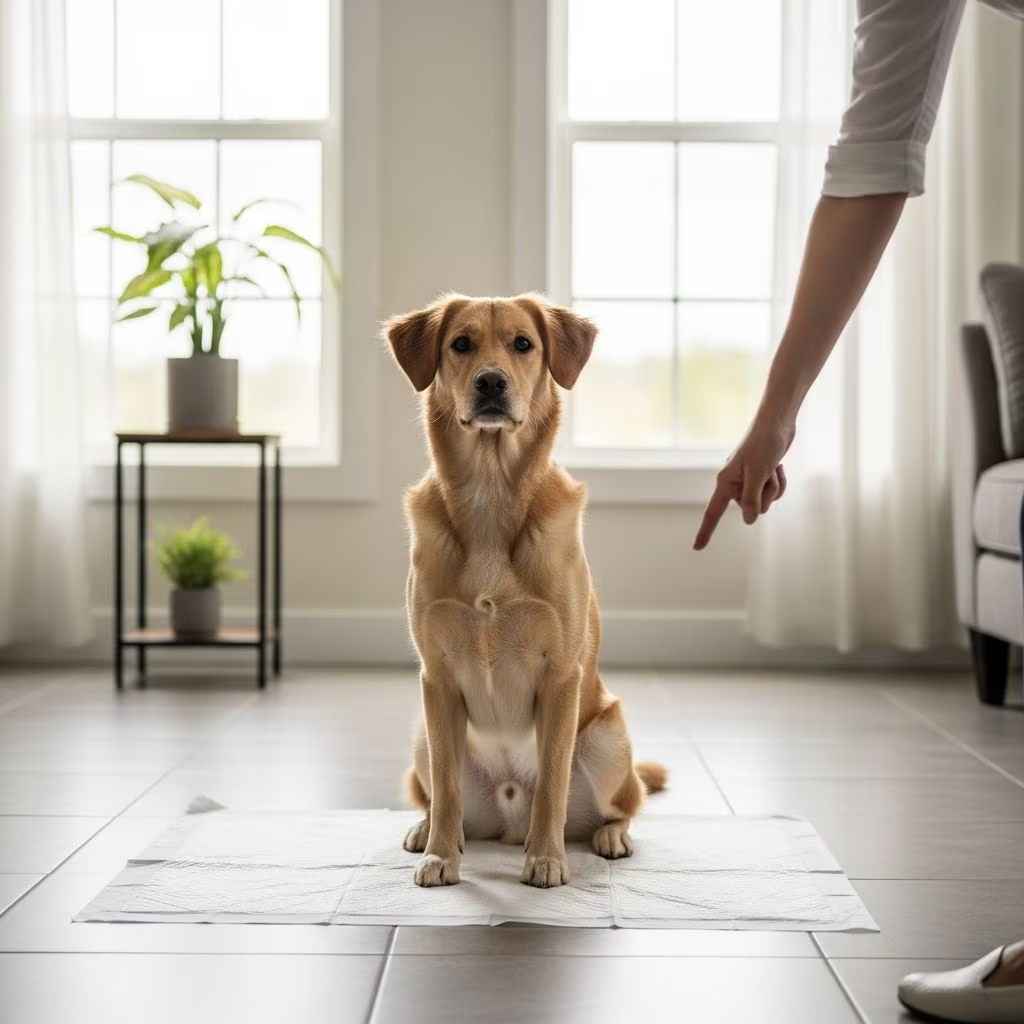
House training stands as one of the most essential skills for any dog owner, transforming chaotic indoor accidents into predictable outdoor routines. By introducing a specific command for elimination, you empower your pet to communicate needs clearly and respond promptly, fostering a harmonious home environment. This approach not only speeds up the training process but also strengthens the bond between you and your dog through consistent positive reinforcement.
Why Teach Elimination Cues?
Developing a reliable potty command offers numerous benefits beyond mere convenience. Dogs naturally seek to please their owners, yet without clear signals, they struggle to align their instincts with household rules. A designated cue bridges this gap, allowing your dog to signal readiness and eliminate on schedule, reducing stress for both parties.
- Prevents Indoor Mishaps: Command-trained dogs learn to hold it until the right moment, minimizing surprises on carpets or furniture.
- Enhances Communication: Your pet gains a voice to express needs, preventing discomfort from full bladders.
- Supports Busy Lifestyles: Ideal for apartments, travel, or quick outings, ensuring compliance in varied settings.
- Boosts Confidence: Success builds your dog’s self-assurance and your leadership role in the pack.
Experts emphasize that consistency in cue usage from day one yields the fastest results, often within weeks for puppies and slightly longer for adults.
Foundational Principles of Potty Training
Before diving into command specifics, grasp the core elements that underpin all successful housebreaking. Dogs thrive on routine, supervision, and rewards, forming the bedrock of habit formation.
| Principle | Description | Key Benefit |
|---|---|---|
| Consistency | Use the same door, spot, and cue every time | Accelerates learning through repetition |
| Supervision | Watch closely or use confinement when unsupervised | Prevents errors and enables immediate correction |
| Positive Reinforcement | Reward immediately after success with treats or praise | Associates elimination with joy and approval |
| Timing | Schedule breaks after meals, play, naps, and every 1-2 hours | Matches natural elimination cycles |
Integrating these principles ensures your training efforts are efficient and humane.
Selecting the Perfect Potty Cue
Choosing an effective command word is crucial; it should be short, distinct, and easy to say enthusiastically. Common options include “go potty,” “do it,” “hurry,” or “outside business.” Opt for one that feels natural to you, as your tone conveys excitement, prompting quicker responses.
Avoid words resembling everyday speech to prevent confusion—”potty” works better than “go” alone. Repeat the cue only during the act of elimination, not beforehand, to create a precise association.
Step-by-Step Training Guide
Follow this structured progression to instill the command reliably. Start with puppies as young as 8 weeks, but adults benefit equally from refreshers.
- Establish a Routine: Feed at set times and remove water an hour before bedtime. Take your dog out first thing in the morning, post-meals (15-30 minutes after), after naps, play, and before bed. Puppies need hourly outings initially.
- Leash and Lead to Spot: Always use a leash to guide to the designated outdoor area. Stand still, using calm energy to encourage sniffing and circling—the precursors to elimination.
- Introduce the Cue: As your dog begins to squat or lift a leg, say the command firmly and cheerfully, like “go potty!” Do not speak otherwise; let nature take its course.
- Immediate Praise: The instant elimination completes, shower with effusive verbal praise (“Good potty!”) and a high-value treat. Timing is critical—rewards within 3 seconds cement the link.
- Short Sessions Only: If no elimination in 5 minutes, return inside neutrally, crate for 10-15 minutes, then try again. Never punish or drag out waits.
- Practice Daily: Aim for 4-6 successful outings per day, gradually increasing intervals as control improves.
Within 7-10 days, most dogs anticipate the cue upon arrival at the spot, eliminating swiftly.
Incorporating Crate Training for Success
Crate training complements potty commands by leveraging dogs’ instinct to avoid soiling sleeping areas. Select a crate just large enough for standing, turning, and lying down comfortably.
- Introduce positively with treats and the “crate” command, making entry voluntary.
- Use for naps, meals, and short absences, praising quiet behavior.
- The “house training triangle”—crate to potty spot to supervised play—reinforces patterns efficiently.
Puppies can hold needs for 1 hour per month of age initially, building to 6-8 hours overnight by 6 months.
Troubleshooting Common Challenges
Accidents happen; address them constructively to avoid setbacks.
Persistent Indoor Accidents
If your dog eliminates inside despite efforts, increase supervision via baby gates or tethers. Interrupt gently with a noise, lead outside immediately, and reward if they finish there. Clean thoroughly with enzymatic cleaners to erase scents.
Slow Learners or Rescues
Adult shelter dogs may have poor histories. Revert to crate basics, using the reverse psychology method: tether near past accident spots with limited slack, guiding to outdoors repeatedly until habits shift. Patience yields results in 2-4 weeks.
Distractions or Fear
In new environments, choose quiet spots. For fearful dogs, use covered crates and gradual exposure. Consistency overrides hesitation.
Advanced Techniques for Reliability
Once basics are solid, refine for off-leash reliability and multi-cue use.
- Distance Cues: Say the command from 5-10 feet away, rewarding compliance.
- Nighttime Training: Limit water post-7 PM; use bells on doors for self-signaling.
- Travel Adaptations: Practice in parks or hotels, maintaining cue and routine.
- Fade Rewards: Transition to intermittent treats, emphasizing praise.
These elevate training to lifelong obedience.
Health Considerations in Training
Rule out medical issues like UTIs or digestive problems mimicking training failures. Consult a vet for frequent small accidents or straining. Diet impacts frequency—high-quality food reduces urgency.
Age-Specific Strategies
| Age Group | Frequency | Tips |
|---|---|---|
| Puppies (8-12 weeks) | Every 30-60 min | Frequent crate use; expect naps to trigger needs |
| Juveniles (3-6 months) | Every 2-4 hours | Extend holds; introduce command fully |
| Adults/Rescues | 3-5 times daily | Address past habits; use tethers if needed |
Frequently Asked Questions (FAQs)
How long until my dog learns the potty command?
Typically 1-4 weeks with daily practice, varying by age and consistency.
What if my dog ignores the cue outdoors?
Return inside calmly, crate briefly, and retry. Avoid free play until success.
Can I train multiple dogs simultaneously?
Yes, use individual cues or leashes to separate sessions.
Is punishment ever okay for accidents?
No— it creates fear and setbacks. Focus on prevention and positives.
What treats work best?
Small, soft pieces like chicken bits or commercial training treats for quick consumption.
Long-Term Maintenance
Sustain success by upholding routines, even as your dog matures. Annual refreshers prevent regressions, especially during life changes like moves. Celebrate milestones to keep training engaging.
With dedication, your dog will master elimination on command, granting peace of mind and a cleaner home for years.
References
- 5 Essential Commands You Can Teach Your Dog — The Dog House Pet Salon. 2023. https://www.thedoghouseps.com/dog-commands/
- House Training Puppies or Older Rescue Dogs — Leerburg. 2022-10-15. https://leerburg.com/housebrk.htm
- Dog Training 101: House Training — Brandon McMillan (YouTube). 2021. https://www.youtube.com/watch?v=fdHtzwq1D2s
- How To Toilet Train Your Puppy or Dog — RSPCA. 2024-05-20. https://www.rspca.org.uk/adviceandwelfare/pets/dogs/training/toilettraining
- House Training for Puppies and Dogs — VCA Animal Hospitals. 2025-01-10. https://vcahospitals.com/know-your-pet/house-training-your-puppy
- Housebreaking Your Favorite Dog: A Step By Step Process — Petmate. 2023-09-01. https://www.petmate.com/blogs/petmate-academy/housebreaking-your-favorite-dog-a-step-by-step-process
- Housetraining Survival Guide — Animal Humane Society. 2024-03-15. https://www.animalhumanesociety.org/resource/housetraining-survival-guide



