

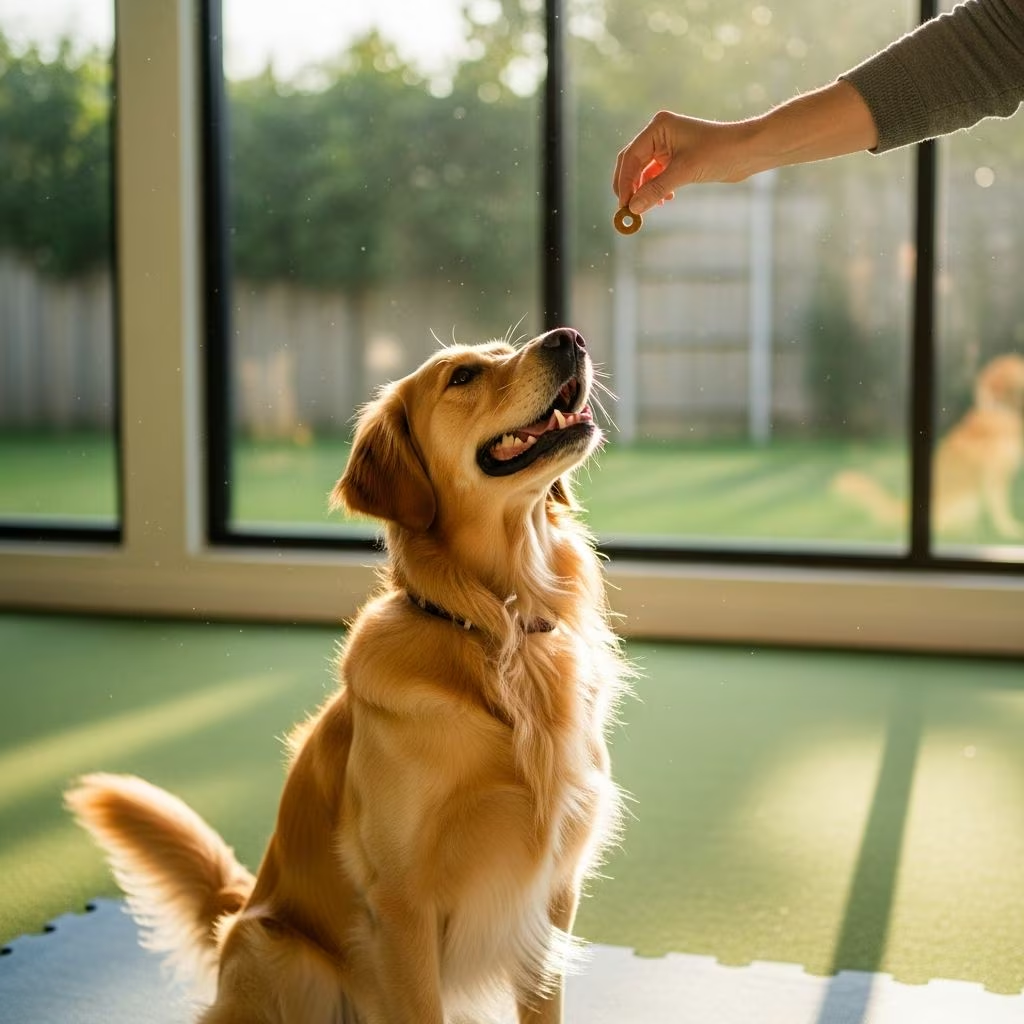
Positive dog training focuses on rewarding desirable actions to encourage repetition, creating a foundation for advanced skills that enhance obedience and mutual trust. This approach prioritizes science-supported methods over punishment, leading to confident, well-mannered dogs suitable for any environment.
Foundations of Reward-Based Learning
Reward-based learning, often called **positive reinforcement**, involves providing treats, praise, toys, or play immediately after a dog performs a wanted behavior. This timing is crucial because dogs associate the reward directly with their action, increasing the likelihood of repetition. Unlike coercive methods, this builds enthusiasm for training sessions and reduces stress.
Key benefits include faster skill acquisition and stronger owner-dog bonds. Dogs trained positively show fewer fear responses and better adaptability to new situations. Start with high-value rewards—those your dog finds irresistible—to motivate engagement from the outset.
Clicker Training: Precision Marking Tool
**Clicker training** uses a small device that emits a consistent ‘click’ sound to mark the exact instant a dog succeeds. Follow the click with a treat to solidify the association. This method excels in advanced scenarios where split-second feedback is needed, such as shaping complex behaviors.
To implement:
- Charge the clicker by clicking and treating repeatedly until the dog anticipates rewards.
- Introduce behaviors by clicking slight approximations of the goal.
- Phase out the clicker gradually as verbal cues take over.
Studies from veterinary behaviorists confirm clickers improve accuracy in tasks like agility or service work, as the sound bridges the gap between action and reward more reliably than voice alone.
Shaping Behaviors Step by Step
Shaping breaks down intricate commands into tiny, achievable increments, rewarding progress toward the final goal. For example, to teach ‘roll over,’ first reward lying down, then a head tilt, building sequentially until the full spin occurs.
This technique fosters problem-solving in dogs, boosting mental stimulation. It’s particularly effective for stubborn or novice learners, preventing frustration from unattainable expectations.
| Behavior Stage | Reward Action | Example: Roll Over |
|---|---|---|
| 1. Initial | Treat for basic position | Dog lies down |
| 2. Approximation | Treat for partial movement | Head drops to side |
| 3. Refinement | Treat for fuller motion | Shoulder rolls |
| 4. Completion | Jackpot reward | Full rollover |
Desensitization and Counter-Conditioning for Reactivity
**Desensitization** gradually exposes dogs to triggers—like strangers or loud noises—at a safe distance where they remain calm, then rewards relaxation. **Counter-conditioning** pairs the trigger with positives, shifting emotional responses from fear to anticipation.
Combine these for issues like leash reactivity: Start far from distractions, treat calm focus, and slowly close the gap. Consistency prevents setbacks, often resolving problems in weeks with daily practice.
Building a Rock-Solid Recall Command
A reliable **recall**—coming when called—is vital for safety off-leash. Begin in low-distraction indoors: Say the cue happily, reward generously upon approach. Progress outdoors, using life rewards like play to outcompete temptations.
Avoid calling for negatives like bath time; reserve it for positives. Advanced practice includes proofing against distractions: Call during mild play, gradually intensifying.
- Practice daily in varied spots.
- Use long lines for safety in open areas.
- Never punish late responses—reset positively.
Impulse Control Drills for Everyday Manners
**Impulse control** teaches waiting for permission before actions like eating or door dashing. ‘Wait’ at doors or ‘leave it’ for dropped food builds self-regulation, essential for polite public behavior.
Exercises include:
- Food Guarding Prevention: Hand-feed meals, rewarding gentle takes.
- Door Manners: Cue ‘sit-stay’ before opening.
- Tug Toy Rules: Release on command for continued play.
These drills enhance focus, reducing jumping or pulling naturally over time.
Advanced Heeling and Distance Control
**Heeling** positions the dog attentively at your side without tension. Advanced versions add speed changes and turns, prepping for competitions. Use treats to lure position, fading to verbal praise.
**Distance commands** like ‘back up’ or ‘side’ create space on cue. Signal with hand gestures, rewarding precise steps away. These prevent crowding and aid in tight spaces.
The Power of the Place Command
**Place** sends dogs to a mat or bed and stays there amid distractions. Ideal for visitors or meals, it promotes calm independence. Lure onto the spot, build duration with rewards, then add distance.
Benefits extend to travel: A portable mat becomes a sanctuary anywhere.
Mental Enrichment Through Training Games
Beyond obedience, games like scent detection or puzzle-solving tire minds as effectively as walks. Hide treats for ‘find it,’ or teach targeting objects with nose or paws.
Rotate activities weekly to sustain interest, preventing boredom-induced mischief.
Tools and Gear for Success
Front-clip harnesses reduce pulling humanely. Long leashes (20-50 ft) enable safe recall practice. High-quality treats vary by size for quick delivery.
Avoid aversives like prong collars, which risk fear aggression per veterinary guidelines.
Common Pitfalls and Fixes
Mistakes include inconsistent rewards or advancing too fast. Fix by logging sessions, ensuring 80% success before progressing. Short, frequent trainings (5-15 min) outperform marathons.
Patience yields results; adult dogs adapt slower but deeply.
FAQs
What age is best for advanced training?
Any age, though puppies absorb quickest. Adults refine faster with maturity.
How long until results show?
Basics in days, advanced in weeks with daily practice.
Can rescues with issues use positive methods?
Yes—desensitization excels for trauma histories.
What if my dog ignores rewards?
Upgrade to ultra-high value like meat, or diagnose health issues.
Is professional help needed?
For aggression, yes; certified trainers ensure safety.
References
- 5 Tips for Successful Dog Training — Virginia Tech College of Veterinary Medicine. 2023-01-01. https://vetmed.vt.edu/news/2023/dog-training-tips.html
- Positive Training Techniques That Set Dogs Up for Success — Dog Dynamics. 2024-01-01. https://dogdynamics.org/training-tips/positive-dog-training-success/
- Advanced Dog Training: Techniques, Tips and Tricks — K-9 Companions. 2023-01-01. https://k-9companions.com/blog/advanced-dog-training-1/
- Advanced Canine Obedience Training Techniques — Wag Mates Academy. 2024-01-01. https://www.wagmatesacademy.com/post/advanced-canine-obedience-training-techniques
- Advanced Dog Training for a Well-Mannered Pet — Paws Oasis Pet Resort. 2023-01-01. https://pawoasispetresort.com/beyond-basic-commands-advanced-dog-training-for-a-well-mannered-pet/



