

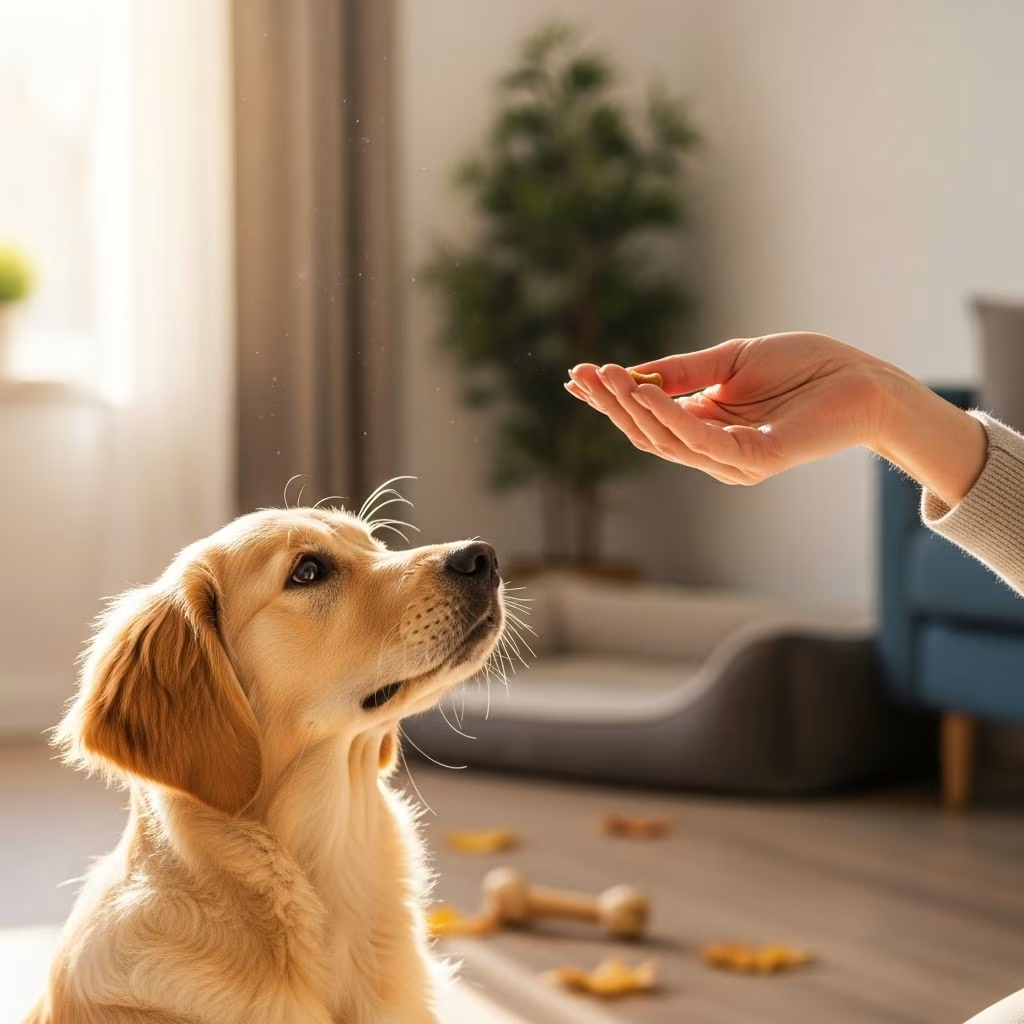
Positive dog training revolves around rewarding desirable actions to encourage repetition, creating a foundation of trust and enthusiasm between you and your canine companion. This approach, grounded in operant conditioning, prioritizes adding valued rewards like treats or praise over punishment, leading to faster learning and stronger bonds.
Why Choose Reward-Based Training?
Reward-based methods outperform traditional punishment techniques by focusing on what dogs should do, rather than what they shouldn’t. Dogs trained positively show increased confidence, reduced stress, and a love for learning, as they associate training with positive outcomes. Unlike aversive methods that risk fear or aggression, positive reinforcement promotes mental exercise and active participation from your dog.
Science supports this: operant conditioning’s positive reinforcement quadrant adds something pleasant to boost behavior frequency. For instance, offering a treat for sitting makes sitting more likely next time. Studies and experts agree this builds coping skills, making dogs better equipped for real-world challenges.
Core Principles of Effective Dog Training
Success hinges on a few unchanging fundamentals. Here’s what every owner needs to know:
- Consistency: Use the same cues and rewards every session. Dogs thrive on predictable routines, reinforcing learning through repetition.
- Timing: Deliver rewards within seconds of the desired action. Delays confuse dogs, breaking the action-reward link.
- Patience: Progress varies by age, breed, and temperament. Short, frequent sessions prevent frustration.
- Socialization: Early exposure to stimuli builds confidence, curbing fear-based issues.
These pillars ensure clear communication, turning training into a collaborative effort.
Selecting the Perfect Rewards
Not all motivators work equally for every dog. Identify your pup’s preferences through observation—food, toys, play, or verbal affirmation. High-value treats like soft cheese bits excel in distractions, while everyday kibble suits low-stakes practice.
| Reward Type | Best For | Examples |
|---|---|---|
| Food | High motivation, new skills | Pea-sized chicken, cheese |
| Praise/Play | Low-distraction, bonding | Enthusiastic “Good dog!”, tug games |
| Toys | Play-driven dogs | Squeaky balls, fetch sticks |
Experiment to match rewards to contexts, keeping sessions engaging.
Essential Techniques for Building Skills
Master these methods to teach commands progressively.
Clicker Training: Precision Marking
A clicker emits a distinct sound pinpointing perfect moments, followed by a reward. This bridges timing gaps, accelerating learning. Charge the clicker first by pairing it with treats repeatedly, then use for cues like “sit”. Dogs quickly grasp the click means jackpot, fostering eager responses.
Shaping: Incremental Success
Break complex behaviors into tiny steps, rewarding approximations. For “down,” praise sitting, then head lowering, then elbow drop—building to full lie-down. This suits shy dogs, boosting confidence through achievable wins.
Desensitization: Conquering Fears
Gradually expose reactive dogs to triggers at safe distances, rewarding calm. Shorten the gap as tolerance grows, transforming anxiety into neutrality.
Combine these for comprehensive training, from basics to advanced obedience.
Step-by-Step Guide to Basic Commands
Start simple to solidify your foundation.
- Sit: Hold a treat above nose level, move back to lure butt down. Reward instantly.
- Stay: From sit, step back one pace, return and reward. Build duration gradually.
- Come: Call in low-distraction areas, reward heavily. Never chase—make recall a game.
- Down: Use shaping or lure from sit by lowering treat to ground.
Practice 5-10 minutes daily, fading lures over time for reliability.
Overcoming Common Training Hurdles
Challenges arise, but solutions exist:
- Distractions: Up rewards, shorten sessions, practice in quiet spots first.
- Regression: Revert to earlier steps; consistency rebuilds habits.
- Lack of Motivation: Switch rewards or check health issues.
- Multiple Dogs: Train individually, then together with group rewards.
View setbacks as learning opportunities, maintaining positivity.
Advanced Applications and Long-Term Maintenance
Once basics click, layer in complexity: heeling, tricks, or agility. Maintain with random rewards to prevent extinction—intermittent reinforcement mimics real life.
Integrate into daily life: reward house manners, loose-leash walking. This cements behaviors without constant treats. Positive training evolves with your dog, adapting to life stages.
Science Behind the Magic
Operant conditioning explains why it works: positive reinforcement increases behaviors by adding reinforcers. Avoid punishment quadrants to prevent shutdown or aggression. Modern research confirms rewards create predictable, joyful environments. The American Kennel Club endorses this for bonding and efficacy.
Benefits Beyond Obedience
Expect reduced behavioral issues, better socialization, and a happier dog. Owners report deeper connections, as dogs view humans as reward sources. It’s fun, stress-free, and inclusive for all dogs.
Frequently Asked Questions (FAQs)
Is positive training suitable for all dogs?
Yes, it works across ages, breeds, and temperaments, adapting to individual needs.
How long until I see results?
Basics emerge in days with consistency; mastery takes weeks to months.
Can I train without treats?
Absolutely—use praise, toys, or play for non-food-motivated dogs.
What if my dog ignores commands?
Increase reward value, improve timing, or reduce distractions.
Does it address aggression?
Yes, via desensitization and counter-conditioning, focusing on root causes.
Daily Training Integration Tips
Weave sessions into routines: mealtimes for sits, walks for heeling. Track progress in a journal to celebrate milestones. Group classes amplify socialization.
Commit to positivity for a lifetime learner. Your dog will thank you with wags and unwavering loyalty.
References
- Positive Training Techniques That Set Dogs Up for Success — Dog Dynamics. 2023. https://dogdynamics.org/training-tips/positive-dog-training-success/
- Basic Dog Training Foundations — K-9 Companions. 2024. https://k-9companions.com/blog/basic-dog-training/
- How Do I Use Positive Treat Training for Dogs? — Dogs Inc. 2023. https://dogsinc.org/blog/ask-the-trainer/training-and-treats/
- Positive Training — Positively.com. 2024. https://positively.com/dog-training/article/philosophy-positive-training
- Positive Reinforcement Dog Training: Understanding Operant Conditioning — American Kennel Club (AKC). 2025-03-01. https://www.akc.org/expert-advice/training/operant-conditioning-positive-reinforcement-dog-training/
- Dog Training Using Positive Techniques — Whole Dog Journal. 2023. https://www.whole-dog-journal.com/training/dog-training-using-positive-techniques/



