

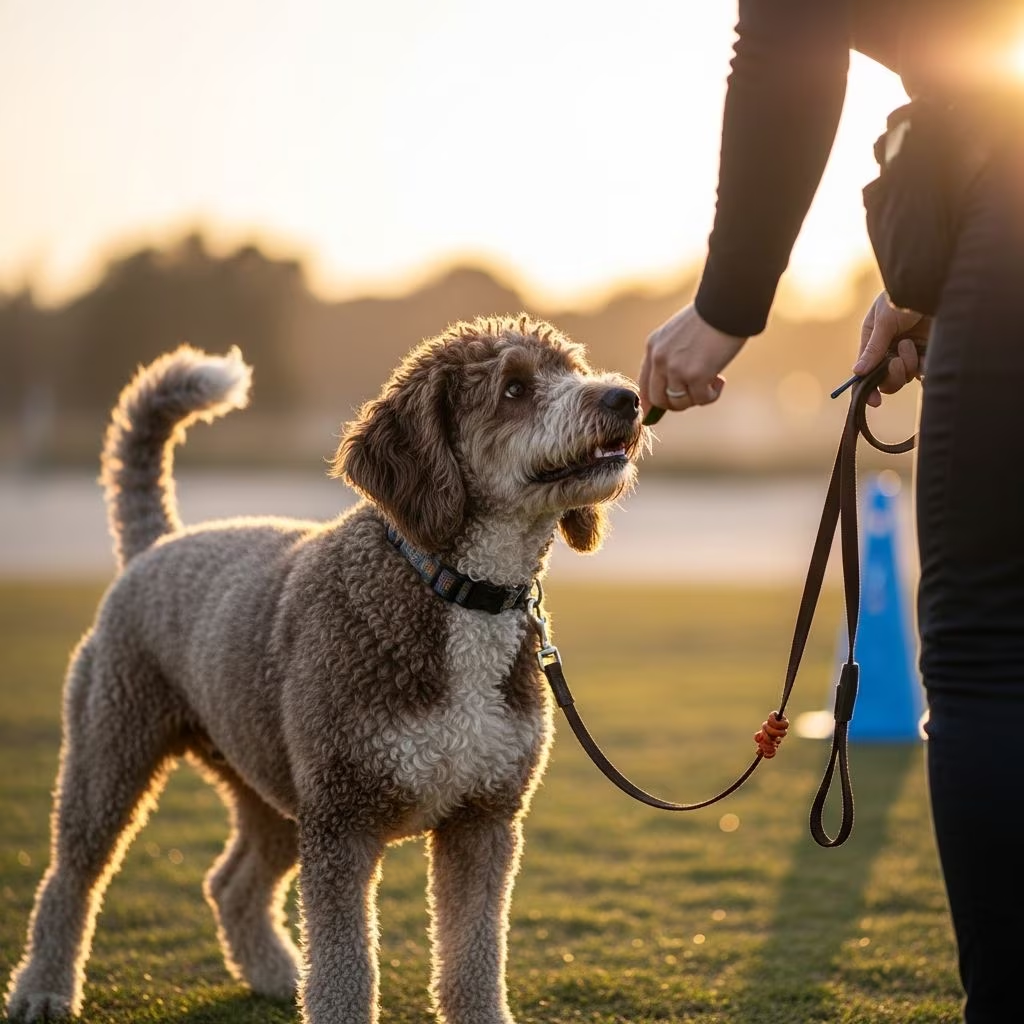
Portuguese Water Dogs are renowned for their remarkable intelligence, boundless energy, and keen desire to work alongside their handlers. These medium-sized canines were originally bred to assist fishermen in Portugal, and their heritage as working dogs continues to shape their behavioral characteristics today. Successfully training a Portuguese Water Dog requires understanding their unique temperament, leveraging their natural aptitude for learning, and applying consistent, reward-based methodologies that respect their independent nature.
Whether you’re bringing home a young puppy or working with an adult Portuguese Water Dog, the foundation of effective training lies in recognizing that these dogs are both highly capable learners and strong-willed individuals. They respond exceptionally well to owners who establish themselves as confident, fair leaders while maintaining a positive and encouraging approach throughout the training process.
Beginning Your Training Journey Early: The Advantages of Starting Young
The most critical factor in developing a well-mannered Portuguese Water Dog is initiating training during the earliest possible stages of their life. Portuguese Water Dogs possess exceptional cognitive abilities and reach physical maturity relatively quickly, creating a narrow window during which foundational behaviors and boundaries can be established most effectively.
Puppies around 8 weeks of age, when they first transition to their new home, are at an ideal stage for beginning their educational journey. At this age, young Portuguese Water Dogs are naturally curious, malleable in their behavior patterns, and most receptive to learning basic household rules and social expectations. Delaying training during these formative weeks risks allowing undesirable behaviors—such as excessive jumping, destructive chewing, or inappropriate elimination—to become established habits that prove significantly more challenging to correct later in the dog’s life.
Early training also provides the critical opportunity to socialize your Portuguese Water Dog with various people, environments, and situations. Proper socialization during puppyhood creates a foundation for confident, well-adjusted adult dogs who respond appropriately to novel situations and different individuals.
Establishing Leadership Through Balanced Authority and Kindness
Portuguese Water Dogs possess independent streaks that can manifest as stubbornness or selective obedience if an owner lacks clear authority. However, these dogs simultaneously demonstrate genuine eagerness to please their handlers, creating a dynamic that requires a carefully calibrated approach to leadership.
The most effective training strategy combines gentle, compassionate communication with firm, unwavering boundaries. Your Portuguese Water Dog needs to understand that you are a trustworthy leader worthy of respect, not through fear or intimidation, but through consistent, predictable behavior and clear expectations.
This balanced approach means:
- Maintaining a calm, confident demeanor during training sessions
- Establishing non-negotiable household rules that are applied consistently
- Avoiding harsh corrections or punishment-based techniques
- Rewarding compliance while calmly redirecting inappropriate behavior
- Following through on commands with persistence and patience
Dogs that perceive their owners as uncertain or inconsistent often test boundaries and attempt to establish themselves as decision-makers. Conversely, dogs trained through fear-based methods develop anxiety and may exhibit unpredictable behavioral problems. The middle ground—confident, consistent, and kind leadership—creates the optimal training environment.
Leveraging Verbal Communication for Enhanced Training Effectiveness
Portuguese Water Dogs possess cognitive abilities that extend far beyond basic command recognition. These intelligent canines can learn and respond to numerous vocal cues, individual words, and complex instructions when trained properly. Their natural responsiveness to vocalization makes audio-based communication particularly effective as a training tool.
When incorporating verbal commands into your training regimen, consistency in terminology is absolutely essential. Selecting specific words for particular behaviors and using them uniformly across all interactions prevents confusion and accelerates the learning process. For example, rather than alternating between “sit,” “sit down,” and “take a seat,” maintain singular, consistent phrasing.
Common vocal commands that Portuguese Water Dogs typically master include:
- Sit – Foundation command teaching controlled positioning
- Come – Recall command essential for safety and control
- Stay – Duration command building impulse control
- Leave it – Safety command preventing dangerous ingestion
- Down – Relaxation command useful in various situations
- No – Correction command indicating inappropriate behavior
Introduce vocal commands early and reinforce them consistently. Over time, your Portuguese Water Dog will develop rapid response times and will perform requested behaviors with increasing reliability and minimal repetition.
The Power of Repetition: How Practice Builds Reliable Behaviors
Portuguese Water Dogs demonstrate both curiosity and intelligence that enables them to acquire extensive behavioral repertoires. However, the transition from occasional compliance to reliable, automatic responses requires substantial repetition and consistent practice.
Many owners mistakenly believe that once a dog performs a command correctly once or twice, the behavior is learned and permanent. In reality, canine learning follows a progression from initial understanding to consistent, reliable execution. Your Portuguese Water Dog genuinely wants to perform correctly and earn your approval, but achieving automatic responses requires multiple exposures to the training scenario.
Effective practice involves:
- Repetition of the verbal cue followed by the desired behavior
- Immediate positive reinforcement upon correct execution
- Varied locations and times to prevent context-dependent learning
- Gradually reducing the frequency of rewards as the behavior becomes automatic
- Periodic refresher training to maintain command reliability
Think of training repetition as building neural pathways in your dog’s brain. Each successful repetition strengthens the association between the command, the behavior, and the positive outcome, until the behavior becomes reflexive rather than deliberate.
Optimizing Training Sessions: Breaking Instruction Into Manageable Segments
Portuguese Water Dogs possess high energy levels and require substantial mental engagement, yet even these capable learners experience fatigue during extended training sessions. Attempting to conduct hour-long training sessions typically results in diminished focus, reduced learning efficiency, and potential frustration for both handler and dog.
The optimal training session structure for Portuguese Water Dogs involves multiple short, focused practice periods rather than single lengthy sessions. Sessions lasting 10 to 20 minutes, followed by rest periods or recreational playtime, produce superior learning outcomes and maintain your dog’s enthusiasm for training activities.
This segmented approach offers several advantages:
- Maintains your dog’s focus and mental engagement
- Prevents fatigue-related decreased performance
- Allows for multiple daily training opportunities
- Provides natural break points for positive transitions between activities
- Makes training feel less burdensome for both participants
- Reduces the likelihood of your dog developing negative associations with training
Rather than planning single intensive training sessions, structure your day to include multiple five-minute to ten-minute practice periods. You might conduct a brief training session after breakfast, another during midday, and a final session before evening playtime. This distributed practice approach leverages spacing effects in learning and produces more durable behavioral changes.
Creating Structure Through Consistent Scheduling and Routine
Portuguese Water Dogs thrive within structured environments where daily activities follow predictable patterns. Establishing consistent schedules for potty breaks, meals, walks, training sessions, and play periods provides your dog with a sense of security and facilitates the learning process.
Routine-based living helps Portuguese Water Dogs by:
- Regulating digestion and elimination patterns
- Creating predictable transition points for training opportunities
- Reducing anxiety through environmental predictability
- Establishing clear expectations for appropriate timing of various activities
- Facilitating more effective house training by synchronizing biological needs with designated bathroom times
Determine specific times for morning potty breaks, midday bathroom excursions, feeding periods, training sessions, and evening exercise. While some flexibility is appropriate for real-world scheduling demands, maintaining consistency most days of the week significantly enhances your Portuguese Water Dog’s receptiveness to training and behavioral adaptation.
Addressing Problematic Behaviors: Managing Biting, Nipping, and Aggressive Play
Portuguese Water Dogs, particularly during puppyhood, may exhibit biting and nipping behaviors as part of normal play and exploration. These water dogs have strong jaws adapted for their working heritage, and without proper redirection, play biting can develop into problematic behavior that creates safety concerns.
Managing and eliminating biting behavior requires:
- Immediate interruption – Stop play activity promptly when biting occurs
- Clear communication – Indicate to your puppy that the bite pressure exceeded acceptable limits
- Appropriate redirection – Offer suitable chew toys as alternative outlets for biting urges
- Game modifications – Substitute catching games for chasing games, which can intensify nipping behavior
- Consistency across interactions – Ensure all family members respond to biting incidents uniformly
Avoid punishment-based responses to biting, as these approaches often increase anxiety and may paradoxically worsen behavioral problems. Instead, use biting incidents as teaching opportunities to redirect your Portuguese Water Dog toward appropriate outlets for their natural predatory and play-drive instincts.
Maximizing Training Through Positive Reinforcement Methodology
Positive reinforcement represents the most effective, humane, and scientifically-supported approach to training Portuguese Water Dogs. This methodology focuses on rewarding desired behaviors, thereby increasing the likelihood of those behaviors recurring, while avoiding punishment-based techniques that can create anxiety and undermine the human-dog relationship.
When your Portuguese Water Dog successfully executes a command or displays appropriate behavior, immediate positive reinforcement creates a powerful association between the behavior and favorable outcomes. This positive association motivates future compliance and strengthens your bond with your dog.
Effective positive reinforcement includes:
- Food rewards – Small, high-value treats delivered immediately after correct behavior
- Verbal praise – Enthusiastic, sincere acknowledgment such as “Good dog!” or “Excellent work!”
- Physical affection – Petting, scratching, or other tactile rewards your dog enjoys
- Toy access – Brief play sessions with favorite toys as rewards
- Activity privileges – Allowing access to swimming, fetching, or other favorite activities contingent on good behavior
The most powerful reinforcers vary by individual dog. Some Portuguese Water Dogs are highly food-motivated and respond exceptionally well to treats, while others prioritize play or physical affection. Identify your specific dog’s most compelling motivators and leverage these during training sessions.
As your Portuguese Water Dog develops reliable command responses, gradually reduce the frequency of treat rewards while maintaining verbal praise and affection. This transition prevents your dog from becoming overly dependent on food motivation while maintaining behavioral reliability through social reinforcement.
Understanding Your Portuguese Water Dog’s Exercise and Mental Stimulation Needs
Portuguese Water Dogs were developed as working dogs requiring substantial physical exertion and mental engagement. Adult Portuguese Water Dogs require approximately one to two hours of daily exercise, while puppies need frequent activity periods distributed throughout the day.
Insufficient exercise and mental stimulation frequently result in behavioral problems including destructiveness, excessive barking, and difficulty focusing during training sessions. A tired, mentally engaged Portuguese Water Dog is far more receptive to training and exhibits fewer problematic behaviors.
Optimal exercise and enrichment activities include:
- Extended walks and jogging sessions
- Swimming and water-based activities (aligning with their breed heritage)
- Fetch and retrieval games
- Interactive puzzle toys and treat-dispensing toys
- Agility training and obstacle courses
- Hide-and-seek games engaging their natural scenting abilities
Incorporate diverse activities to prevent boredom and maintain your dog’s physical conditioning. Many Portuguese Water Dogs particularly enjoy water-based activities, offering an excellent opportunity to combine exercise with engagement of their natural instincts.
Frequently Asked Questions About Portuguese Water Dog Training
At what age should I begin training my Portuguese Water Dog?
Begin training immediately when your puppy arrives home, typically around 8 weeks of age. Early foundation training establishes behaviors and boundaries that persist throughout your dog’s life. Even young puppies can learn basic commands and household expectations when training is age-appropriate and positive in nature.
How long do Portuguese Water Dogs take to housetrain?
Housetraining timelines vary based on individual dogs, consistency of training, and schedule adherence. Most Portuguese Water Dogs demonstrate reliable housetraining between 3 to 6 months of age when trained using consistent schedules, designated bathroom areas, and positive reinforcement for appropriate elimination.
Can Portuguese Water Dogs learn advanced commands?
Yes. Portuguese Water Dogs possess sufficient intelligence to master extensive command repertoires including advanced behaviors such as directed retrieves, off-leash recalls, and service dog tasks. Their eagerness to please and natural working drive make them excellent candidates for advanced training programs.
What should I do if my Portuguese Water Dog isn’t responding to training?
Lack of response typically indicates insufficient motivation, inconsistent training methodology, or unmet physical/mental exercise needs. Reassess your reinforcement strategy, ensure consistency across all handlers, and increase daily exercise and mental stimulation. Consider consulting a professional trainer for personalized guidance.
How do I manage my Portuguese Water Dog’s independent nature during training?
Portuguese Water Dogs’ independence requires confident, consistent leadership combined with rewards that genuinely motivate your specific dog. Avoid punishment-based corrections and instead focus on making obedience more rewarding than non-compliance. Establish yourself as a trustworthy decision-maker through calm, fair leadership.
Conclusion: Building a Lasting Partnership Through Effective Training
Training a Portuguese Water Dog represents a commitment to understanding and appreciating this exceptional breed’s unique characteristics while guiding them toward reliable, appropriate behaviors. These intelligent, capable dogs possess genuine desire to please their handlers, but they require confident leadership, consistent methodology, and recognition of their individual personalities.
By starting early, maintaining structured routines, breaking training into manageable segments, leveraging verbal communication, employing positive reinforcement, and ensuring adequate physical and mental stimulation, you create the optimal conditions for developing a well-behaved, responsive companion. The investment in training during your Portuguese Water Dog’s early years produces years of rewarding interaction and a harmonious household environment.
References
- How to Train a Portuguese Water Dog: 9 Vet-Approved Tips — Dogster. Accessed 2026-01-30. https://www.dogster.com/dog-training/how-to-train-portuguese-water-dog
- House Training Your Portuguese Water Dog: A Step-by-Step Guide for a Happy Home — Wheatley Water Dogs. https://www.wheatleywaterdogs.com/post/house-training-your-portuguese-water-dog-a-step-by-step-guide-for-a-happy-home
- Portuguese Water Dog Breed Guide — BorrowMyDoggy. https://www.borrowmydoggy.com/doggypedia/dog-breed-guides-portuguese-water-dog



