

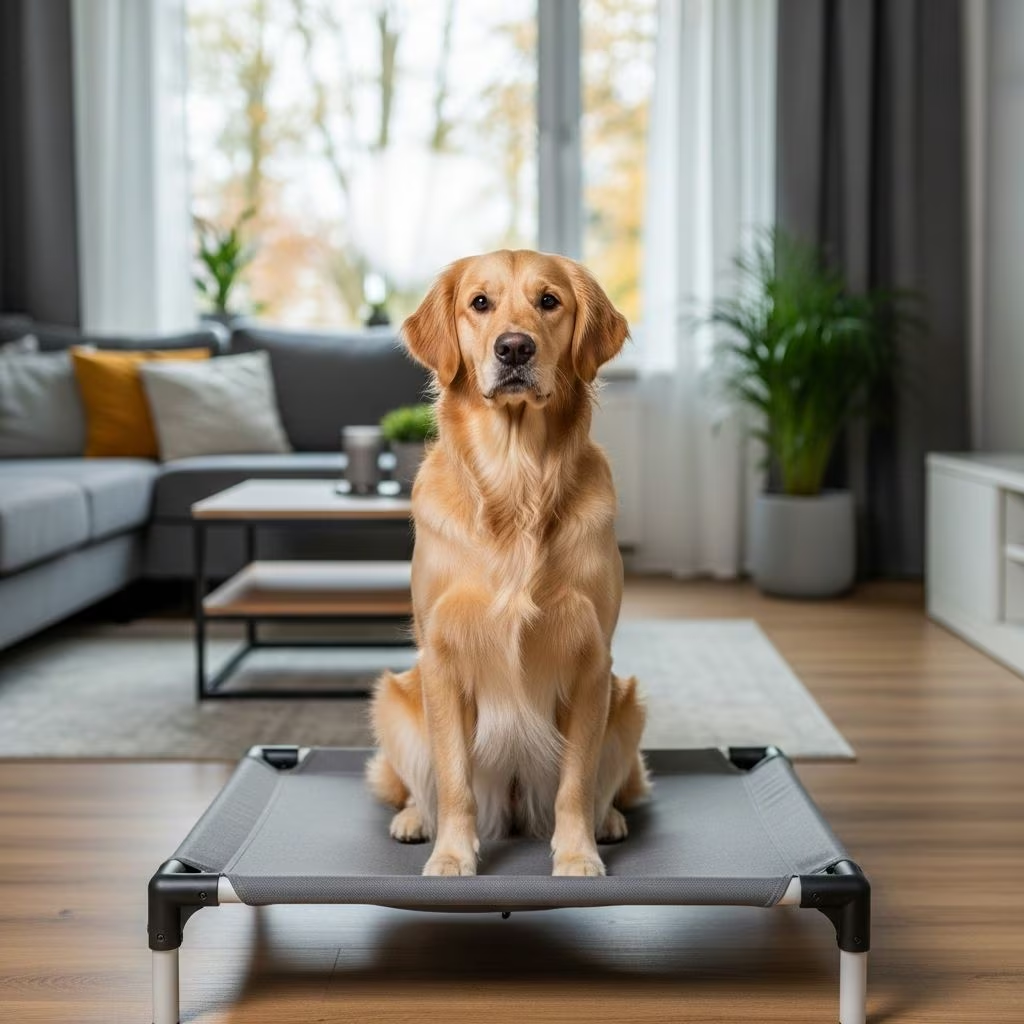
The place command is a cornerstone of effective dog training, teaching dogs to go to a designated spot—like a mat, bed, or cot—and remain there until released. This skill fosters impulse control, reduces unwanted behaviors such as jumping on guests, and provides a reliable way to manage your dog during meals, visitors, or stressful situations. By mastering place, dogs learn patience and boundaries, making daily life smoother for both pet and owner.
Why the Place Command Transforms Dog Ownership
Implementing the place command offers multifaceted benefits. It serves as a send-away cue combined with a stay, encouraging dogs to settle in one area while building mental focus. Owners report fewer incidents of counter-surfing, door dashing, or excessive barking because the dog has a clear ‘job’ to perform. This command is particularly valuable for high-energy breeds or reactive dogs, promoting relaxation without confinement.
- Enhances Safety: Keeps dogs away from hazards like hot stoves or busy doorways.
- Boosts Socialization: Allows calm greetings for visitors without chaos.
- Supports Mental Health: Provides a predictable routine that reduces anxiety.
- Versatile Application: Works indoors, outdoors, or in public spaces with portable mats.
According to training methodologies, consistent practice leads to dogs that default to their place during distractions, creating a more harmonious household.
Essential Equipment for Success
Before starting, gather the right tools to set your dog up for achievement. A sturdy, elevated bed or cot (about 2-3 feet wide) provides a tactile cue distinct from the floor, helping dogs identify their spot quickly. Use a 6-foot leash for guidance, a martingale collar or harness for security, and high-value treats like small pieces of chicken or cheese to motivate.
| Item | Purpose | Tips |
|---|---|---|
| Elevated Cot/Bed | Defines the boundary | Choose non-slip surface; size fits dog comfortably |
| 6-Foot Leash | Gentle guidance | Lightweight, no retractable types |
| Treats/Praise | Reinforcement | Vary values for progression |
| Marker Word (e.g., ‘Yes’) | Timing success | Practice ‘charging’ it first |
Optional items include a clicker for precise marking and toys for play-based rewards in advanced stages.
Foundational Skills: The Terminal Marker
Success hinges on a reliable release cue before introducing ‘place.’ A terminal marker, such as ‘yes’ or a clicker, signals the end of a behavior, teaching dogs they must wait for permission to move. Start sessions by pairing the marker with treats repeatedly—say ‘yes’ and deliver food immediately—until the dog anticipates rewards upon hearing it. This builds understanding that behaviors persist until the marker releases them.
- Hold treat in hand, say marker, give treat. Repeat 20-30 times.
- Test by asking for a simple sit; mark and reward only on release.
- Practice in short bursts to avoid fatigue.
This step prevents confusion, ensuring dogs don’t leave their spot prematurely.
Step-by-Step Training Guide
Phase 1: Luring onto the Spot
Begin in a quiet room with minimal distractions. Attach the leash close to the collar and walk purposefully toward the bed, maintaining momentum so the dog follows naturally. Keep leash short but loose. When all four paws land on the bed, immediately mark with ‘yes,’ step back, and reward from your hand or by dropping food on the spot.
- Approach from various angles to generalize the action.
- If the dog hesitates or stops short, gently guide with leash pressure or body positioning without pausing.
- Ignore position (stand, sit, down); focus on all paws on bed.
- Sessions: 5-10 minutes, 3-5 times daily.
Repeat until the dog steps on reliably without full luring.
Phase 2: Naming the Command
Once movement is fluid, add the verbal cue. From 2-3 feet away, say ‘place’ while pointing or gesturing toward the bed. If the dog complies, mark and reward. Use consistent tone—firm yet upbeat. If refusal occurs, calmly say ‘nope,’ apply light leash pressure to guide back, then reward compliance.
Pro Tip: Fade the leash gradually; drop it but stay nearby.
Phase 3: Building Duration and Stay
With paws on place, delay the marker slightly—increase by seconds. Praise calmly (‘good place’) to encourage settling. If paws lift off, use spatial pressure (step closer), verbal ‘no,’ and leash guide back. Reward only for staying put.
- Start: 5 seconds, build to 5 minutes.
- Incorporate distractions: toys nearby, mild noises.
- Release with marker + ‘break’ or ‘free,’ allowing off-bed fun.
Phase 4: Distance and Proofing
Step back progressively: 1 foot, then 5, 10. Send from sitting positions or different rooms. Practice doorbell simulations or guest arrivals by cueing place first. Generalize to new objects like park benches for real-world use.
Advanced: Multitasking—cook while dog holds place, or invite helpers to interact minimally.
Common Challenges and Fixes
Training hitches are normal; address them proactively.
| Issue | Solution |
|---|---|
| Dog avoids bed | Increase treat value; lure with food hand first |
| Breaks stay early | Reset immediately; shorten duration, rebuild |
| Distraction overload | Lower environment difficulty; progress slowly |
| High arousal breeds | Exercise prior; use calming praise |
For stubborn cases, consult certified trainers. Consistency across family members prevents mixed signals.
Real-Life Applications and Scenarios
Beyond basics, integrate place into routines. During dinners, send to place preemptively. For travel, use portable mats. Puppies benefit early for house manners; rescues gain security from structure. Videos demonstrate seamless execution in homes with kids or multiple pets.
Frequently Asked Questions (FAQs)
How long until my dog learns place?
Most dogs grasp basics in 1-2 weeks with daily practice; mastery takes 4-6 weeks.
Can any dog age learn this?
Yes, from 8-week puppies to seniors; adapt pace for physical limits.
What if my dog is fearful of the bed?
Start with feeding meals on it; build positive associations gradually.
Do I need treats forever?
No, phase to verbal praise/life rewards; variable schedule maintains reliability.
Is place better than crate training?
Complementary; place promotes freedom with boundaries.
Advanced Variations for Expert Level
Once proficient, add duration challenges (30+ minutes), off-leash reliability, or combine with heeling. Train ‘place’ amid chaos like ball tosses. Track progress in a journal for motivation.
Incorporate into agility or therapy dog prep for versatile obedience.
References
- The Place Command: Teach Your Dog to Settle Anywhere — Long Haul Trekks. 2023. https://longhaultrekkers.com/the-place-command/
- The Place Command – Mannerly Mutts Dog Training — Maine Dog Trainer. 2022. https://www.mainedogtrainer.com/blog/the-place-command-is-excellent-obedience-and-behavioral-exercise-part-1-of-the-command-series
- Place Command In 4 Easy Steps — YouTube (Training Video). 2021. https://www.youtube.com/watch?v=xM7KeODgMsE
- How to Teach Your Dog the PLACE Command (Step-By-Step) — Hamilton Dog Training (YouTube). 2023. https://www.youtube.com/watch?v=yOUTrFOi7TI
- Puppy Training: How to Teach Your Dog – Upstate Canine Academy — Upstate Canine. 2024. https://www.upstatecanine.com/blog/how-to-teach-your-dog-the-go-to-bed-command/



