

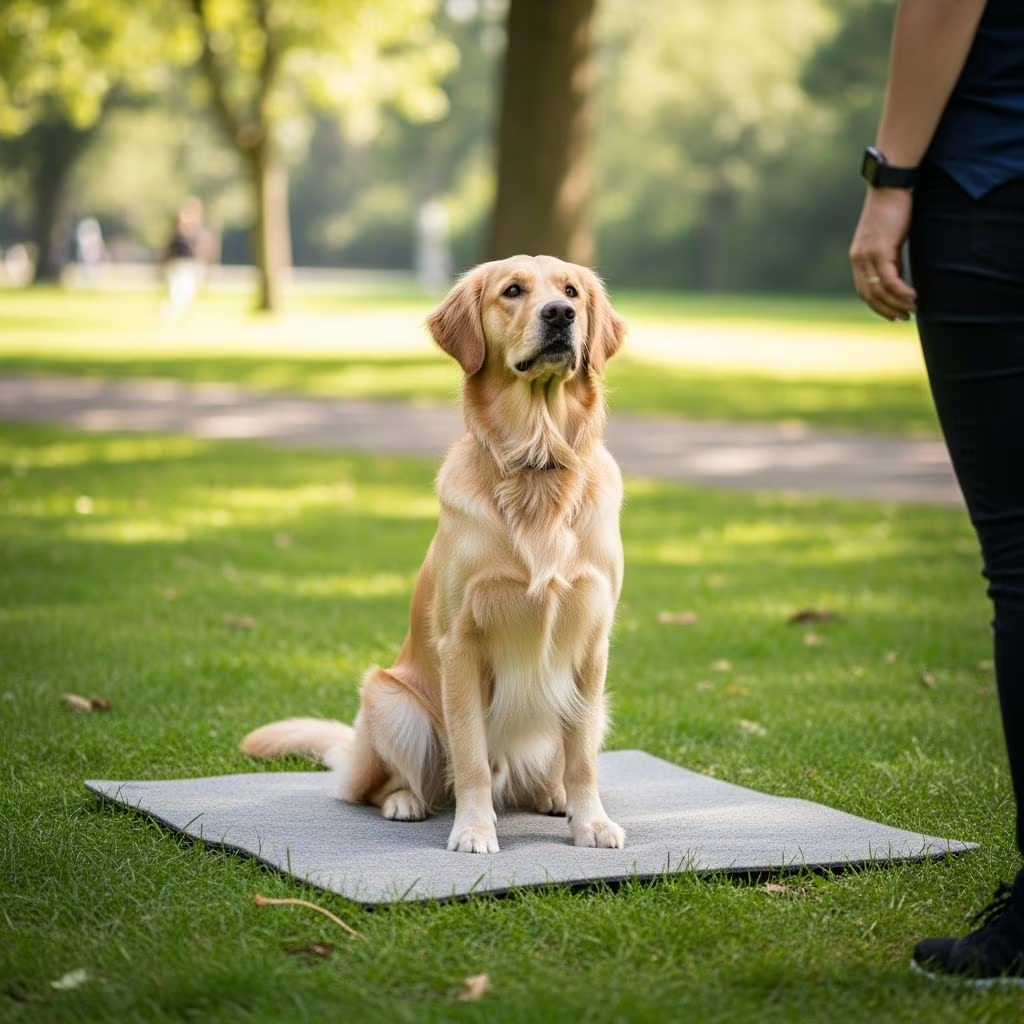
The Place command stands out as one of the most versatile tools in dog training, helping dogs learn to settle in a designated spot while building essential skills like impulse control and relaxation. This single instruction combines elements of sending a dog to a location, maintaining position, and handling distractions, making it invaluable for everyday life.
Why the Place Command Transforms Dog Behavior
Teaching a dog to go to Place fosters independence and reduces anxious shadowing, where dogs constantly follow their owners. It promotes calm waiting during meals, guests, or busy moments, preventing jumping or underfoot antics. Dogs on Place learn boundaries, improving overall manners without constant supervision.
- Impulse Control: Dogs resist chasing distractions while staying put.
- Relaxation Training: Encourages settling, countering hyperactivity.
- Versatility: Portable mats allow practice anywhere, from home to parks.
- Safety Boost: Keeps dogs out of harm during doorbells or cooking.
Experts note this command rivals recall in utility, as it creates a psychological shift from needy follower to confident companion.
Essential Equipment for Successful Training
Start with items that define clear boundaries and comfort. A sturdy mat, elevated bed, or board (about 3×3 feet) works best, distinct from flooring to signal ‘special spot’. Use a 6-foot leash for guidance, a secure collar, and high-value treats for motivation. Avoid everyday rugs to prevent confusion.
| Item | Purpose | Tips |
|---|---|---|
| Mat/Bed | Defines boundary | Non-slip, washable, elevated for visibility |
| 6′ Leash | Gentle guidance | Lightweight, no retractable |
| Treats | Positive reinforcement | Small, soft, high-value like cheese |
| Release Word | Ends session | Consistent like ‘free’ or ‘break’ |
Building the Foundation: Introducing the Spot
Begin in a quiet room with minimal distractions. Position the mat centrally for easy access from all sides. Walk your dog nearby on leash, casually stepping over it. When all four paws land on the mat, calmly say ‘Place’ and reward immediately. Repeat from various angles to generalize the concept, ensuring the dog doesn’t associate it with one direction only.
Allow free exploration first; toss treats on the mat to build positive links. Praise any interaction—sniffing, paw touching—shaping toward full commitment. Sessions last 5-10 minutes, multiple times daily for quick progress.
Transitioning to Send-to-Place
Once comfortable, introduce distance. From 2-3 feet away, point firmly while saying ‘Place’, guiding with leash if needed. Use body language—a slight nudge or step forward—to encourage movement. Reward only when all paws are fully on, adjusting position gently if paws dangle off.
Aim for three successful unprompted sends before advancing. This phase, often 5-7 minutes, solidifies the cue as a directional signal rather than proximity-based. Practice circling the mat while leashed to build duration and comfort in motion.
Adding Duration and Position Flexibility
Dogs may sit, stand, or lie down on Place—position choice is theirs, as long as boundaries hold. Hold the leash loosely, walking perimeter circles to test steadiness. If they shift off, a quick body block or leash tug returns them without drama. Verbal markers like ‘good’ acknowledge effort, not release.
Gradually extend time: start at 10 seconds, building to minutes. Introduce a separate ‘stay’ cue if desired for emphasis, but Place implies duration inherently.
Incorporating Distance and Proofing
Send from farther (5-10 feet), praising on arrival. Walk away briefly, returning to reward. Focus on one ‘D’ at a time: duration first, then distance, finally distractions. This prevents overwhelm.
For long Place, repeat sends at prior distances, using ‘good Place’ as a keep-going marker. Corrections remain minimal—leash or verbal ‘no’—prioritizing practice.
Handling Distractions and Real-World Application
Proof with mild interruptions: toys rolling by, claps, or family movement. Reward heavily for compliance. Progress to door knocks or guests, where Place shines for greetings. Practice across rooms, then outdoors in low-traffic spots like yards, generalizing to parks or travel.
Portable mats enable airplane use or visits, maintaining calm amid chaos.
Common Mistakes and Fixes
Avoid these pitfalls for smoother training:
- No Clear Boundaries: Use defined edges; fuzzy spots confuse dogs.
- Inconsistent Rewards: Always reinforce success immediately.
- Rushing Phases: Master each step before advancing.
- Forgetting Release: End sessions with ‘free’ to prevent frustration.
- High Distractions Early: Build foundations distraction-free.
Puppies learn fastest; adults may need patience but benefit equally.
Advanced Variations for Expert Control
Once basic Place is solid, add:
- Circle Place: Continuous circling builds focus amid movement.
- Multi-Spot Training: Use identical mats in new locations.
- Integration with Other Commands: Pair with down-stay for competitions.
- Group Settings: Multiple dogs on individual Places.
These elevate Place to competition-level reliability.
Benefits for Specific Dog Types
High-energy breeds like Border Collies gain outlet for mental work. Reactive dogs learn self-soothing. Seniors appreciate low-impact settling.
FAQ
What if my dog won’t step on the mat?
Lure with treats or gently guide with leash. Build positive associations slowly.
How long until mastery?
Basics in 1-2 weeks with daily 10-minute sessions; proofing takes months.
Can I use Place without treats?
Yes, phase to praise/body language after foundation, using treats sparingly.
Is Place suitable for puppies?
Absolutely, start as young as 8 weeks for lifelong habits.
What if my dog leaves Place early?
Quietly return without fanfare, rebuilding duration incrementally.
Troubleshooting Persistent Issues
For stubborn cases, regress phases or increase reward value. Consult pros if anxiety underlies resistance. Consistency across family members is key.
References
- The Place Command – Mannerly Mutts Dog Training — Maine Dog Trainer. Accessed 2026. https://www.mainedogtrainer.com/blog/the-place-command-is-excellent-obedience-and-behavioral-exercise-part-1-of-the-command-series
- The Value of Teaching Your Dog the “Place” Command — Bluewater Dog. Accessed 2026. https://www.bluewater.dog/blogs/news/teaching-your-dog-place-command
- Place Command In 4 Easy Steps — YouTube (Robert Cabral). Accessed 2026. https://www.youtube.com/watch?v=xM7KeODgMsE
- Place Command • The Most Valuable Dog Training Tool — Robin MacFarlane. Accessed 2026. https://robinmacfarlane.com/place-command/
- How To Teach Your Dog To Go to Their Place — American Kennel Club. 2023-05-15. https://www.akc.org/expert-advice/training/teaching-go-to-your-place/
- Effortlessly Teach Your Dog Place and Stay — YouTube (Refined Canine). Accessed 2026. https://www.youtube.com/watch?v=Dea_l6Nb7FQ
- How to Teach a Dog ‘Go to Your Place’ — Best Friends Animal Society. Accessed 2026. https://bestfriends.org/pet-care-resources/how-teach-dog-go-your-place



