

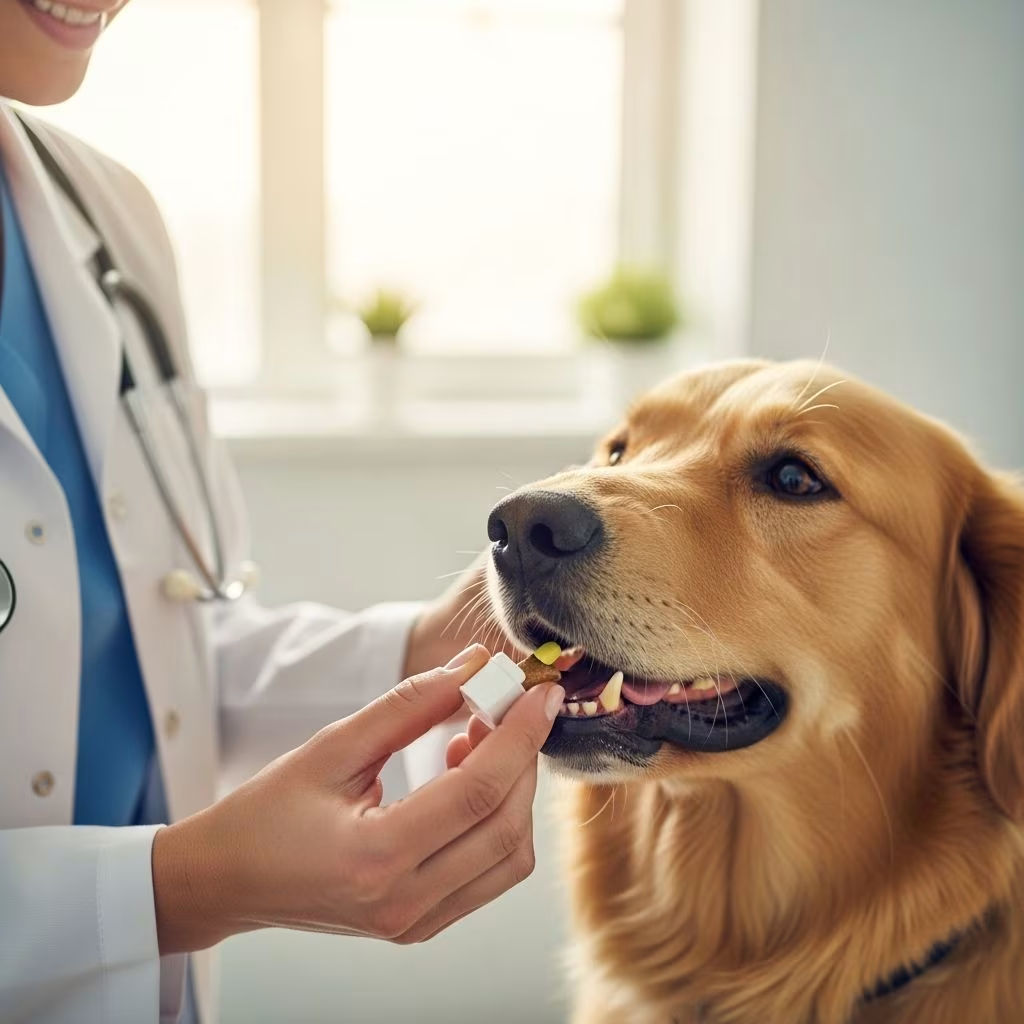
Administering medication to dogs can transform from a daily battle into a manageable routine with the right strategies. Whether dealing with tablets, capsules, or liquids, pet owners must ensure complete doses to support recovery or manage chronic conditions effectively. This guide draws from veterinary best practices to outline safe, efficient approaches that prioritize both pet comfort and owner safety.
Why Accurate Dosing Matters for Canine Health
Medications prescribed for dogs treat everything from infections and pain to heart issues and allergies. Incomplete doses can lead to ineffective treatment, worsening symptoms, or antibiotic resistance. Veterinary guidelines stress verifying prescriptions, preparing doses in advance, and monitoring for side effects post-administration. Always consult your vet before altering methods, as some drugs interact poorly with food or require specific timing.
Preparation Essentials Before Medication Time
Success starts with organization. Gather all tools: oral syringes for liquids, pill splitters if needed (with vet approval), treats, and gloves if handling is messy. Read labels carefully for dosage, frequency, and storage—refrigerated meds should warm to body temperature via hand-holding or warm water, never microwaved. Set up a calm, familiar space away from distractions. For multi-dose regimens, lay out individual pills to avoid errors.
- Wash hands thoroughly to prevent sticking or contamination.
- Measure liquids precisely using provided syringes.
- Have rewards ready—praise, play, or favorite toys—to build positive associations.
Food-Based Techniques: The Easiest Starting Point
Hiding pills in food appeals to a dog’s instincts, often succeeding where direct methods fail. Select small portions of enticing, safe foods to guarantee consumption without waste.
| Food Option | Why It Works | Cautions |
|---|---|---|
| Deli meats or hot dogs | Strong savory aroma masks pill taste | Use low-fat, unseasoned varieties; limit for calorie control |
| Peanut butter (xylitol-free) | Sticky texture encases pill fully | Avoid sugar-free; test small amounts first |
| Cooked sweet potato or meatballs | Soft, moldable for secure hiding | Ensure fully cooked; no onions or toxic additives |
| Cheese bits | Irresistible for many dogs | Check vet for dairy compatibility with med |
| Wet food meatballs | Familiar daily meal base | Separate med portion; watch for spit-outs |
Form treats around the pill, hand-feed to confirm swallowing, and separate from main meals. Pre-meal timing leverages hunger—heat wet food slightly for enhanced appeal. Commercial pill pockets offer flavored alternatives, though savvy dogs may detect them eventually.
Direct Pill Administration: Step-by-Step for Stubborn Cases
When food fails, manual placement ensures delivery. Enlist a helper for restraint if your dog resists. Approach calmly to avoid fear responses that could lead to bites.
- Kneel beside your dog, petting to relax. Grasp muzzle gently from the side.
- With free hand, pry upper lip behind canine teeth to open jaw slightly—no full head tilt needed.
- Drop pill deep onto tongue base, avoiding gagging by not inserting fingers too far.
- Close mouth, hold muzzle, stroke throat downward, and blow lightly on nose to trigger swallow reflex.
- Reward immediately upon success.
Pill guns (long plastic dispensers) simplify this for wiggly pups: load, insert tip over tongue back, and release. Practice empty runs to desensitize your dog.
Handling Liquid Medications with Precision
Liquids suit finicky eaters but demand slow delivery to prevent aspiration. Mix into treats if possible, or use direct syringe method.
- Fill syringe accurately; warm if chilled.
- Insert tip sideways past lower teeth, chin level—not tilted up.
- Squirt tiny amounts (pea-sized), pausing for swallows; aim toward cheek pouch.
- Speak soothingly; praise after each step.
Two-person teams excel: one holds, one administers. Monitor for drooling or refusal, adjusting pace accordingly.
Advanced Tools and Tricks for Long-Term Success
For chronic meds, innovate beyond basics. Pill treat dispensers, flavored compounding from pharmacies, or vet-demonstrated techniques elevate routines.
- Pill pockets/pro treats: Pre-made, med-specific flavors.
- Compounded meds: Vet-custom flavored liquids/gels.
- Training sessions: Pair with play to reduce stress over time.
- Timing hacks: Dose during peak hunger or post-walk relaxation.
Track progress in a journal: what works, refusals, side effects. If struggles persist, seek vet alternatives like injectables or clinic visits.
Safety Protocols: Dos and Don’ts Every Owner Needs
Prioritize welfare—yours and your dog’s. Forceful tactics risk injury; abandon if unsafe.
Do:
- Observe post-dose for vomiting; re-dose only per vet.
- Confirm swallow via lip check or play wait.
- Use positive reinforcement consistently.
Don’t:
- Crush/chew pills without approval—coatings control release.
- Chase/corner—triggers defense.
- Mix with kibble broadly; ensures partial eats.
- Ignore allergies/intolerances in treats.
Common Challenges and Tailored Solutions
Picky eaters? Rotate foods weekly. Spitters? Smaller, stickier bites. Anxious dogs? Desensitize with empty syringes. Large breeds need bigger treats; small ones micro-portions. Puppies require gentler holds; seniors firmer support.
| Challenge | Solution |
|---|---|
| Fussy about taste | Switch to liquid compounding |
| Spits out pill | Use pill gun; throat stroke |
| Fears handling | Gradual training; helper |
| Multi-pill doses | Space with treats; stagger times |
FAQs: Quick Answers to Top Pet Owner Questions
What if my dog vomits right after a pill?
Don’t re-dose immediately—call vet. Note timing; many meds absorb fast.
Can I use human food freely?
No—avoid xylitol, onions, grapes. Vet-approved only.
How often should I try new methods?
Alternate daily to prevent suspicion; track efficacy.
Is it okay for kids to help medicate?
Supervise closely; adults handle resistant dogs.
What if nothing works?
Return to vet for alternatives like shots or hospital dosing.
Building a Positive Medication Routine Long-Term
Consistency fosters cooperation. End sessions with fun, vary routines subtly, and celebrate milestones. Consult vets for behaviorists if phobia develops. With patience, pill time becomes uneventful, bolstering your bond and your dog’s health.
References
- How to Give a Dog a Pill: 8 Tips to Try — GoodRx. 2023-10-15. https://www.goodrx.com/pet-health/dog/how-to-give-dog-medicine
- How to Give Your Dog Medicine: Expert Tips and Tricks — CareCredit. 2024-02-20. https://www.carecredit.com/well-u/pet-care/how-to-give-dog-medicine/
- How to Give a Dog a Pill — Best Friends Animal Society. 2023-05-12. https://bestfriends.org/pet-care-resources/how-give-dog-pill
- Giving Your Dog Oral Medications — Cornell University College of Veterinary Medicine. 2024-01-08. https://www.vet.cornell.edu/hospitals/pharmacy/consumer-clinical-care-guidelines-animals/giving-your-dog-oral-medications
- How to Give a Dog a Pill Using Foods That Are Safe — PetMD. 2023-11-03. https://www.petmd.com/dog/care/how-give-dog-pill-using-foods-are-safe
- How to Get a Dog to Take a Pill: Urgent Tips — GSVS. 2024-06-18. https://gsvs.org/blog/how-to-get-dog-to-take-pill-urgent-tips/



