

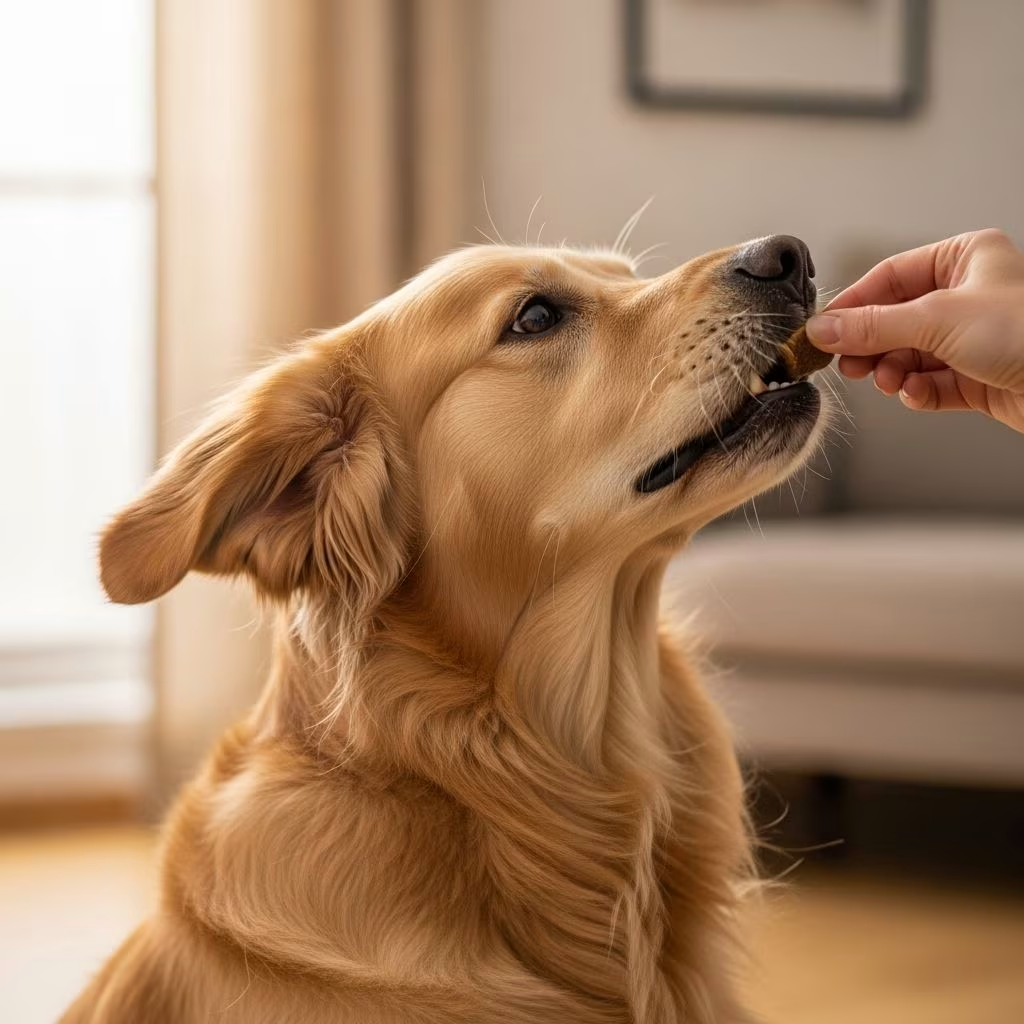
Teaching a dog to reliably respond to its name forms the cornerstone of effective training and communication. This foundational skill ensures your canine companion turns its focus toward you on cue, enhancing safety during walks, preventing mishaps in distracting environments, and strengthening the human-animal bond. By associating the name with positive outcomes, dogs learn to prioritize your attention amid everyday chaos.
Why Name Training Matters for Every Dog Owner
At its core, name recognition serves as a gateway to advanced obedience. When a dog snaps to attention upon hearing its name, subsequent commands like ‘sit’ or ‘come’ become far more effective. This is particularly vital in high-distraction scenarios, such as busy parks or urban streets, where ignoring you could lead to dangerous situations like chasing after a squirrel into traffic.
Research from canine behavior experts emphasizes that dogs process names as unique auditory markers designed to elicit focus. Unlike generic words, a properly trained name triggers an automatic orientation response, making it easier to redirect behavior instantly. For new puppies or adopted adults, mastering this early prevents common issues like selective hearing, where pets tune out familiar voices amid noise.
Owners often overlook how poor name response undermines overall training progress. A dog that doesn’t reliably look at you struggles with eye contact-based cues, complicating commands that rely on visual connection. Consistent name training builds attentiveness as a habit, paving the way for reliable recall and impulse control.
Optimal Age and Readiness for Training
Puppies reach peak readiness for name association around 12 weeks, when cognitive development and sensory maturity align. At this stage, their vision fully supports linking sounds to rewards, accelerating learning. Starting earlier risks frustration due to underdeveloped focus, while delaying misses a critical socialization window.
Adult dogs, including rescues, adapt quickly with the same principles. Shelters report that renaming fosters fresh positive associations, erasing prior negative links from stressful pasts. Assess readiness by observing baseline attention: if your dog already engages briefly during play, it’s primed for structured sessions.
Core Principles of Positive Reinforcement
Positive reinforcement anchors all successful name training. This method pairs the name with immediate rewards, creating a joyful anticipation. High-value treats like soft chicken bits or cheese outperform kibble, as they demand quick consumption and sustain motivation without filling the dog up.
Classical conditioning introduces the name as a predictor of good things: say the name, deliver a treat without requiring action. Operant conditioning adds behavior: name prompts a turn, rewarded instantly. Combining both yields rapid, durable results, as dogs learn both automatic and voluntary responses.12
- Select high-motivation rewards: Use pea-sized portions of novel foods to maintain excitement.
- Timing is critical: Reward within one second of the desired response to forge the link.
- Voice modulation: Employ cheerful tones initially, varying later for versatility.
Step-by-Step Training Protocol
Begin in a low-distraction indoor space to build confidence. Short, frequent sessions—3-5 minutes, 4-6 times daily—maximize retention without fatigue.
Phase 1: Building the Association (Days 1-3)
With your dog engaged in mild activity, say the name once in an upbeat voice. The instant it glances over, mark with a clicker or ‘yes!’ and treat. Repeat 5-10 times per session, ending while engagement peaks. Practice across family members for generalization.3
| Session Element | Purpose | Tips |
|---|---|---|
| Name Call | Trigger Response | Single utterance only |
| Mark + Reward | Reinforce Look | Hand near face for eye contact |
| Repeat Cycles | Build Habit | 5-7 reps max |
Phase 2: Enhancing Focus and Distance (Days 4-7)
Increase criteria: require direct eye contact before rewarding, and step back gradually. Introduce mild distractions like toys. If response falters, revert to prior success level. Intermittent rewards (every 2-3 responses) foster persistence.
Phase 3: Real-World Proofing (Week 2+)
Venture outdoors on-leash, starting in quiet yards. Call amid gentle distractions, rewarding promptly. Gradually escalate to parks, varying tones from whisper to command. Aim for 80-90% reliability before reducing treats, relying on praise.
Common Challenges and Solutions
Dogs may ignore calls due to over-familiarity or competing stimuli. Counter by:
- Avoiding overuse: Limit to 1-2 calls per interaction; reserve for attention-grabbing moments.
- No pre-command chaining: Teach independent cues like ‘sit’ without prefixing the name.
- Renaming adults: Pair new name with treats consistently, phasing out old ones.
- Distraction overload: Use physical guides like leash tugs initially in busy areas.
Patience prevents negative fallout; scolding erodes trust, turning the name into a warning signal.
Advanced Techniques for Reliability
Layer in clicker training for precision: charge the clicker first, then pair with name responses. For competitive environments, teach ‘name’ as an emergency attention cue, distinct from ‘watch me.’ Multi-dog homes benefit from individualized tones or prefixes.
Track progress with a simple log:
| Day | Location | Success Rate (%) | Notes |
|---|---|---|---|
| 1 | Indoor | 70 | Quick learner |
| 5 | Backyard | 85 | Added toy distraction |
| 10 | Park | 95 | Off-leash ready |
Integrating Name Response into Daily Life
Embed training seamlessly: during meals, say the name before releasing food; on walks, use it to regain focus pre-crossing streets. Games like ‘find it’ post-name call reinforce fun associations. Over weeks, treats fade, leaving verbal affirmation as the primary reinforcer.
For working breeds or active families, name proficiency supports agility, herding, or therapy roles, where split-second attention saves time and ensures safety.
Health and Breed Considerations
Hearing-impaired dogs respond to hand signals paired with vibrations or lights, adapting the protocol visually. Breeds with high prey drive, like terriers, need higher-value rewards and slower distraction ramps. Consult vets for age or health barriers, ensuring training aligns with physical capabilities.
Frequently Asked Questions (FAQs)
How long until my dog learns its name?
Puppies often respond within days; adults take 1-2 weeks with consistency. Full reliability across environments spans 4-6 weeks.
Can I change my adopted dog’s name?
Yes—use positive pairings exclusively with the new name, ignoring the old one.
What if my dog doesn’t respond outdoors?
Revert to leashed, low-distraction spots; boost rewards and shorten sessions.
Should I use my dog’s name before every command?
No; train cues standalone to avoid dependency.
Is clicker training necessary?
Optional but enhances precision for precise markers.
Long-Term Maintenance Strategies
Weekly refreshers prevent regression. Randomly call the name during calm moments, rewarding variably. Monitor for ‘name fatigue’—if responses wane, introduce novel rewards or environments. Celebrate milestones like off-leash park success to keep motivation high.
Ultimately, a rock-solid name response transforms interactions, making training joyful and outings secure. Commit to these methods, and your dog will view its name as the best sound in the world.
References
- How to Teach Your Dog Their Name — American Kennel Club. 2023-05-15. https://www.akc.org/expert-advice/training/how-to-teach-dog-name/
- How To Teach Your Dog Their Name — Training Canines. 2024-02-10. https://trainingcanines.com/how-to-teach-your-dog-their-name/
- How to Teach Dogs Their Name: 4-Step Guide — Woofz. 2025-01-20. https://www.woofz.com/blog/how-to-teach-dog-name/



