

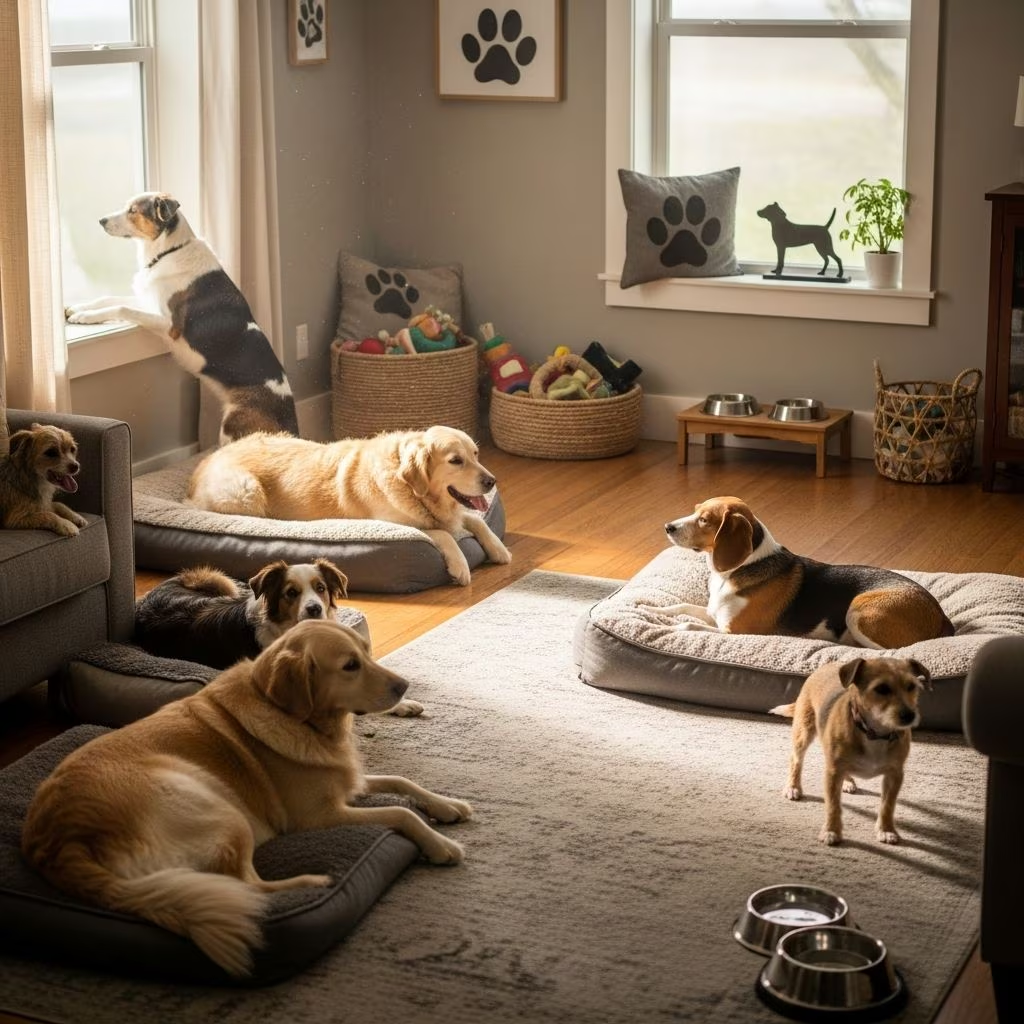
Bringing multiple dogs into your home can multiply the joy of pet ownership, but it also introduces unique challenges in behavior management, resource sharing, and group dynamics. Success hinges on thoughtful preparation, consistent leadership, and proactive strategies tailored to canine social needs. This guide draws from established canine behavior principles to help you build a balanced, stress-free environment where every dog thrives.
Choosing Dogs That Click Together
The foundation of a smooth multi-dog household starts with selecting pets whose personalities mesh well. Not every pair or group forms an instant bond; some combinations spark ongoing tension due to mismatched energy levels, play styles, or temperaments. Observe potential dogs in group settings during introductions to gauge compatibility—look for relaxed body language, mutual interest without stiffness, and balanced play initiation.
- Assess energy levels: High-drive dogs may overwhelm calmer ones, leading to frustration.
- Consider age and size: Puppies often annoy adults, while large dogs can unintentionally intimidate smaller ones.
- Test introductions on neutral ground: Walk them together before bringing them home to simulate real interactions.
Rescue organizations emphasize compatibility testing, rotating dogs in playgroups to identify natural affinities. Prioritizing this step reduces future interventions significantly.
Building a Foundation of Leadership and Obedience
Every dog in the household must recognize clear household rules enforced by consistent human leadership. The more dogs you have, the more critical solid obedience becomes, as lapses can escalate into group chaos. Focus on core commands practiced daily, both individually and as a pack.
| Essential Command | Purpose in Multi-Dog Home | Training Tip |
|---|---|---|
| Leave It | Prevents resource guarding | Use high-value treats to reward ignoring temptations |
| Go to Place | Enables quick separations | Designate crates or mats as safe zones with rewards |
| Stay/Wait | Manages doors, meals, and exits | Practice with increasing distractions from other dogs |
| Recall (Come) | Interrupts play or spats | Train off-leash in enclosed areas, rewarding promptly |
| Attention Getter | Redirects focus during arousal | Pair a cue like “Look” with food from your hand |
Short, daily sessions—especially around mealtimes—reinforce these skills. Mealtime drills with “down-stay” or “wait” build impulse control and pack hierarchy awareness. Involve all household members in training to ensure uniform responses, preventing confusion.
Resource Management: Food, Toys, and Space
Conflicts often arise over high-value items like food bowls, chews, or favorite toys. Fair distribution and separation minimize guarding behaviors. Duplicate essentials: multiple beds, bowls, and puzzle toys ensure no dog feels deprived.
- Feed in crates or separate rooms to avoid scavenging or bullying.
- Reserve premium chews (e.g., bones) for solo crate time, removing them post-session.
- Pick up toys after play; rotate access to prevent fixation.
Create dedicated zones: a crate or gated area per dog for rest, eating, and downtime. This setup protects against overstimulation and allows recharging, much like personal space for humans. High-value items should never be left accessible during unsupervised time.
Daily Routines for Prevention and Peace
Structured schedules prevent common triggers like excitement overload or unattended spats. Never leave new or mismatched dogs alone together initially; graduate to supervised freedom as trust builds.
- Supervise Interactions: Monitor play closely. Use a “break” cue—taught by pairing it with treats—to interrupt escalating arousal. Separate briefly if growling occurs, praising calm reunions.
- Separate Before Absence: Crate, gate, or rotate dogs when leaving. Acclimate gradually: start with short absences while home, building to full outings.
- Manage Transitions: Use leashes indoors for doorways or greetings to control impulses.
Life changes—new pets, moves, or visitors—can shift dynamics. Revisit basics during transitions, watching for redirected aggression or bullying.
Fostering Individual Bonds Amid the Pack
Group living risks pack mentality overshadowing personal connections. Counter this with dedicated one-on-one time: solo walks, car rides, or training games strengthen your leadership role and each dog’s security.
- 10-minute tug sessions or neighborhood jaunts build listening in group settings.
- Rotate privileges: one dog joins errands while others rest.
- Practice alone-time comfort: essential for vet visits or separations.
Skills like nose-to-hand targets allow gentle movement without physical intervention, ideal for navigating tight spaces or de-escalating.
Recognizing and Defusing Triggers
Awareness of flashpoints—arousal from play, resource competition, or intrusions—enables prevention. High-energy games can tip into fights; interrupt early with cues or barriers.
Proactive environment setup, or “antecedent arrangement,” anticipates issues: clear pathways, removed temptations, and calm entry protocols reduce incidents. Backup plans like muzzles for reactive pairs or professional consults ensure safety.
Training Tools and Techniques for Groups
Beyond basics, group drills polish pack manners. Line up for treats to practice patience, or recall one dog from play to reinforce control.
- Cut-Off Cues: Phrases like “enough” paired with rewards halt interactions instantly.
- Spot Go: Direct dogs to beds during chaos for timeouts.
- Impulse Games: “It’s yer choice” teaches self-control, benefiting multiples.
Professional trainers recommend starting pups young in multi-settings for resilience.
FAQs for Multi-Dog Living
What if my dogs suddenly fight after years of peace?
Dynamics shift with age, health, or stress. Re-separate, consult a behaviorist, and reinforce management.
How long to supervise new dogs?
Weeks to months; err on caution until reliable alone.
Can I train multiples together?
Yes, for group cues, but prioritize individuals to avoid favoritism.
What breeds suit multi-dog homes?
No breed is guaranteed; focus on individuals with sociable histories.
Help! One dog bullies another.
Separate resources, train individually, and use positive interrupters.
Long-Term Strategies for Lasting Harmony
Sustainable multi-dog life embraces management over perfection. Accept separations as normal, prioritize low-stress joys like scent walks, and adjust as dogs age. Regular vet checks catch pain-triggered irritability early. Celebrate progress: harmonious greetings or shared rests signal success.
With diligence, multi-dog homes offer profound rewards—watching your pack flourish under your guidance transforms challenges into a vibrant family tapestry.
References
- Multi-Dog Homes — BADRAP. Accessed 2026. https://badrap.org/training-resources/multi-dog-homes/
- Tips for Managing a Multi-Dog Household — Bark Busters. Accessed 2026. https://www.barkbusters.com/news/managing-a-multidog-household
- Managing the Multi-Dog Household — Homeward Pet Adoption Center. 2013-04. https://www.homewardpet.org/wp-content/uploads/2013/04/Managing-the-Multi-Dog-Household.pdf
- Managing a Multi Dog Household — Taysia Blue Rescue. Accessed 2026. https://taysiablue.com/resources/managing-a-multi-dog-household
- Thriving with Multiple Dogs: Best Practices for a Harmonious Home — Oakland Dog Trainer. Accessed 2026. https://www.oaklanddogtrainer.com/post/thriving-with-multiple-dogs-best-practices-for-a-harmonious-home
- 5 (+1) Skills That Help Me Manage My Multi-Dog Household — Pet Harmony Training. Accessed 2026. https://petharmonytraining.com/5-1-skills-that-help-me-manage-my-multi-dog-household/
- A Practical Guide to Multi-Dog Living — Red Pointy Dog. Accessed 2026. https://www.redpointydog.com/post/a-practical-guide-to-multi-dog-living-why-avoiding-the-hard-things-is-just-fine



