

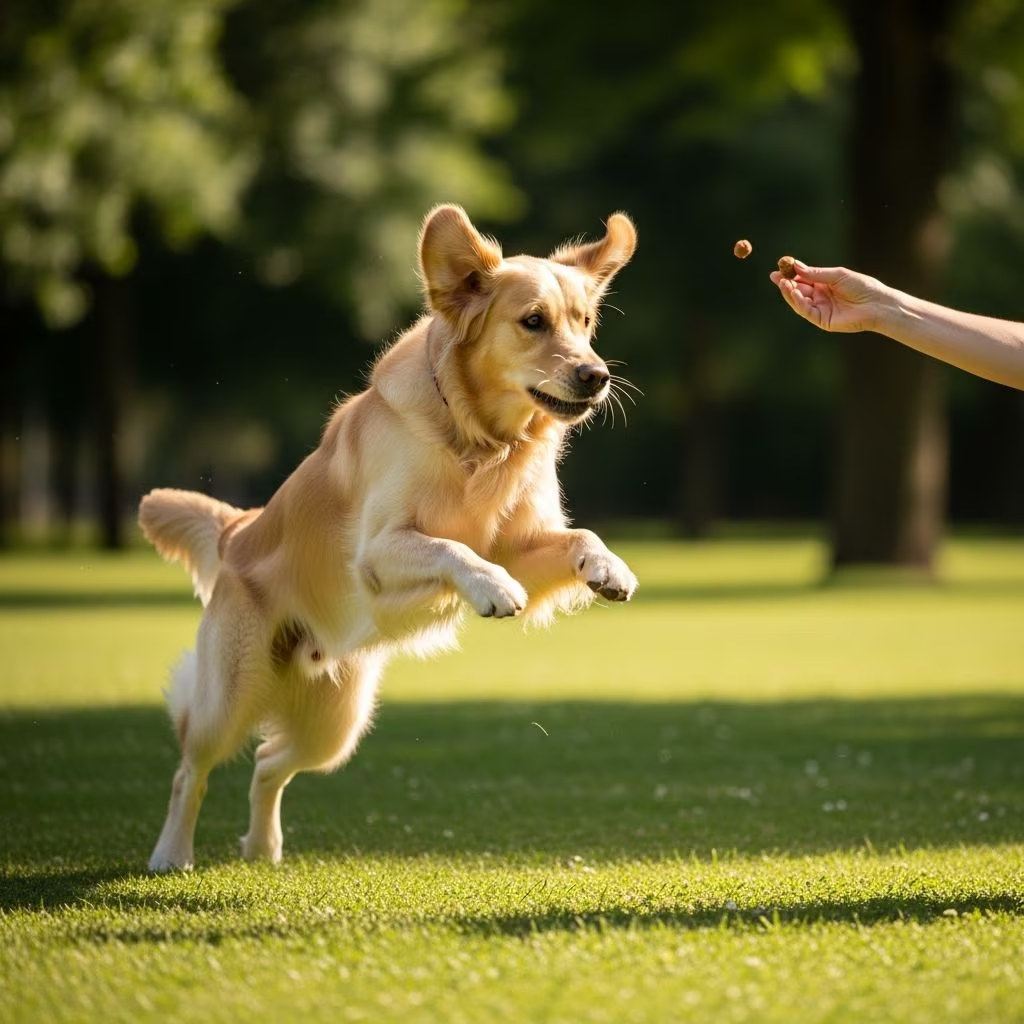
Lure-based training represents one of the most accessible and effective approaches for teaching dogs new behaviors and commands. This method capitalizes on a dog’s natural instinct to follow and investigate objects, making it an intuitive way for both novice and experienced trainers to communicate desired actions. By understanding the mechanics of lure training and implementing proper progression techniques, owners can develop a strong foundation for their dog’s behavioral development while maintaining a positive, reward-focused learning environment.
Understanding the Foundation of Lure Training
Lure training operates on a simple yet powerful principle: dogs naturally follow objects of interest, whether those are treats, toys, or other motivating items. This instinctive behavior becomes the primary mechanism for guiding a dog into the physical positions and movements that correspond to desired commands. The beauty of this approach lies in its directness—rather than waiting for a dog to randomly perform a behavior before rewarding it, the trainer actively shapes the dog’s body into the correct position using something the dog finds motivating.
The foundation of successful lure training begins with identifying what genuinely motivates your individual dog. While many trainers default to using food treats, the most effective lure is whatever captures and holds your specific dog’s attention most reliably. Some dogs respond enthusiastically to high-value treats, while others may be more motivated by favorite toys or even access to preferred activities. Spending time experimenting with different motivators before beginning formal training sessions allows you to select the most potent reinforcer for your dog’s personality and preferences.
Once you’ve identified an appropriate lure, the next consideration involves the physical form of the lure itself. Trainers working with food lures benefit from using pieces approximately half an inch in size—large enough to be meaningful to the dog but small enough to be held easily in your hand without becoming cumbersome. Positioning the treat by tucking it behind your fingers with just a tiny portion visible creates an ideal lure that keeps the dog focused on your hand position. This configuration maintains your dog’s attention on the trajectory of the lure while allowing precise control over the movement pattern.
The Pre-Training Preparation Phase
Before attempting to lure a dog into specific behaviors or positions, establishing enthusiasm and understanding about the lure itself sets the stage for success. This foundational step, sometimes called the “lure game,” involves teaching your dog to actively pursue and follow the lure with genuine interest and excitement.
During this preparation phase, wave the lure around in engaging patterns while making encouraging sounds and showing enthusiasm about the lure itself. Each time your dog demonstrates any interest in the lure—even minimal head movement in its direction—immediately mark that interest with a positive verbal marker such as “yes” or the sound of a clicker, then provide the treat as a reward. Over several repetitions, gradually increase the distance your dog must travel to earn the treat, progressively building her engagement and motivation to follow the lure enthusiastically.
This preparation work might seem unnecessary to some trainers eager to begin teaching specific commands, yet it establishes several critical foundations. Your dog learns that following the lure reliably results in positive outcomes, develops stronger focus on the lure itself, and builds the physical habit of tracking the lure’s movement with her nose and body. Many training difficulties encountered later stem from skipping or rushing through this crucial setup phase.
Executing the Core Luring Process
With foundation work established, the actual process of luring your dog into desired positions follows a structured approach. Begin by placing the lure directly on your dog’s nose, thinking of it as a magnetic connection between the treat and your dog’s muzzle. This contact point becomes your control mechanism for directing body movement.
Slowly move your hand holding the lure in the direction you want your dog’s body to follow. The speed of this movement matters considerably—moving too quickly causes most dogs to lose the lure and break focus, while moving too slowly fails to generate enough momentum for the body to follow naturally. Finding the appropriate pace takes practice but becomes intuitive as you work with your individual dog.
Throughout the luring motion, maintain continuous light contact between the lure and your dog’s nose. If your dog stops following the lure at any point, immediately stop moving and reposition the lure back on her nose rather than continuing the motion with a dog that has “fallen off” the lure. This prevents establishing a pattern where incomplete or hesitant following receives reinforcement.
As your dog moves into the desired position—whether that’s sitting, lying down, spinning, or standing—immediately mark the behavior with your chosen verbal marker or clicker sound, then transition the lure into a reward by opening your hand and allowing your dog to consume the treat. The transformation from lure to reward happens at the precise moment the correct position is achieved, creating a clear association between the position and positive outcomes.
Managing Complex Behaviors Through Incremental Shaping
Some behaviors prove difficult for dogs to complete in a single continuous luring motion. Spinning provides an excellent example—many dogs successfully follow the lure partway through the circular motion but then become stuck or lose momentum before completing the full rotation. When encountering this challenge, break the desired behavior into smaller, more manageable increments.
For the spin example, begin by marking and rewarding even a quarter turn in the correct direction. Once your dog reliably performs quarter turns, gradually increase the expectation to half turns, then three-quarter turns, finally building to complete 360-degree spins. This incremental approach, sometimes called “shaping,” allows your dog to experience consistent success while progressively approaching the complete final behavior.
Each training session should feature multiple successful repetitions of the behavior at your current level before advancing expectations upward. Attempting to progress too quickly creates frustration for both dog and trainer, while moving at an appropriately gradual pace builds confidence and ensures solid understanding before adding complexity.
The Critical Transition Away from Lure Dependency
A fundamental misunderstanding about lure training involves maintaining lure-based work indefinitely, accidentally creating a situation where dogs only perform behaviors when they observe food directly in front of their face. This condition—sometimes called “bribery” rather than true training—undermines the goal of developing reliable, consistent behavioral responses to cues alone.
Transitioning away from lure dependency requires a systematic approach that progressively reduces the prominence and eventually eliminates the visible lure entirely. A proven method involves implementing a ratio-based progression: lure your dog three times in a row using the standard luring technique, then on the fourth repetition, remove the food from your hand and perform the hand motion without the lure present. Your dog, having just experienced three successful repetitions where the motion resulted in treats, typically anticipates that the behavior should be repeated and performs it despite the absence of a visible lure.
This 3:1 ratio represents your starting point. As your dog demonstrates consistent success with this ratio, gradually adjust to 2:1, then 1:1, and eventually phase out lures entirely, replacing them with consistent hand signal cues. Throughout this transition, continue providing rewards—they simply come from a separate source (your other hand, pocket, or treat pouch) rather than being held as a lure.
Introducing Hand Signals and Verbal Cues
Many trainers make the mistake of introducing verbal commands too early in the lure training process. Adding a vocal cue while your dog is still actively learning to follow the physical lure creates confusion rather than clarity. The proper sequence involves establishing reliable lure-following and behavior execution first, then systematically introducing additional communication methods.
After your dog consistently performs the desired behavior when lured, begin pairing a hand signal with the luring motion. The hand signal should mimic the movement pattern the lure followed—if teaching “sit” involved moving the lure up and back, your hand signal should replicate this trajectory even without the treat present. Practice this hand signal paired with lure work multiple times before expecting your dog to respond to the hand signal alone.
Verbal cues arrive last in this sequence. Once your dog reliably responds to hand signals, add your chosen verbal cue immediately before executing the hand signal. Over multiple repetitions, your dog begins associating the verbal cue with the behavior, eventually responding to the voice command alone without the hand signal serving as a necessary prompt. However, many trainers maintain the hand signal as a secondary reinforcement cue, particularly useful in situations with distracting environmental factors.
Fading Lures Through Errorless Techniques
Progressive lure fading using errorless training methods ensures your dog experiences continuous success while transitioning toward independent behavior execution. This approach differs from abruptly removing the lure, which often results in confused or incomplete responses.
The errorless fading process begins with establishing completely reliable behavior execution while using the full lure. Once this foundation solidifies, gradually reduce the prominence of the lure across multiple sessions by holding it slightly farther from your dog’s nose than previously, using less aromatic treats, or positioning your hand in ways that provide minimal visible lure while still guiding the behavior.
The next progression involves transitioning to an empty hand gesture that mimics the luring motion—your fingers positioned as though holding a treat but actually empty. For many dogs, the established pattern of previous successful repetitions means they anticipate the behavior should occur and comply despite the absence of visible reward. Immediate reward from an alternative source (treat from your pocket or verbal praise with a treat shortly after) reinforces this pattern.
This gradual progression prevents the common frustration where dogs suddenly receive no lure after becoming accustomed to treat-guided training. By adjusting incrementally, your dog maintains confidence and understanding throughout the transition process.
Selecting Appropriate Behaviors for Lure Training
While lure training provides an effective tool for numerous behaviors, certain commands particularly benefit from this approach while others respond better to alternative training methods. Behaviors involving natural body positions and movements typically lend themselves well to luring techniques.
Ideal candidates for lure training include:
- Sit—a natural resting position dogs adopt regularly
- Lie down—achieved by guiding the lure downward and forward
- Stand—promoted by moving the lure upward
- Spin or circle—natural movement patterns
- Back up—achieved by moving the lure slightly backward
Conversely, complex behaviors involving object manipulation, such as holding items or retrieving, function more effectively with alternative training approaches that develop decision-making skills rather than simple following responses. Similarly, behaviors requiring the dog to remain in position (such as stay) work better when combined with other training methods after the initial position is established through luring.
Overcoming Common Lure Training Challenges
Several predictable obstacles emerge during lure training. Dogs “falling off” the lure—losing focus and stopping their movement—typically results from either excessive speed in hand movements or insufficient motivation from the chosen lure. Slowing your hand movement and experimenting with higher-value treats generally resolves this issue.
Dogs becoming stuck partway through a behavior during the learning process respond well to reducing expectations and rewarding partial progress rather than complete performance. This breaks the behavior into manageable segments that build toward the final complete action.
Difficulty transitioning away from visible lures often stems from insufficient practice with the behavior while lured before beginning the fading process. Ensure your dog demonstrates consistent, enthusiastic execution with the lure present before reducing it—moving too quickly through this step creates reliance rather than preparation for independence.
Choosing Rewards Beyond Food Lures
While food treats remain the most common lure choice, successful lure training can incorporate toys, access to preferred activities, or other motivators specific to your dog’s preferences. The primary requirement involves selecting something your dog will reliably follow and remain engaged with throughout the training repetition.
Some trainers incorporate life rewards—access to preferred experiences—as reinforcement following lure work. After your dog responds correctly to the lured behavior, you might reward by allowing access to outdoor play, releasing tension in a held leash, or permitting interaction with a toy. These non-food rewards provide variety, reduce dependency on treat-based motivation, and leverage natural reinforcers already motivating your dog.
Frequently Asked Questions
At what age can puppies begin lure training?
Puppies can begin basic lure training as early as 6-8 weeks of age, though sessions should remain extremely brief (2-5 minutes) to match their limited attention spans and developing focus capabilities. The fundamental lure game and simple behaviors like sit translate well to young puppies when kept playful and positive.
How long does it typically take to transition a dog from lure-dependent to independent response?
Timeline varies considerably based on individual dog learning speed, consistency of training, and behavior complexity. Simple behaviors often show transition progress within 2-4 weeks of consistent practice, while more complex behaviors may require 6-8 weeks or longer. Consistency matters more than speed—daily practice produces faster results than sporadic sessions.
Can lure training work for adult dogs or rescued dogs?
Absolutely. Dogs of any age learn effectively through lure-based training. Adult and rescued dogs sometimes progress more quickly than puppies due to better focus and attention spans. Previous training history may require some adaptation, but the fundamental principles apply across all ages.
What should I do if my dog shows no interest in the lure?
If your dog seems unmotivated by the selected lure, experiment with different options. Try higher-value treats, toys the dog particularly enjoys, or non-food rewards like play opportunities. Occasionally, training timing matters—training when your dog is well-rested and not overly excited or anxious produces better engagement than attempting training during inappropriate times.
Is lure training appropriate for dogs with resource guarding issues?
Dogs displaying resource guarding around food may benefit from working with a certified professional trainer before engaging in food-based lure training. Alternative lures (toys, activities) might prove safer, or specific counter-conditioning work may be necessary before introducing food-based training methods.
Building a Strong Training Foundation
Lure training provides an excellent foundational approach for teaching dogs to respond reliably to human direction and communication. By understanding the systematic progression from initial engagement through complete independent response to verbal cues, trainers develop capability to teach virtually any position-based behavior effectively.
The key to success involves patience with each progression phase, maintaining consistency in execution, and remembering that the ultimate goal involves a dog responding reliably to verbal cues and hand signals without requiring visible lures or food. This transformation from lure-dependent performance to independent behavioral response represents the true measure of effective training and reflects a dog who has genuinely learned what their handler requests, rather than simply following food.
References
- Dog Training 101: Step-By-Step Guide to Lure/Reward Training — 3 Lost Dogs. https://www.3lostdogs.com/dog-training-101-ep-2-step-by-step-guide-to-lure-reward-training/
- The Four Stages Of Luring — Success Dogs. https://www.successdogs.com/core-training-concepts/the-four-stages-of-luring/
- Luring Dog Training for Beginners — SpotOn Fence. https://spotonfence.com/blogs/training-tips/dog-training-techniques-luring
- The Right Way to Do Lure Reward Dog Training — Animal Behavior College. https://www.animalbehaviorcollege.com/blog/pet-training/right-way-lure-reward-dog-training/
- Fading a Lure in Dog Training: Errorless Positive Methods — Lay Lo Pets. https://www.laylopets.com/blogs/barkives/positive-reinforcement-dog-training-fading-a-lure-in-dog-training-using-errorless-dog-training-techniques
- Dog Training: 6 Tips to Using a Lure and Reward Method — The Honest Kitchen. https://www.thehonestkitchen.com/blogs/pet-tips-training/dog-training-6-tips-to-using-a-lure-and-reward-method/
- What Is Lure-Reward Dog Training? — Animal Wellness Magazine. https://animalwellnessmagazine.com/what-is-lure-reward-dog-training/



