

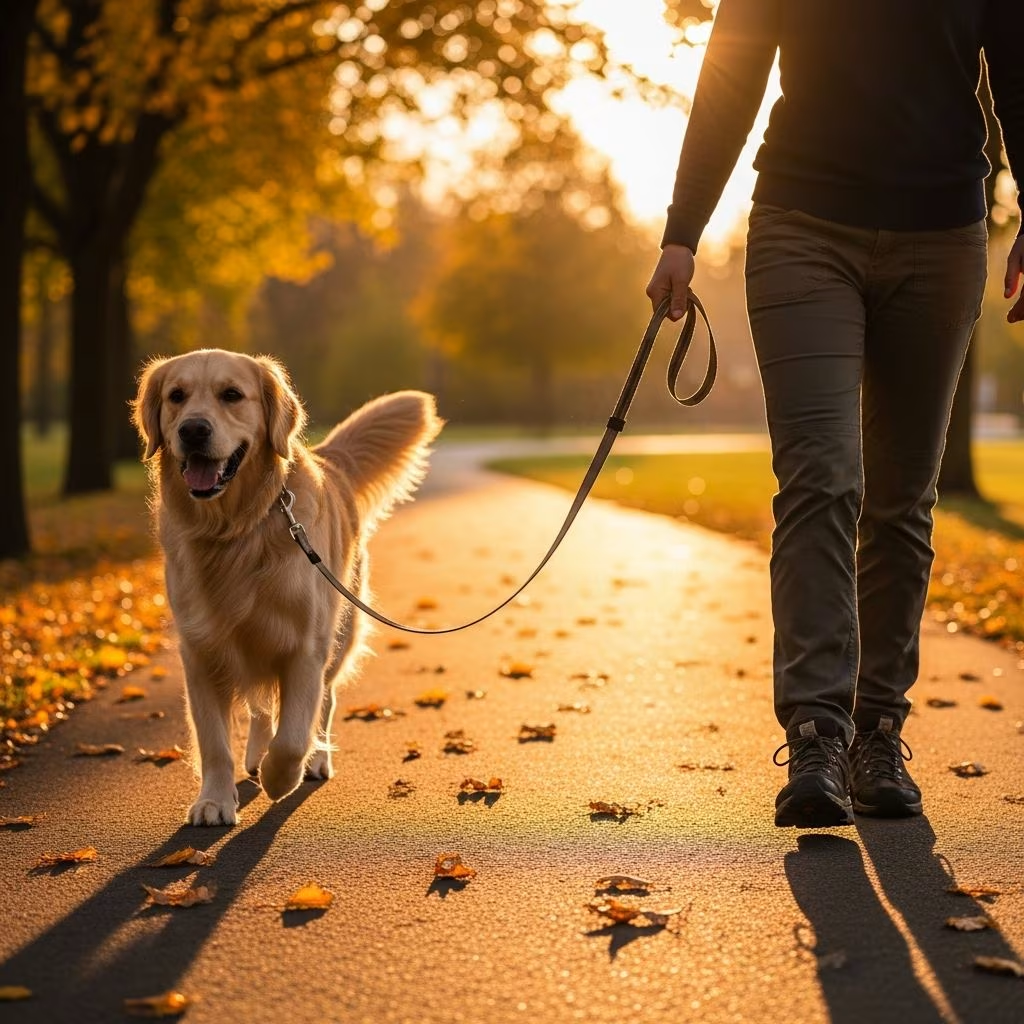
Leash pulling turns enjoyable outings into frustrating battles for many dog owners. Dogs pull because they are excited, distracted, or simply moving faster than their humans. The good news is that with consistent techniques rooted in positive reinforcement, you can teach your dog to walk politely on a loose leash. This guide explores practical methods, equipment options, and training steps to make walks pleasant for both you and your pet.
Understanding Why Dogs Pull on Leash
Dogs often pull due to their natural enthusiasm for exploring scents, sights, and sounds during walks. Smaller breeds may hustle to keep up with human strides, while larger ones charge ahead out of excitement. Inconsistent handling reinforces this behavior: if pulling gets them forward movement, they learn it works. Addressing the root causes starts with prevention and rewarding desired positions near your side.
Essential Equipment for Better Walks
Choosing the right gear sets the foundation for successful training. A standard 4- to 6-foot leash provides enough freedom without excess slack that encourages forging ahead. Avoid retractable leashes, as they promote pulling by allowing dogs to roam far ahead.
- Front-clip harnesses: These attach at the chest, gently redirecting pulling dogs back toward you by turning their shoulders. Brands like PetSafe Easy Walk or Freedom No-Pull offer reliable options.
- Head halters: Similar to horse halters, they guide the head and body. Use gently to avoid neck strain, and never leave on unsupervised.
- Flat collars: Suitable for well-behaved dogs, but switch to harnesses if pulling is severe to protect the throat.
High-value treats, a clicker for marking good behavior, and a calm mindset complete your toolkit. Start training in low-distraction areas like your yard or home to build success early.
Core Training Techniques to Eliminate Pulling
Effective methods focus on interrupting pulling and reinforcing loose-leash positions. Consistency is key: apply the same response every time to reshape habits.
Direction Changes for Quick Corrections
One of the most dynamic approaches is abruptly changing direction when your dog pulls. When tension builds, say their name cheerfully and turn 180 degrees the opposite way. Reward with praise or treats as they catch up and walk at your side with a slack leash. This keeps momentum while teaching that pulling leads away from their goal, not toward it.
- Perform turns quietly without verbal cues if possible, especially when the dog isn’t focused on you.
- Repeat frequently at first; progress will show as turns become less needed.
Be a Tree: The Stop-and-Release Method
Plant your feet firmly when the leash tightens, becoming a motionless “tree.” Wait silently until your dog backs off or returns to you, then praise lavishly and resume walking. This uses negative punishment by withholding forward progress, but reassess if it frustrates your dog excessively—some respond better to motion-based methods.
Combine with treats for slack-leash moments to speed learning. Patience pays off, though ingrained habits may take weeks to fade.
Reinforcing Incompatible Behaviors
Prevent pulling by cueing actions that can’t happen simultaneously, like a “sit” or “heel” before tension arises. Start walks with a fun recall game: toss a treat behind you, rewarding returns to your side. This builds focus and positions your dog correctly from the outset.
Building a Strong Foundation Step by Step
Break training into phases for lasting results. Begin indoors to minimize distractions.
- Teach loose-leash basics: Hold the leash and walk a few steps. Reward any slack-leash moments with treats and cheer.
- Add distance: Gradually extend walks, stopping or turning immediately on pulls. Never allow rewarded forward progress.
- Increase pace: Match a brisk human walking speed to engage your dog’s energy, reducing the urge to surge ahead.
- Practice daily: Short, frequent sessions (5-10 minutes) build habits faster than marathon outings.
| Method | Best For | Pros | Cons |
|---|---|---|---|
| Direction Change | High-energy dogs | Keeps walk moving; rewards good position | Requires space; initial zigzagging |
| Be a Tree | Stubborn pullers | Simple; no equipment needed | Can stall walks; frustrating for some dogs |
| Incompatible Behavior | Preventive training | Proactive; builds focus | Needs treats; slower for strong pullers |
Advanced Tips for Real-World Success
Once basics click, layer in challenges. Walk at varying speeds to keep your dog attentive. Ignore distractions by turning away before engagement. For reactive dogs, increase distance from triggers and reward calm focus.
Positive reinforcement shines here: mark desired behaviors with a clicker or “yes!” followed by treats. Avoid punishment, as it can heighten anxiety and worsen pulling. If progress stalls, consult a certified trainer.
Common Mistakes and How to Avoid Them
Many owners unwittingly reinforce bad habits. Key pitfalls include:
- Allowing any pulling to result in progress—even occasionally teaches inconsistency.
- Using too slow a pace, frustrating energetic dogs.
- Over-talking or yanking, which escalates tension.
- Skipping low-distraction practice, overwhelming beginners.
Track sessions in a journal: note pulls per minute to measure improvement objectively.
FAQ
How long does it take to stop leash pulling?
Most dogs improve in 1-4 weeks with daily practice, though severe cases may need months. Consistency accelerates results.
Is a harness better than a collar for pullers?
Yes, front-clip harnesses reduce pulling force on the neck and offer better control.
What if my dog ignores direction changes?
Amp up frequency and use higher-value rewards. Pair with a prong collar only if properly conditioned by a pro.
Can puppies learn loose-leash walking?
Absolutely—start young in low-distraction settings for lifelong habits.
Does the be-a-tree method work for all dogs?
It suits many, but switch to active methods like turns if your dog becomes stressed.
Long-Term Maintenance for Perfect Walks
Sustained loose-leash walking requires ongoing reinforcement. Randomly reward heel positions during walks to prevent regression. Vary routes to keep engagement high. Enroll in group classes for socialization and pro feedback.
With these strategies, walks become bonding time, not battles. Patient, reward-based training transforms pullers into perfect walking partners, enhancing your dog’s quality of life and yours.
References
- American Standard Dog Training. How To FIX Leash Pulling in UNDER 10 Minutes! — YouTube. 2023. https://www.youtube.com/watch?v=mM-YIoJyko8
- Dog Pulls on Leash? Try These 5 Tips! — Happy Hounds Dog Training. 2023. https://happyhoundsdogtraining.ca/dog-pulls-on-leash-try-these-5-tips/
- Stop a Dog From Pulling on Leash. — Best Friends Animal Society. 2024-10-15. https://bestfriends.org/pet-care-resources/how-stop-dog-pulling-leash
- How to train your dog to walk nicely on the lead. — RSPCA. 2023. https://www.rspca.org.uk/adviceandwelfare/pets/dogs/training/walknicely
- The Trainer’s Guide to Loose Leash Walking. — Manners for Mutts. 2025-11-04. https://mannersformutts.com/blog/2025/11/04/dogs-on-halloween-how-to-keep-them-calm-confident-and-safe-2/
- How to Stop Your Dog From Pulling on Leash. — American Kennel Club. 2024. https://www.akc.org/expert-advice/training/expert-tips-dog-leash-issues/



