

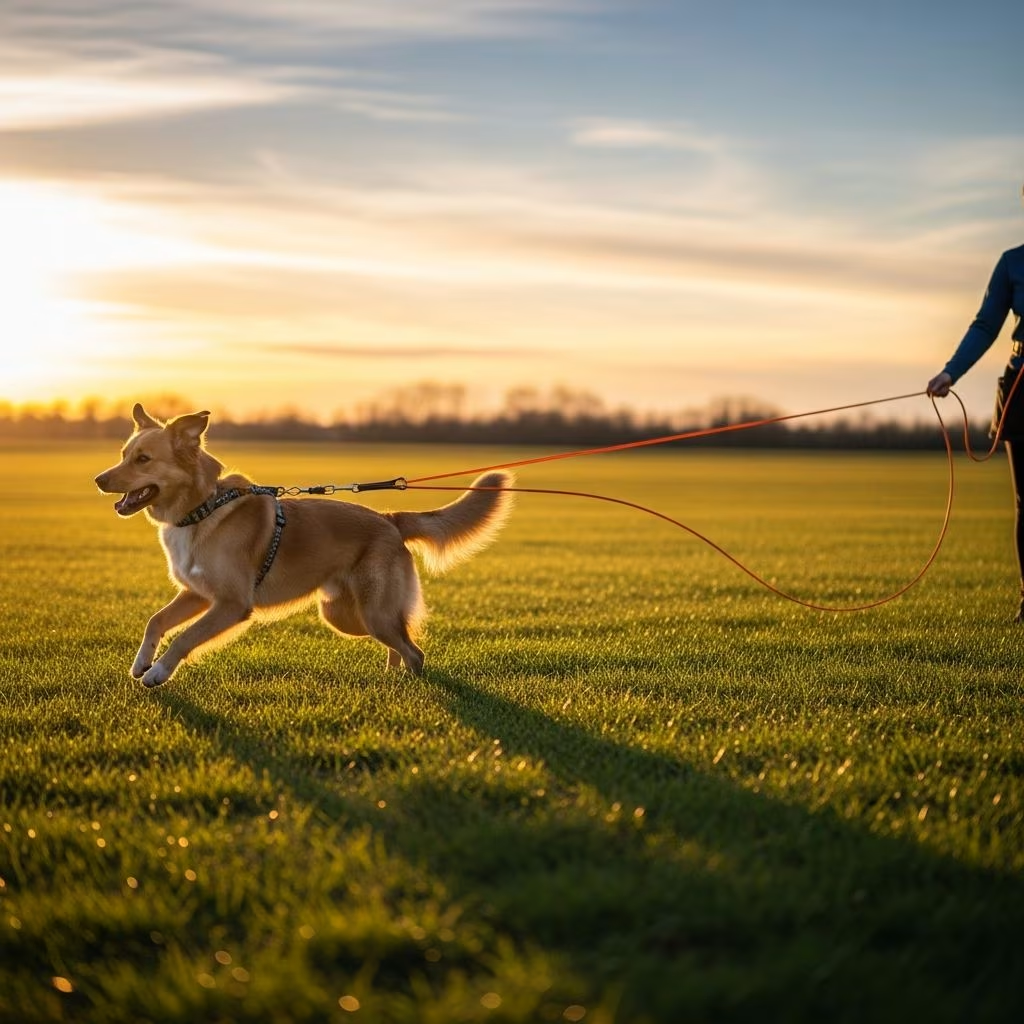
Long line training represents a pivotal method in modern dog obedience programs, bridging the gap between short-leash control and full off-leash freedom. By attaching a lightweight, extended leash—typically ranging from 10 to 50 feet—owners can practice essential commands at greater distances while maintaining safety. This approach not only reinforces core behaviors like coming when called but also addresses common challenges such as pulling, fear responses, and distraction resistance. Drawing from established canine behavior principles, long line work fosters trust, builds handler confidence, and prepares dogs for real-world scenarios where reliability is paramount.
Why Long Lines Transform Dog Training
The versatility of a long line lies in its ability to simulate off-leash conditions without the risks. Standard leashes restrict movement, often heightening tension during walks, whereas longer lines allow dogs to investigate their environment naturally. This controlled freedom is crucial for mental enrichment, as sniffing and exploring reduce stress hormones and promote calmer demeanors.
For novice handlers, the psychological safety net prevents runaway incidents, enabling progressive exposure to distractions like traffic or other animals. Veterinary behaviorists emphasize that such gradual desensitization prevents setbacks in training progress. Moreover, long lines facilitate distance-based cueing, teaching dogs that commands apply regardless of proximity, a foundation for advanced obedience.
Selecting the Ideal Long Line Equipment
Choosing the right long line is foundational to effective training. Materials matter: biothane or thin nylon cords offer durability and low weight, minimizing drag while resisting tangles. Avoid heavy ropes or retractable models, as they can jerk unpredictably or teach dogs to pull against resistance.
| Line Length | Best For | Pros | Cons |
|---|---|---|---|
| 10-15 feet | Beginners, urban areas | Easy handling, less tangling | Limited range |
| 20-30 feet | Recall practice, fields | Balanced freedom/control | Requires management skills |
| 50 feet | Advanced off-leash prep | Maximum exploration | Prone to snags, harder to reel |
Attach via a sturdy harness rather than a collar to protect the neck during enthusiastic pulls. High-value rewards like squeeze pouches or freeze-dried treats are essential motivators.
Core Techniques for Building Rock-Solid Recall
Recall, or the “come” command, is non-negotiable for safety. Begin in low-distraction settings, such as a quiet backyard, calling your dog from 5 feet away with an upbeat tone. Gently reel them in if needed, rewarding immediately upon arrival. Gradually extend distance, incorporating the full line length over sessions.
- Start Short: Use 10% of line length initially to ensure success.
- Layer Distractions: Introduce mild stimuli like toys before progressing to people or scents.
- Never Punish: Approaching with negativity erodes trust; always end on a high note.
- Variable Rewards: Mix treat values to mimic unpredictable real-life reinforcements.
Practice 5-10 minute sessions daily, tracking progress in a journal. Data from canine training studies show consistent short bursts yield 80% faster command reliability than sporadic long efforts.
Distance Obedience: Sit, Stay, and Beyond
Long lines excel in teaching cues at range. Position yourself 10 feet away, cue “sit,” and use the line for gentle guidance if ignored. Release with praise, repeating across environments to promote generalization—where dogs apply skills universally.
For “stay,” mark the position with a hand signal, walking the line’s length backward. Return promptly to reward, fading the line’s role over time. This builds impulse control vital for doorways or crossings.
Helping Reactive Dogs Thrive
Dogs prone to lunging or barking at triggers benefit immensely from long lines, which create buffer zones. Identify the “threshold” distance where reactions begin, then parallel-walk at that margin, rewarding calm focus. Slack lines prevent tension transfer, a common reactivity amplifier.
Pro Tip: Scout locations pre-walk to avoid surprises, entering fields from calm vantage points. Over weeks, shrink the threshold as confidence grows.
Safe Exploration and Mental Enrichment
Beyond commands, long lines enable sniffing sessions that fulfill innate drives. Allow 20-30 feet of reach in safe meadows, interrupting only for hazards. Reward voluntary check-ins to keep you central in their world. This reduces cabin fever in apartment dwellers and curbs destructive home behaviors.
Common Mistakes and How to Avoid Them
Handlers often tighten lines instinctively, signaling anxiety to dogs. Maintain slack by coiling neatly or using a belt clip. Another pitfall: permitting play with on-leash dogs, risking entanglements.
- Don’t reel harshly—step toward the dog instead.
- Avoid calling during peak distractions early on.
- Steer clear of muddy or briar-filled areas initially.
Progression timelines vary: puppies master basics in 2-4 weeks, adults with histories may need months. Patience prevents plateaus.
Transitioning to Off-Leash Success
Once recall hits 95% reliability on the full line across distractions, transition by dragging the line unleashed. Step on it if bolting, gradually shortening attachment time. Enclosed parks serve as final proving grounds.
Monitor for regressions, reverting to line work as needed. Lifelong maintenance—random recalls during fun—ensures permanence.
Real-World Applications and Case Studies
In rural settings, long lines manage livestock proximity; urban users navigate parks safely. Consider a herding breed overcoming chase instincts through structured sessions, achieving off-leash hikes. Rescue dogs with trauma histories gain security via predictable freedom.
Frequently Asked Questions (FAQs)
What if my dog tangles the long line?
Practice in open spaces first, using lightweight materials. Untangle calmly without frustration to avoid associating negativity.
Is long line training suitable for puppies?
Yes, from 12 weeks, focusing on fun and short durations to build positive associations.
How often should I train?
Daily 5-15 minute sessions outperform weekend marathons for retention.
Can it help leash-reactive small dogs?
Absolutely; the distance aids de-sensitization regardless of size.
What rewards work best?
High-value, novel items like meat pouches outperform kibble for motivation.
Advanced Variations for Seasoned Handlers
Incorporate directional cues like “left” or “right” at distance, or pair with flirt poles for engagement. For hunting breeds, simulate retrieves with bumpers on line ends. Always prioritize safety gear like breakaway clips.
References
- Give Them Freedom, Keep the Control: Training Dogs with a Long Line — Pet Dog Trainer. 2023. https://www.petdogtrainer.com/blog/give-them-freedom-keep-the-control-training-dogs-with-a-long-line
- How to use a long line to improve your dog’s recall training — Indigo Dog Training. 2022. https://www.indigodogtraining.co.uk/blog/how-to-use-a-long-line-to-improve-your-dogs-recall-training
- Recall Training With A Long Lead: The Benefits and How it works — Arctic Sammy. 2023. https://www.arcticsammy.co.nz/blogs/arctic-sammys-blog/recall-training-with-a-long-lead-the-benefits-and-how-it-works
- Long Line Training — Whole Dog Journal. 2023. https://www.whole-dog-journal.com/training/long-line-training/
- Long Line Training Part One – Safety and Handling Tips — Thriving Canine. 2024. https://www.thrivingcanine.com/blog/long-line-training-part-one-safety-and-handling-tips/



