

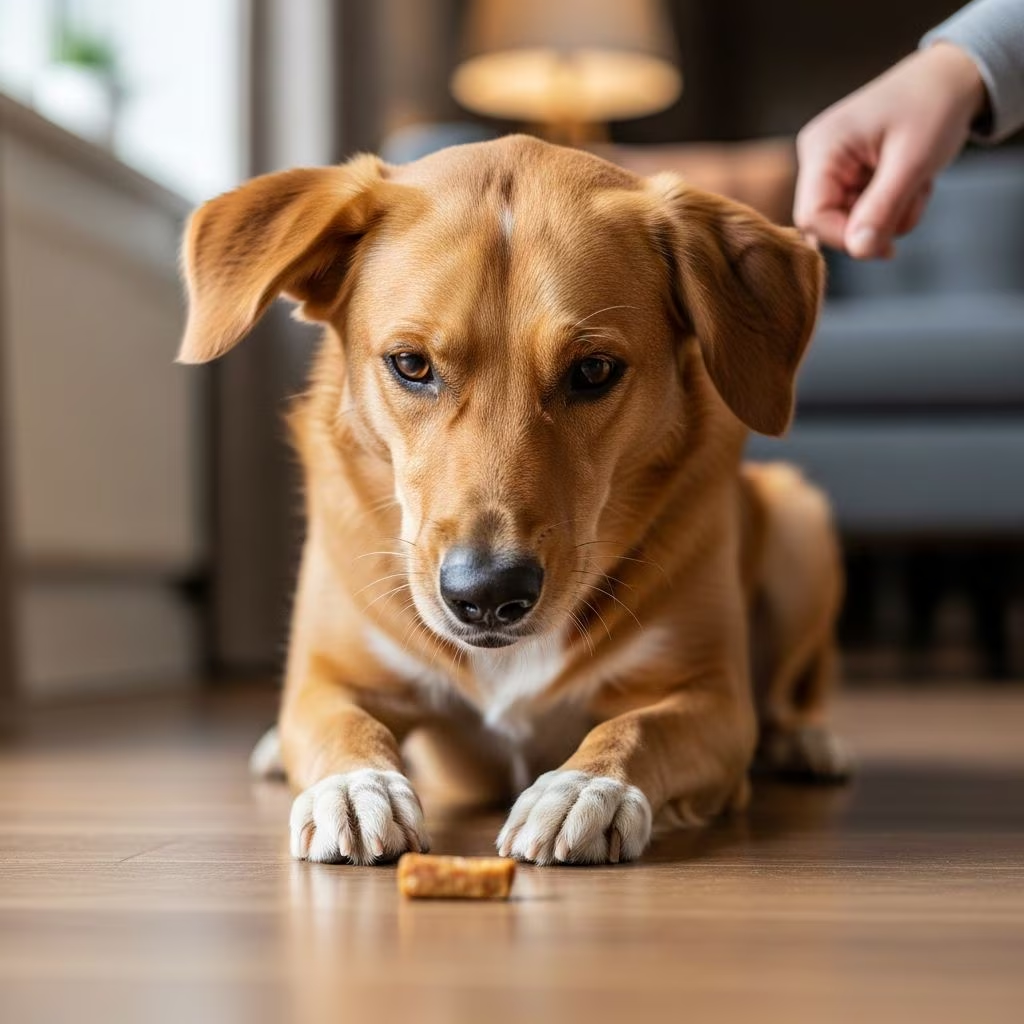
The ‘leave it’ command stands as a cornerstone of dog training, empowering owners to guide their pets away from potential dangers and distractions. This skill fosters impulse control, ensuring dogs ignore harmful items like toxic foods or unsafe objects while promoting a safer, more harmonious life together. Drawing from established positive reinforcement techniques, this guide outlines a progressive approach suitable for dogs of all ages and breeds.
Why Impulse Control Matters in Canine Behavior
Dogs naturally explore their world through sniffing, mouthing, and tasting, driven by curiosity and survival instincts. However, urban environments present risks such as chicken bones, chemicals, or allergens that can lead to health emergencies. Teaching ‘leave it’ redirects this exploratory drive toward owner-approved rewards, building self-regulation.
- Safety First: Prevents ingestion of hazardous materials like chocolate or xylitol-sweetened gum.
- Behavioral Balance: Reduces resource guarding and improves focus during walks.
- Real-World Reliability: Applies to distractions beyond food, including toys or other animals.
Research from animal welfare organizations emphasizes that consistent training correlates with fewer veterinary incidents related to scavenging.
Foundational Principles of Positive Reinforcement Training
Effective ‘leave it’ training relies on operant conditioning, where desired behaviors earn rewards. Use high-value treats like chicken or cheese for motivation, reserving them exclusively for sessions to heighten appeal. Sessions should last 5-10 minutes, occurring multiple times daily to leverage short attention spans.
| Element | Purpose | Example |
|---|---|---|
| Marker Word | Pinpoints exact desired behavior | “Yes!” or clicker sound |
| Low-Value Bait | Initial temptation | Kibble or dry treats |
| High-Value Reward | Reinforces compliance | Boiled chicken bits |
Always prioritize prevention: Never allow success in grabbing forbidden items, as this reinforces unwanted actions.
Step-by-Step Training Progression
Phase 1: Closed Fist Introduction
Begin indoors in a quiet space. Sit on the floor with your dog, presenting a low-value treat in your closed fist. Say “leave it” calmly. Allow sniffing or pawing, but ignore all efforts. The instant your dog withdraws—pausing, turning away, or looking up—mark with “Yes!” and deliver a superior treat from your other hand.
- Repeat 10-15 times per session until anticipation appears (dog backs off immediately upon cue).
- Practice across 2-3 days, aiming for voluntary disengagement.
This phase teaches that ignoring yields better outcomes, flipping natural temptation into learned restraint.
Phase 2: Open Palm and Eye Contact
Once reliable, transition to an open palm holding the bait. If the dog lunges, close your fist and reset. Reward only for averting gaze or direct eye contact, associating focus on you with gains.
- Target: 40 repetitions for fluency.
- Tip: Use a happy tone to encourage upward glances.
Eye contact builds a communication bridge, vital for advanced obedience.
Phase 3: Grounded Temptations
Place bait on the floor, covering with your hand or foot initially. Say “leave it,” waiting for disinterest. Mark and reward from your pocket stash. Gradually lift your hand, then drop bait openly while leashed.
Progress markers:
- Dog ignores covered bait consistently.
- Hand hovers without interference.
- Freely dropped item prompts look-away response.
Phase 4: Line Drills and Generalization
Scatter low-value treats in a row, spaced 3-5 feet apart. Leash your dog, cue “leave it,” and walk past, rewarding ignorance at each station. Cover any lunges with your foot, resuming only on compliance.
Extend to yards, sidewalks, and parks. Substitute non-food items like balls or sticks to broaden application, ensuring the cue means “ignore anything undesirable.”
Incorporating Real-Life Distractions
With basics solid, introduce variables. Start with mild distractions (e.g., a toy nearby), escalating to family members or calm dogs. Maintain leash control and jackpot rewards (multiple treats or play bursts) for success.
- Gradation Strategy: Low distraction → Moderate → High (e.g., squirrels).
- Management Rule: Avoid cueing if failure likely; regress to easier setups.
Practice 100+ trials per distraction type for robustness.
Common Challenges and Solutions
Training hitches arise; address proactively:
| Issue | Symptom | Solution |
|---|---|---|
| Persistent Lunging | Dog ignores cue repeatedly | Revert to prior phase; up reward value |
| Distraction Overload | Sudden regression outdoors | Shorten sessions; train in low-stimuli zones first |
| Motivation Dip | Disinterest in rewards | Fast dog pre-session; rotate treat types |
For high-drive breeds like Terriers, double repetitions. Puppies under 6 months excel quickly due to malleability.
Advanced Applications and Troubleshooting
Beyond food, ‘leave it’ governs interactions: Use for aggressive encounters, counter-surfing, or vehicle approaches. Pair with ‘sit’ for layered control. In emergencies, a sharp tone amplifies, but daily positivity sustains response.
Monitor progress via journal: Note success rates per phase/location. Aim for 90% reliability before advancing.
Benefits for Long-Term Canine Health and Harmony
Proficient dogs exhibit calmer demeanors, fewer vet bills from ingestions, and stronger owner bonds. This command underpins recalls and heeling, amplifying training ROI. Families report stress-free outings, with pets thriving under clear leadership.
Frequently Asked Questions (FAQs)
How long until my dog masters ‘leave it’?
Basics take 1-2 weeks with daily practice; full generalization spans 4-6 weeks, varying by age and temperament.
Can I use this for puppies?
Yes, start at 8 weeks; short sessions prevent fatigue.
What if my dog is food-obsessed?
Employ ultra-high-value rewards (e.g., steak) and ensure hunger without starvation.
Is a clicker necessary?
No, but it sharpens timing over verbal markers.
How to fade treats over time?
Intermittently reward post-mastery, shifting to praise/life rewards like walks.
References
- Leave It Command: Training Your Dog to Ignore Food and Other Items — American Kennel Club (AKC). 2023. https://www.akc.org/expert-advice/training/learning-the-leave-it-command/
- Teach Your Dog the “Leave It” Command — Arizona Animal Welfare League (AAWL). 2015. https://aawl.org/sites/default/files/teaching_your_dog_the_leave_it_command.pdf



