

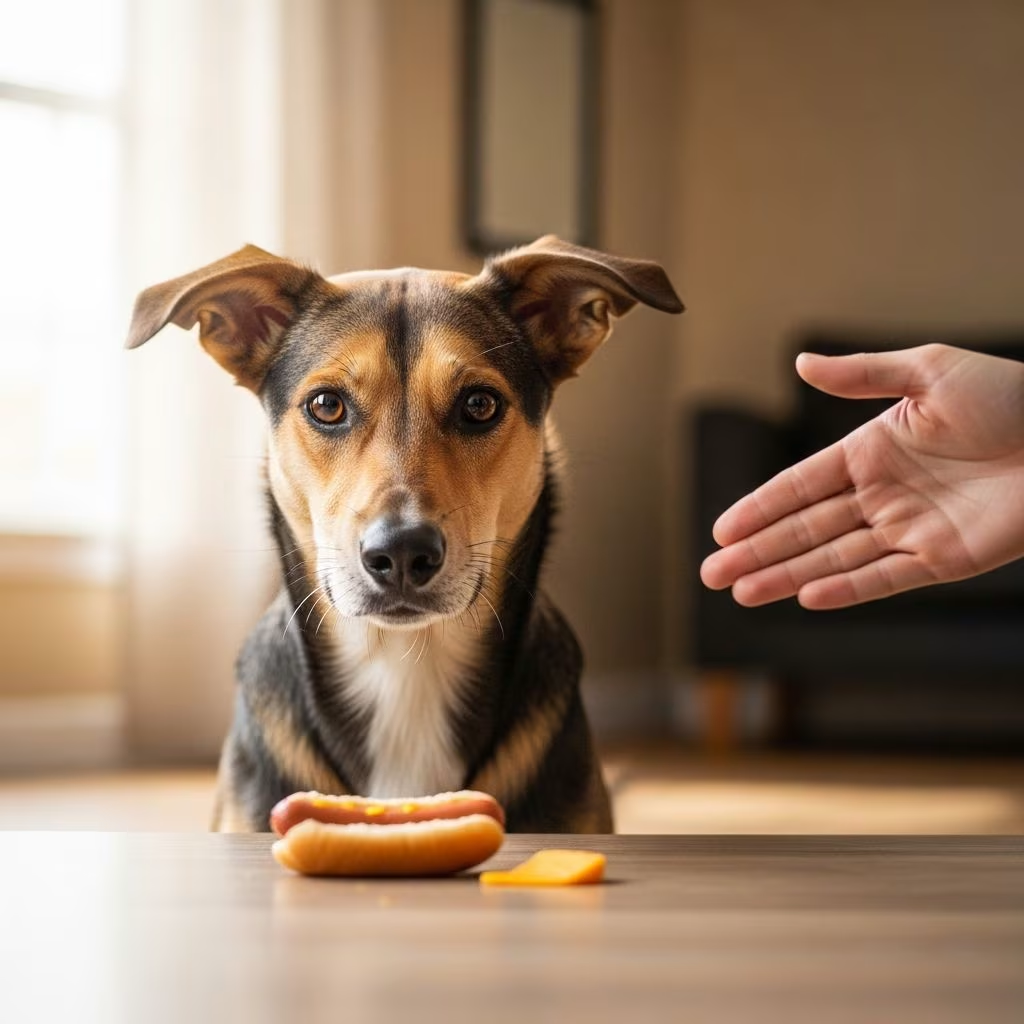
The ‘leave it’ command stands as a cornerstone of responsible dog ownership, empowering pets to resist distractions and potential dangers. Whether it’s a piece of food on the floor, a tempting toy, or hazardous debris during walks, this skill promotes safety and strengthens the bond between dog and owner. Training focuses on positive reinforcement, teaching dogs that ignoring forbidden items leads to better rewards.
Why Every Dog Needs to Learn ‘Leave It’
Teaching ‘leave it’ prevents ingestion of harmful substances like chocolate, medications, or sharp objects, which can lead to veterinary emergencies. It also curbs unwanted behaviors such as scavenging on walks or begging at the table, fostering a more obedient companion. For puppies, early training builds impulse control; for adults, it corrects ingrained habits. Consistency across family members ensures the command’s reliability in diverse scenarios.
Beyond immediate safety, this command enhances overall training progress. Dogs proficient in ‘leave it’ often excel in other areas like recall and focus, making daily life smoother. Owners report fewer stressful incidents, from park distractions to home mishaps.
Foundational Principles of Effective Training
Positive reinforcement forms the bedrock of successful ‘leave it’ training. Use high-value treats—those your dog finds irresistible—to motivate compliance. Sessions should last 5-10 minutes, occurring multiple times daily to leverage short attention spans. Always end on a positive note to maintain enthusiasm.
- Choose the right environment: Begin indoors with minimal distractions to build confidence before advancing outdoors.
- Timing is crucial: Reward the instant your dog disengages, reinforcing the desired response.
- Use a calm tone: Firm but not harsh delivery prevents fear-based reactions.
Patience ranks highest among virtues here. Progress varies by breed, age, and temperament—some dogs grasp it in days, others weeks. Track advancements to celebrate milestones and adjust methods.
Step-by-Step Guide to Teaching ‘Leave It’
Follow this progressive protocol, inspired by established veterinary and training guidelines, to instill the command reliably.
Phase 1: Closed Hand Introduction
Hold a low-value treat (like kibble) in your closed fist, palm up. Present it to your dog, who will sniff and paw at it. Remain silent and still. The moment they back away—even briefly—praise lavishly and offer a high-value treat from your other hand. Repeat 10-15 times per session until they consistently withdraw without prompting.
Phase 2: Introduce the Verbal Cue
Once reliable, say ‘leave it’ calmly just before they engage. If they persist, close your hand tighter. Reward immediate disengagement with praise and a superior treat. Practice until they respond to the cue alone.
Phase 3: Open Hand and Floor Placement
Place the treat on your open palm. Command ‘leave it’ upon approach. Cover it if needed, rewarding compliance from elsewhere. Advance to floor drops: Toss a treat down, leash your dog if necessary, and cue ‘leave it.’ Reward eye contact or turning away.
Phase 4: Increase Distance and Distractions
Drop the leash, practice with toys or multiple items. Introduce mild distractions like background noise. Outdoors, target real-world temptations such as leaves or litter, always rewarding success.
Phase 5: Mastery and Generalization
Test in varied settings: parks, homes of friends, during meals. Use with people passing treats or exciting scents. Fade rewards gradually, relying on verbal praise to sustain behavior.
| Phase | Key Action | Treat Value | Goal |
|---|---|---|---|
| 1 | Closed fist | Low in fist, high reward | Disengage on own |
| 2 | Add cue | High reward | Respond to voice |
| 3 | Floor drop | Medium target, high reward | Ignore accessible items |
| 4 | Distractions | High reward | Focus amid chaos |
| 5 | Real life | Praise primary | Automatic obedience |
Adapting Training for Puppies Versus Adult Dogs
Puppies under 6 months benefit from play-integrated sessions, using toys over treats to match their energy. Short bursts prevent frustration. Adults may require firmer consistency to override habits, starting with lower distractions. Senior dogs or rescues might need slower pacing, incorporating health checks for mobility issues.
Breeds like retrievers, driven by food motivation, progress quickly with treats; hounds, scent-focused, demand higher-value rewards. Tailor to individual needs for optimal results.
Troubleshooting Common Training Hurdles
Owners often face stalls. Here’s how to overcome them:
- Dog ignores cue: Revert to prior phase; ensure rewards outshine targets.
- Over-excitement: Exercise first; train when calm.
- Inconsistent family enforcement: Hold group sessions for unified rules.
- Outdoor failures: Gradually desensitize; use long lines for safety.
Avoid repeating the command—say it once to preserve meaning. Never punish; it erodes trust.
Real-World Applications and Safety Benefits
Deploy ‘leave it’ for dropped pills, roadkill, or aggressive dogs. During hikes, it averts toxic plants; at beaches, sharp shells. In homes with kids, it prevents toy swallowing. Combined with recall, it forms a safety net for off-leash areas.
Statistics from animal welfare groups underscore its value: scavenging causes thousands of annual poisonings, many preventable with obedience training.
Advanced Variations and Complementary Commands
Elevate skills with ‘leave it’ plus ‘look at me’ for focus. Practice ‘drop it’ for items already in mouth: Trade for treats. Integrate into agility or therapy dog prep for multi-task reliability.
For competitive obedience, add duration: Hold ‘leave it’ for 30 seconds amid distractions. These build mental resilience.
Long-Term Maintenance and Proofing
Practice weekly indefinitely. Randomize scenarios to prevent cue prediction. Involve guests or other pets. If regression occurs, refresh basics without discouragement.
Frequently Asked Questions (FAQs)
How long does it take to teach ‘leave it’?
Typically 1-4 weeks with daily practice, varying by dog.
Can I use toys instead of treats?
Yes, for play-driven dogs; alternate for variety.
What if my dog is food-obsessed?
Use highest-value rewards; consider hunger timing pre-meals.
Is a leash always necessary?
Initially yes, for control; phase out as proficiency grows.
Does age matter for learning this?
No—puppies, adults, seniors all succeed with adaptation.
Conclusion
Mastering ‘leave it’ transforms risky behaviors into reliable obedience, safeguarding your dog while deepening your partnership. Commit to consistent, joyful training for lifelong benefits.
References
- How To Train Your Dog To Leave Something Alone — RSPCA. Accessed 2026. https://www.rspca.org.uk/adviceandwelfare/pets/dogs/training/leave
- Dog Training: How to Teach a Dog to Leave It — Purina US. Accessed 2026. https://www.purina.com/articles/dog/behavior/training/how-to-teach-dog-leave-it
- Master the “Leave It” Command! — Alan’s K9 Academy. Accessed 2026. https://www.alansk9academy.com/blogs/master-the-leave-it-command
- Teaching Your Pup the Leave It Command — Buddy and Friends DD. Accessed 2026. https://buddyandfriendsdd.com/teaching-leave-it-command/



