

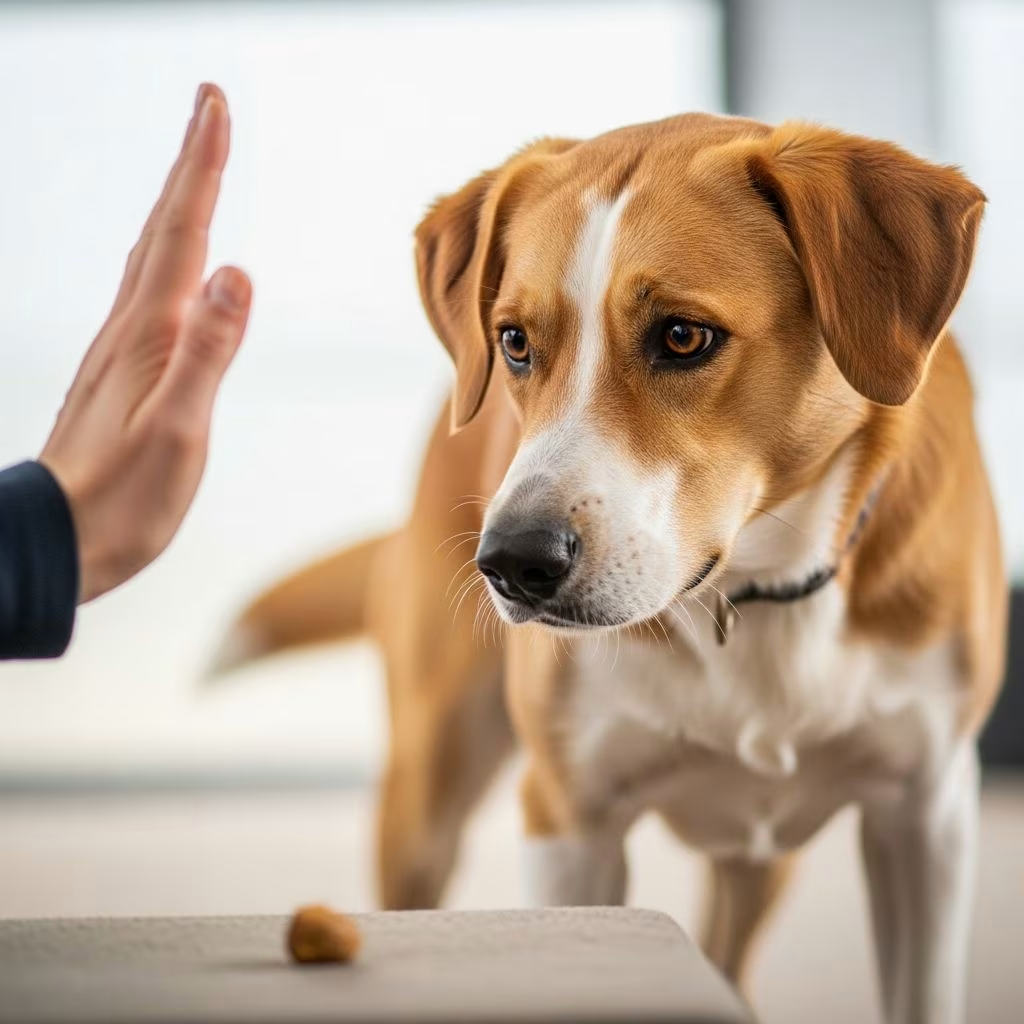
The ‘leave it’ command stands as one of the most vital skills in a dog’s training repertoire. It empowers owners to redirect their pets away from potentially dangerous or unwanted items, such as discarded food, toxic substances, or distracting objects during walks. By fostering impulse control, this cue not only promotes safety but also strengthens the bond between dog and owner through clear communication and positive reinforcement.
Why Impulse Control Matters in Canine Behavior
Impulse control forms the foundation of obedient behavior, helping dogs resist innate urges to investigate or consume inappropriate items. Without it, dogs may ingest harmful materials like chocolate, sharp debris, or spoiled food, leading to health emergencies. Training this skill early prevents such incidents and builds mental discipline, making dogs more reliable in varied environments.
Experts emphasize that consistent practice translates to real-world reliability. For instance, a dog proficient in ‘leave it’ can navigate busy streets without lunging at dropped treats, reducing risks during outings. This command also aids in managing reactivity toward other animals or people, enhancing overall household harmony.
Essential Tools and Preparation for Training
Before starting, gather low-value treats (like kibble) for temptation and high-value rewards (such as cheese or chicken) for motivation. A leash, clicker or marker word (‘yes’), and a quiet space minimize distractions. Sessions should last 5-10 minutes, repeated multiple times daily for best retention.
- Low-value treats: Bland items your dog finds mildly appealing.
- High-value treats: Irresistible rewards delivered from your other hand.
- Leash: For controlled practice with ground items.
- Clicker/Marker: Precise timing for marking correct responses.
Building the Foundation: Closed Fist Method
Begin with the closed fist technique to teach self-control without a verbal cue. Hold a low-value treat in your loosely closed fist, allowing your dog to sniff and paw at it. Remain patient and silent as they investigate.
Once they cease efforts—typically backing away or losing interest—mark the behavior instantly with a click or ‘yes,’ then reveal the treat saying ‘take it.’ This associates disengagement with reward, reinforcing that ignoring leads to gaining.
- Present fist; ignore all attempts to access treat.
- Mark and reward precisely when dog stops trying.
- Repeat until dog anticipates by pulling back voluntarily.
Progress by delaying the ‘take it’ release by 1-2 seconds, building tolerance. Most dogs grasp this within 5-10 repetitions.
Transitioning to Open Hand Challenges
With reliability achieved, place the treat on your open palm. If the dog lunges, close your fist and wait. Reward only upon voluntary retreat, praising lavishly. This elevates difficulty, simulating accessible temptations.
Practice until the dog ignores the open hand consistently. Introduce the ‘leave it’ cue just before presenting the palm, pairing it with successful ignores. Use a calm, normal tone to avoid intimidation.
| Stage | Action | Expected Dog Response | Reward Timing |
|---|---|---|---|
| Closed Fist | Dog paws/licks | Stops trying | Immediate mark + treat |
| Open Palm | Dog approaches | Turns head away | After 2-second pause |
Ground Level Practice: Real-World Simulation
Drop a treat on the floor out of reach. If ignored automatically, mark and reward from your hand. Gradually place it closer, using the leash to block access if needed. Say ‘leave it’ before dropping for cue association.
Arrange low-value treats in a line, spaced apart. Walk past on leash, cueing ‘leave it’ at each. Cover with your foot if lunged at, rewarding ignores with superior treats. Master one before advancing.
Outdoor generalization is crucial—practice on sidewalks or yards to solidify the skill across contexts.
Advanced Applications and Distraction Proofing
Once solid, introduce movement: Walk toward floor treats, cueing ‘leave it.’ Stop if approached, resuming only on compliance. Avoid yanking; steady tension suffices.
Layer distractions like toys, other pets, or people. Reward heavily for success, regressing if failure occurs. Never cue if success is unlikely, preventing error reinforcement.
- Multiple treats in motion (e.g., rolling ball with food).
- Social scenarios: Pass friendly dogs.
- High-temptation items: Simulate trash or feces.
Common Mistakes and Troubleshooting
Avoid repeating ‘leave it’ excessively, as it loses impact. If your dog forges ahead, shorten distances or revert stages. Patience trumps force; positive methods yield lasting results.
For stubborn cases, use two-hand swaps: One hand holds temptation, the other superior reward behind your back. Reveal only upon ignore.
Benefits Beyond Obedience: Safety and Freedom
A mastered ‘leave it’ grants dogs more off-leash liberty in safe areas, as owners trust their choices. It mitigates scavenging on hikes, preventing gastrointestinal issues or poisoning.
Statistically, trained dogs face fewer vet visits for ingestions, per veterinary reports. This cue also curbs resource guarding, fostering peaceful multi-dog homes.
FAQ: Leave It Training Essentials
Q: How long until my dog learns ‘leave it’?
A: Puppies often succeed in days; adults may take weeks with daily practice.
Q: What if my dog is food-obsessed?
A: Use ultra-high-value rewards and start with least favorite treats.
Q: Can I train without treats?
A: Treats accelerate learning; phase to praise/life rewards later.
Q: Is ‘leave it’ suitable for all breeds?
A: Yes, adaptable for hounds to retrievers with consistent method.
Q: How to maintain the skill long-term?
A: Random practice in daily routines prevents regression.
Integrating Leave It into Daily Routines
Incorporate during meals by dropping kibble, cueing ‘leave it’ before permission. On walks, use for street debris. Games like fetch with ‘leave it’ for dropped toys build fun reliability.
Family involvement ensures consistency; children practice under supervision with soft cues. Track progress in a journal, noting successes per environment.
References
- How to Teach Your Dog the ‘Leave It’ Command — American Kennel Club (AKC). 2023-05-15. https://www.akc.org/expert-advice/training/learning-the-leave-it-command/
- Leave It | Positively.com — Positively.com (Victoria Stilwell). 2022-08-10. https://positively.com/dog-training/article/canine-life-skills-leave-it
- How To Train Your Dog To Leave Something Alone — RSPCA. 2024-02-20. https://www.rspca.org.uk/adviceandwelfare/pets/dogs/training/leave
- How to Train Your Dog to LEAVE IT in 5 Easy Steps — YouTube (Professional Dog Trainer Channel). 2023-11-12. https://www.youtube.com/watch?v=0ZJzGPbdRvU
- How to Teach a Dog Leave It Command (Step 1) — YouTube (Cavalier King Charles Spaniel Tips). 2024-01-05. https://www.youtube.com/watch?v=0uk5_NhlCMk



