

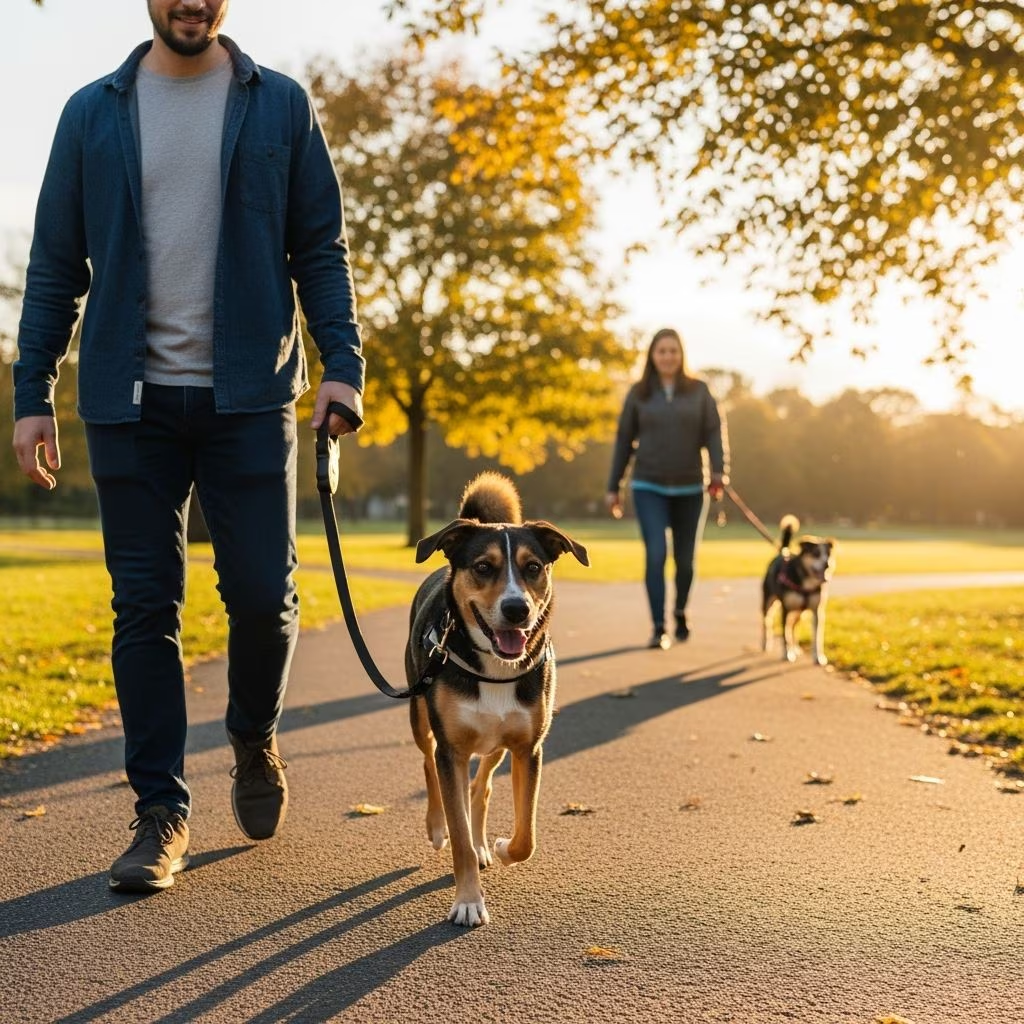
Leash reactivity, often perceived as aggression, occurs when dogs display intense behaviors like barking, lunging, or growling while on a leash. This common issue stems from the restraint of the leash amplifying natural responses to triggers, making everyday walks challenging for owners.
Understanding the Roots of Leash Reactivity
Dogs exhibit leash reactivity due to several interconnected factors. Fear is a primary driver, where the leash prevents flight from perceived threats, prompting a fight response instead. Frustration arises when dogs cannot approach or greet others freely, building tension during restrained interactions.
Territorial instincts also play a role, as leashed dogs feel compelled to protect their space more vigorously. Insufficient early socialization leaves puppies unprepared for diverse stimuli, heightening anxiety on walks. Additionally, pent-up energy from lack of exercise can manifest as over-excitement, escalating into reactive outbursts.
The leash itself acts as a barrier, similar to a fence, trapping dogs in uncomfortable situations and intensifying stress. Off-leash, these dogs might simply avoid triggers, but restraint escalates their discomfort.
Spotting the Signs Early
Recognizing leash reactivity begins with observing body language. Stiff posture, raised hackles, dilated pupils, and forward ears signal escalating tension. Vocalizations like barking or whining, combined with lunging or pulling, confirm reactivity.
Differentiate true aggression—intended to harm—from reactivity, where dogs aim to create distance or control the situation. A reactive dog wants triggers to move away, not closer. Early detection allows intervention before behaviors solidify.
Prevention Strategies for Puppies and Young Dogs
Proactive steps during puppyhood build confidence and reduce future reactivity. Start with controlled socialization: expose pups to people, dogs, and environments at low intensity to foster positive associations.
- Enroll in puppy classes for supervised play and basic obedience.
- Practice loose-leash walking in quiet areas, rewarding calm focus.
- Ensure daily exercise to burn energy, preventing frustration buildup.
- Use high-value treats to associate leashes with rewards from day one.
Consistency prevents habits from forming. Short, frequent sessions outperform marathon walks initially.
Core Training Techniques for Management
Effective management relies on science-based methods like desensitization and counterconditioning. Desensitization gradually exposes dogs to triggers at sub-threshold levels, building tolerance. Counterconditioning pairs triggers with rewards, shifting emotional responses.
| Technique | Description | Steps |
|---|---|---|
| Desensitization | Expose to triggers below reaction threshold | 1. Identify trigger distance 2. Stay just outside it 3. Reward calm behavior 4. Gradually decrease distance |
| Counterconditioning | Change emotional response to triggers | 1. Use highest-value treats 2. Feed before dog notices trigger 3. Continue feeding during exposure 4. Stop when trigger passes |
| Positive Reinforcement | Reward desired behaviors | 1. Mark calm with clicker/word 2. Treat immediately 3. Practice in low-distraction areas first |
Implement these in controlled settings. For example, walk at a distance where your dog notices but doesn’t react, then treat profusely.
Equipment Choices for Safer Walks
Proper gear enhances control without escalating fear. Front-clip harnesses redirect pulling gently, while head halters like Gentle Leader guide via the nose for calm focus.
- Avoid choke, prong, or shock collars; they increase frustration and pain associations.
- Opt for martingale collars for escape artists, ensuring fit allows two fingers between collar and neck.
- Keep leashes loose to prevent tension transmission; short leashes aid control in crowds.
A slightly hungry dog before walks boosts treat motivation. Feed post-walk to maintain engagement.
Daily Management and Lifestyle Adjustments
Beyond training, adjust routines for success. Scout routes to avoid known triggers initially. Use emergency U-turns: pivot abruptly and reward for following.
Incorporate impulse control games at home:
- Wait at doors for “sit” cue.
- Practice “leave it” with toys.
- Engage in nose work or tug for mental exercise.
Exercise off-leash in safe areas burns energy reactively. Track progress in a journal to celebrate small wins and adjust plans.
When to Call in Professional Help
Severe cases demand experts. Certified trainers (CPDT), behavior consultants (CDBC), or veterinary behaviorists assess root causes and customize plans. They teach advanced skills like muzzle training for safety.
Professionals ensure safety, accelerate progress, and prevent owner burnout. Look for force-free methods and credentials from bodies like IAABC or APDT.
Real-World Success Stories and Tips
Owners report transformations after consistent application. One case involved a fearful terrier mix; weekly desensitization sessions reduced barking by 80% in two months. Another frustrated Labrador improved via counterconditioning during off-peak walks.
Tips from pros:
- Stay calm; dogs mirror tension.
- Use high-distraction environments only after basics solidify.
- Combine with relaxation protocols like Karen Overall’s at home.
Common Mistakes to Avoid
Punitive methods worsen reactivity by adding fear. Yelling or yanking reinforces leash as a threat. Overfacing—exposing to intense triggers too soon—sensitizes rather than desensitizes.
Neglecting body language cues leads to surprises. Always prioritize prevention over reaction.
FAQs on Leash Reactivity
Is leash reactivity the same as aggression?
No, reactivity often seeks distance, while aggression intends harm. Both require management.
How long does training take?
Weeks to months, depending on consistency and severity. Patience yields results.
Can all dogs be fixed?
Most improve significantly with tailored plans; rare cases need lifelong management.
What if my dog bites on leash?
Consult a vet behaviorist immediately; muzzle train for safety.
Does neutering help?
It may reduce some aggression but doesn’t address fear-based reactivity.
Building a Reactivity-Free Future
Transforming a reactive dog requires commitment but rewards with stress-free companionship. Combine prevention, training, equipment, and professional input for holistic success. Track progress, celebrate milestones, and enjoy harmonious walks together.
References
- How to Deal with Leash Aggression in Dogs — Miller Clark Animal Hospital. 2024-03-15. https://www.millerclarkanimalhospital.com/site/blog/2024/03/15/leash-aggression
- How to Deal With Leash Aggression in Dogs — Gluckstadt Animal Hospital. 2024-07-15. https://www.gluckstadtanimalhospital.com/site/blog/2024/07/15/deal-with-leash-aggression-dogs
- How to Deal with Leash Aggression in Dogs — Clackamas Pet Clinic. 2024-01-30. https://www.clackamaspetclinic.com/site/blog/2024/01/30/leash-aggression-dogs
- How to Deal with Leash Aggression in Dogs — Oahu Veterinary Specialists. 2024-02-29. https://www.oahvet.com/site/blog/2024/02/29/leash-aggression-dogs
- How to Help Dogs That Are Aggressive During Leash Walking — Today’s Veterinary Practice. N/A. https://todaysveterinarypractice.com/behavior/how-to-help-dogs-that-are-aggressive-during-leash-walking/
- Leash Aggression in Dogs: What to Know — American Kennel Club. N/A. https://www.akc.org/expert-advice/training/leash-aggression/
- Dog-Dog Aggression On Leash (Reactivity) — San Francisco SPCA. N/A. https://www.sfspca.org/resource/dog-dog-aggression-on-leash-reactivity/



